Quantum Mechanics Fundamentals
Classical Physics Limitations
Cracks in the Foundation
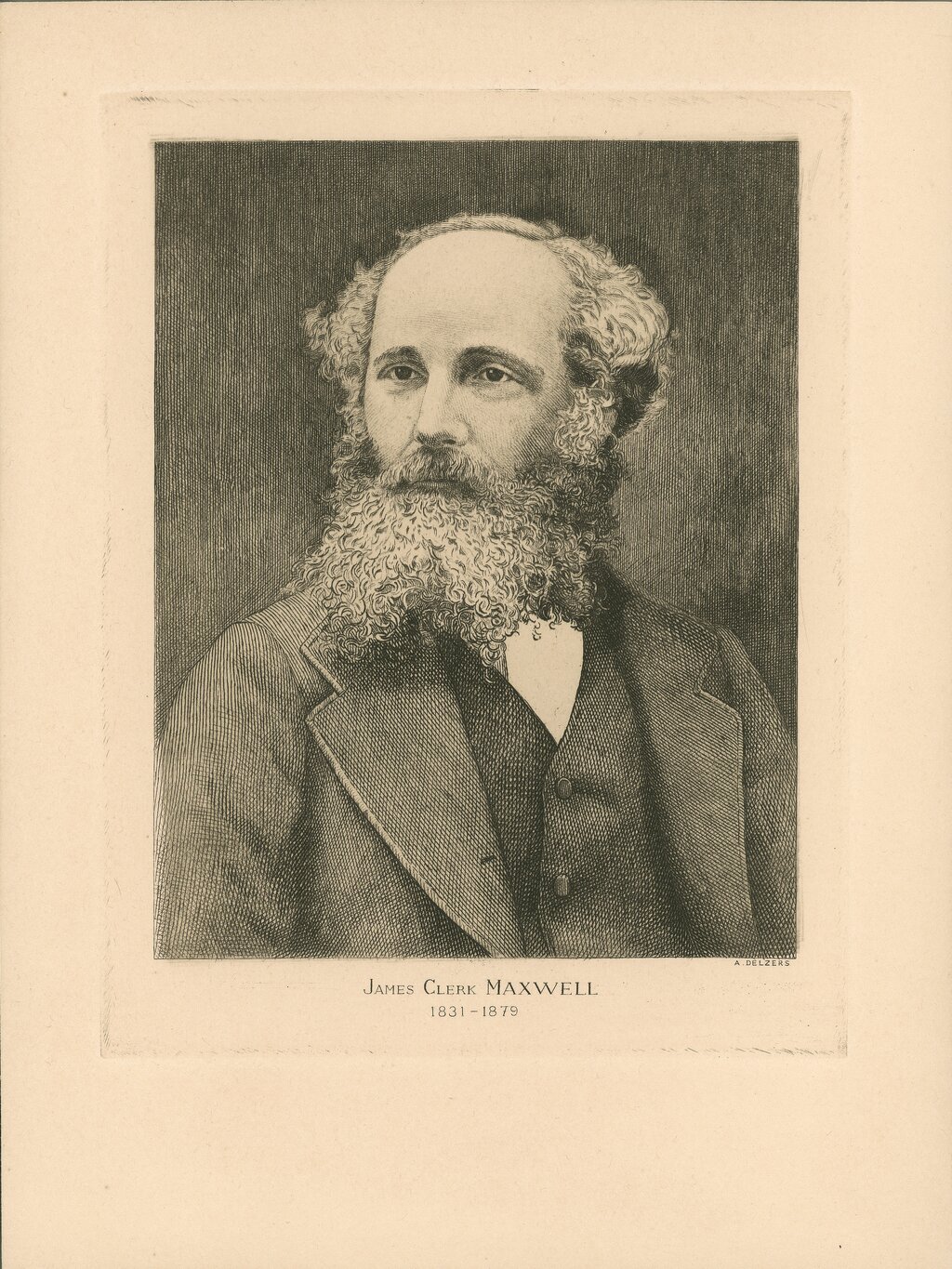
For centuries, classical physics stood as a towering achievement. Built on the work of giants like Isaac Newton and James Clerk Maxwell, it described the world with stunning accuracy. From the orbit of planets to the behavior of electricity and magnetism, its laws seemed universal. But as the 19th century turned to the 20th, scientists began running experiments that classical physics just couldn't explain. These weren't small errors; they were deep, fundamental contradictions that suggested something was profoundly wrong with our understanding of reality.
The world of the very small and the very hot refused to play by the established rules. The elegant equations that worked so well for baseballs and buildings failed spectacularly when applied to atoms and light. These failures weren't just academic curiosities; they were clues pointing toward a new, stranger, and more accurate description of the universe.
The Glow of a Hot Object
Think about a piece of metal in a blacksmith's forge. As it gets hotter, it starts to glow—first red, then orange, then white-hot. This light is a form of thermal radiation. Physicists wanted to understand the relationship between an object's temperature and the light it emits.
To simplify the problem, they imagined an ideal object called a “black body.” A perfect black body absorbs all light that hits it and emits radiation based only on its temperature. When physicists used the laws of classical physics to predict the radiation from a black body, the results were absurd.
Classical theory predicted that as the wavelength of the light got shorter (moving toward the ultraviolet end of the spectrum), the amount of energy emitted should increase infinitely. This glaring failure became known as the “ultraviolet catastrophe.”
Of course, this isn't what happens. We don't get blasted with infinite ultraviolet radiation from our toaster ovens. Experiments showed a very different picture. The radiation intensity peaked at a certain wavelength and then dropped off for shorter wavelengths. The theory was completely wrong.
This wasn't a minor calculation error. It was a sign that the fundamental principles of thermodynamics and electromagnetism, as they were understood, were incomplete. Something was preventing hot objects from emitting unlimited high-energy radiation, but classical physics had no explanation for what it could be.
Light's Strange Kick
Another puzzle emerged from a phenomenon called the photoelectric effect. Scientists observed that when you shine light on a metal surface, it can sometimes knock electrons loose. This wasn't surprising in itself; light is a wave, and waves carry energy. Classical wave theory made a few clear predictions about how this should work.
| Classical Prediction | Experimental Reality |
|---|---|
| Any color of light should work if it's bright enough. | Light below a certain frequency (a threshold) does nothing, no matter how bright. |
| There should be a time delay as the electron absorbs energy from the wave. | Electrons are ejected instantly. |
| Increasing the light's intensity (brightness) should make the electrons fly off with more energy. | Brighter light ejects more electrons, but their maximum energy doesn't change. |
The results were completely at odds with the idea of light as a continuous wave. The instantaneous ejection of electrons suggested that energy was being delivered in concentrated packets, not spread out over a wavefront. And the existence of a threshold frequency was baffling. It was as if the light needed to have a certain minimum “kick” to dislodge an electron, a kick that depended on its color (frequency), not its brightness (intensity).
The Unstable Atom
Perhaps the most troubling failure of classical physics was the atom itself. After the discovery of the electron, the prevailing model pictured the atom as a miniature solar system, with electrons orbiting a dense, positive nucleus. This model was simple and elegant, but it had a fatal flaw according to classical electromagnetism.

An orbiting electron is constantly changing direction, which means it's accelerating. According to Maxwell's equations, any accelerating electric charge must radiate energy in the form of electromagnetic waves. This means the electron should rapidly lose energy, causing its orbit to decay. It would spiral into the nucleus in a tiny fraction of a second. If classical physics were the whole story, atoms couldn't exist. The very matter we're made of should have collapsed long ago.
There was another, related problem. When a gas is heated, it emits light. But it doesn't emit a full rainbow. Instead, it emits light only at specific, sharply defined colors or frequencies—a pattern called an emission spectrum. It's like a barcode for each element. Classical physics had no explanation for this. An electron spiraling into the nucleus should emit a continuous smear of radiation, not discrete lines. The existence of these spectral lines hinted that electrons in atoms could only exist in specific energy states, a concept totally foreign to classical mechanics.
These three problems—black-body radiation, the photoelectric effect, and atomic stability—were the cracks in the foundation of physics. They showed that the classical rules, so successful on a human scale, simply did not apply in the microscopic realm. A revolution was needed.
What major problem did classical physics have when trying to explain black-body radiation?
The experimental results of the photoelectric effect contradicted classical wave theory. Which observation was particularly damning?