Quantum Mechanics and Financial Manifestation
Quantum Mechanics Basics
The Quantum World
At the scale of atoms and electrons, the world operates by a different set of rules. Classical physics, which explains the motion of planets and baseballs, breaks down. In its place is quantum mechanics, a theory that describes a reality full of probabilities, uncertainties, and strange connections that defy our everyday intuition.
Both Wave and Particle
One of the first strange ideas to come out of quantum mechanics is that tiny things like electrons and photons (particles of light) don't have a single identity. Sometimes they act like tiny, solid particles, and other times they act like spread-out waves.
The most famous demonstration of this is the double-slit experiment. If you shoot a stream of electrons at a barrier with two slits in it, you might expect to see two bands on the detector screen behind it, corresponding to the electrons that went through each slit. But that's not what happens.
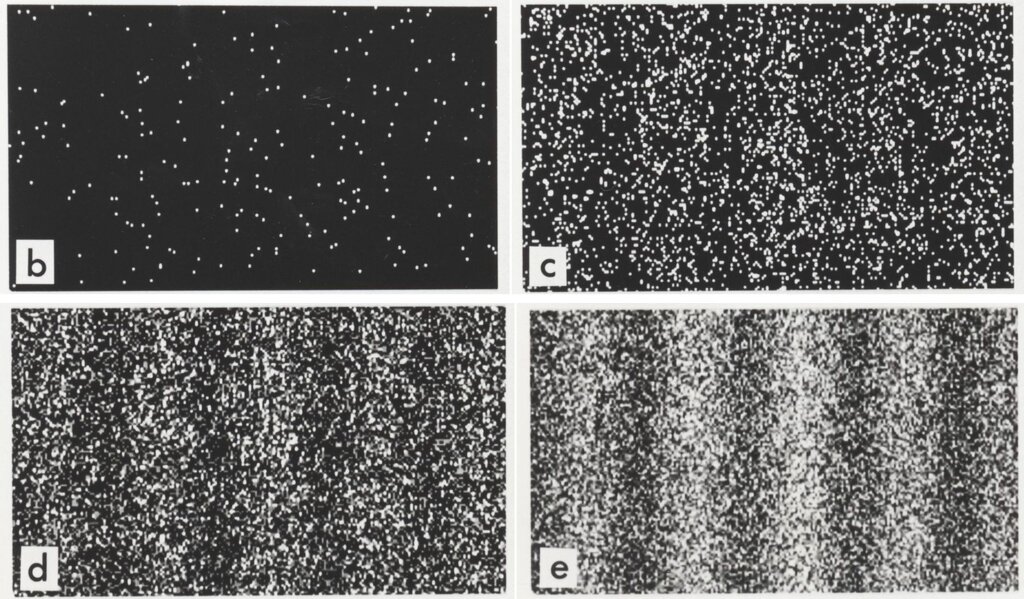
Instead, an interference pattern emerges—a series of many bands, just like you’d see if waves of water passed through two openings and interfered with each other on the other side. This happens even if you send the electrons through one at a time. It's as if each electron passes through both slits simultaneously as a wave and interferes with itself.
But here's the truly bizarre part. If you place a detector at the slits to see which one the electron goes through, the wave pattern vanishes. The act of measuring forces the electron to “choose” a path and behave like a particle, leaving just two bands on the screen. The very act of observation changes the outcome.
States of Possibility
The wave-like nature of quantum objects leads to another core concept: superposition. Before it's measured, a quantum particle doesn't have definite properties. Instead, it exists in a combination of all its possible states at once. It’s not just in one place; it's in a fuzzy cloud of probabilities.
Think of a spinning coin. While it's in the air, it’s neither heads nor tails. It's in a dynamic state that combines both possibilities. When it lands and you look at it (the measurement), it settles into one definite state: heads or tails. A quantum particle is similar. Before measurement, it's in a superposition of states. The act of measuring forces it to “pick one.”
A quantum system can exist in multiple states—position, energy, spin—at the same time. This is superposition.
This cloud of possibilities is directly related to the Heisenberg Uncertainty Principle. Werner Heisenberg realized there's a fundamental limit to how much we can know about a particle's properties simultaneously. For certain pairs of properties, like position and momentum, the more precisely you measure one, the less precisely you know the other.
This isn't a limitation of our instruments. It's a fundamental property of nature. If you pinpoint an electron's exact position, its momentum becomes completely uncertain, and vice versa. There's an inherent trade-off baked into the fabric of reality.
This formula shows that the uncertainty in position () multiplied by the uncertainty in momentum () must be greater than or equal to a very small constant. They can never both be zero.
Spooky Connections
Perhaps the most baffling quantum idea is entanglement. It's possible to link two or more particles in such a way that they share a single quantum state. Their fates become intertwined, no matter how far apart they are.
Imagine you have two entangled particles. If one has a property called “spin up,” you instantly know the other has “spin down.” The strange thing is that neither particle had a definite spin before you measured it—they were both in a superposition. The moment you measure one, the state of the other is instantly determined, whether it's across the lab or across the galaxy.
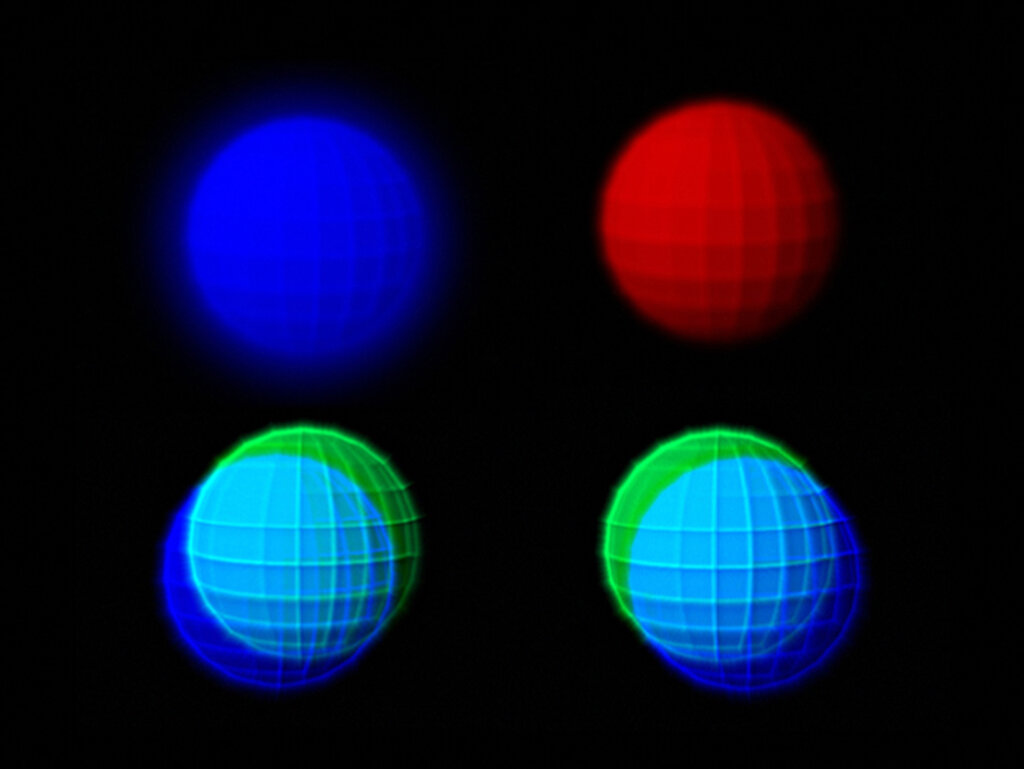
Albert Einstein famously called this “spooky action at a distance” because it seemed to violate the rule that nothing can travel faster than light. Yet, experiment after experiment has confirmed that entanglement is real. It doesn't allow for faster-than-light communication, because you still have to compare measurements classically, but it reveals a deep, non-local connection within the quantum world.
These principles—wave-particle duality, superposition, uncertainty, and entanglement—form the foundation of quantum mechanics. They challenge our classical view of a predictable, deterministic universe and introduce a world built on probability and interconnectedness.
Now, let's test your understanding of these core quantum concepts.
In the double-slit experiment, what happens if a detector is placed at the slits to observe which slit each electron passes through?
The principle of superposition states that a quantum particle, before being measured, exists in a definite, single state.