Quantum Mechanics
Quantum Mathematical Framework
Mastering the Quantum Language
To truly unlock the mysteries of quantum mechanics, we must move beyond simple wave visuals and step into the elegant world of linear algebra. In this chapter, we will replace intuitive diagrams with the precision of Hilbert space and Dirac's bra-ket notation. By the end, you will be fluent in the ket vector formalism, giving you the mathematical tools required to analyze complex quantum systems with ease.
Beyond the Wave
In your early exploration of quantum mechanics, you likely encountered the particle as a wavy squiggle in space—the . While this spatial view is intuitive, it becomes incredibly clunky when you try to describe more than one particle or non-spatial properties like or polarization.
To progress, we need to abstract the physical state away from the 'wavy' picture and into a 'vector' picture. Think of it this way: instead of tracking the literal curves of a wave, we treat the entire physical state as a single object—a vector. Just as a point in 3D space can be represented by an arrow with a specific direction and length, a quantum state is a pointing in a specific 'direction' within a much larger mathematical arena.
The Arena of Hilbert Space
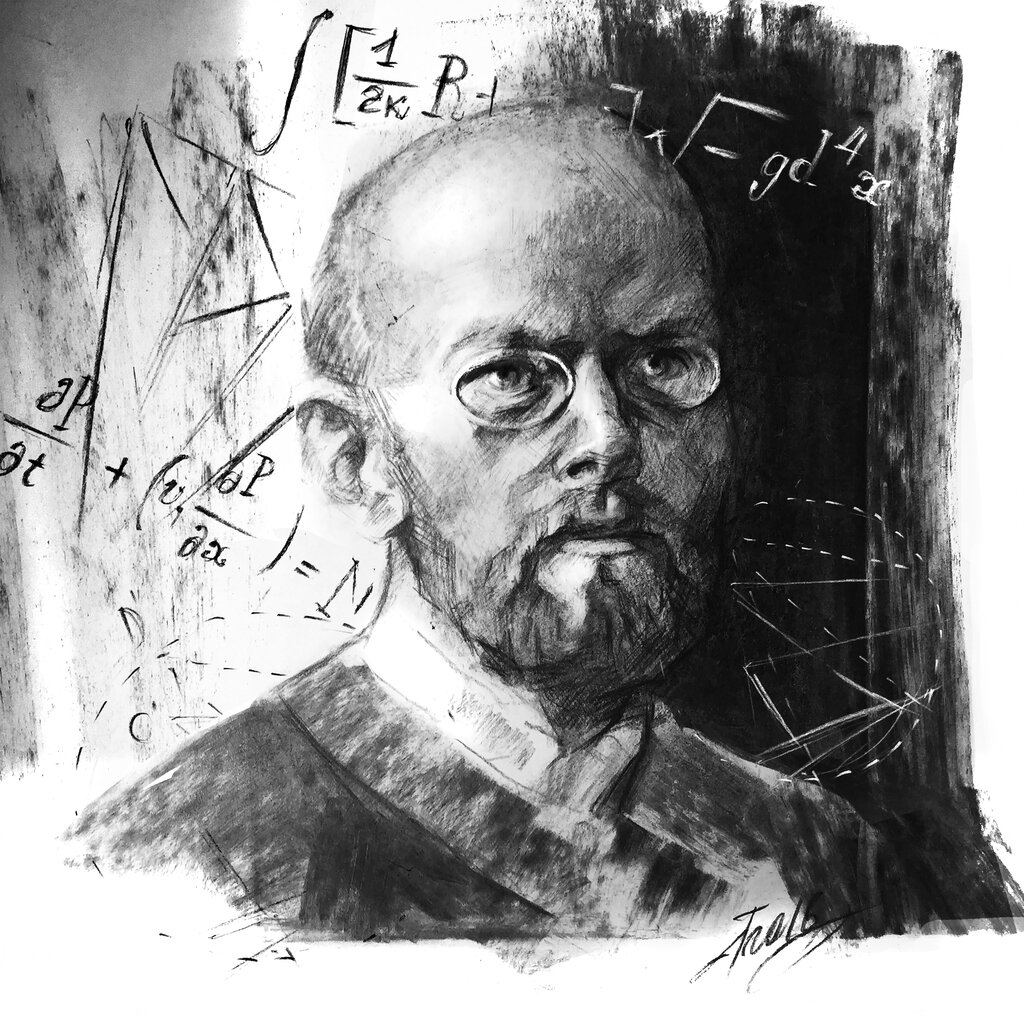
This mathematical arena is known as Hilbert space, named after David Hilbert. It is a complex vector space that serves as the 'playground' where all possible quantum states live. While a vector in high school geometry exists in two or three dimensions, a Hilbert space can have infinite dimensions.
For a space to qualify as a Hilbert space, it must meet a few strict criteria. It must be a vector space, meaning you can add states together and scale them. It must be 'complete,' ensuring that if a sequence of states seems to be converging to a limit, that limit is also a state within the space. Most importantly, it must support an inner product, which is the tool we use to calculate the overlap between two states.
The inner product is the secret sauce of quantum mechanics. It allows us to determine the 'distance' or 'angle' between two states, which eventually tells us the probability of a system transitioning from one state to another. In this geometry, two states are 'orthogonal' if they have zero overlap—meaning if the system is in one state, there is a zero percent chance of measuring it in the other.
The Birth of the Ket
To make working in this abstract space easier, P.A.M. Dirac introduced a specialized notation. He took the state vector and placed it inside a 'Ket' symbol: . This isn't just fancy bracket work; it is a signal that we are dealing with a vector in Hilbert space.
When we write , we are focusing purely on the state itself, regardless of whether we are thinking about its position, its momentum, or its spin. This abstraction is what allows us to handle systems with many particles or complicated degrees of freedom without drowning in calculus. We are essentially doing 'quantum bookkeeping' with vectors.
A physical state in quantum mechanics is represented by a single direction in a complex Hilbert space.
By shifting our perspective from waves to kets, we gain the mathematical agility to describe reality at its most fundamental level. We are no longer tied to drawing squiggles; we are now calculating the geometry of existence itself. This vector-based foundation is exactly what we need to start exploring the next piece of Dirac's language: the 'Bra.'