Quantum Field Theory Explained
Introduction to Quantum Fields
The Fabric of Reality
We often picture fundamental particles like electrons as tiny, solid balls zipping through space. This is a useful mental model, but it's not the full story. In modern physics, the most fundamental things in the universe aren't particles at all. They're fields.
A field is something that has a value at every point in space and time. Think of the temperature in a room. You can measure it here, over there, or by the window, and each point will have a specific temperature. That collection of all temperature values makes up a temperature field. Another example is a magnetic field. It exists everywhere around a magnet, ready to pull on a paperclip you place within it.
In Quantum Field Theory (QFT), the universe is made of fundamental fields. Particles are not the primary ingredients; the fields are.
What makes a field a quantum field? Just like everything else at the smallest scales, these fields must obey the rules of quantum mechanics. This means their values aren't fixed. Instead, they are governed by probability and exist in a state of constant fluctuation. Every known particle in the universe has its own corresponding quantum field that fills all of space.
Particles as Ripples
If fields are the fundamental reality, where do particles come from? A particle is simply a concentrated vibration or excitation in its field. It's a ripple in the fabric of reality.
Imagine a perfectly still, infinite lake. This represents a quantum field in its lowest energy state, the vacuum. Now, toss a pebble into the lake. A ripple spreads out. That ripple is the particle. If you toss another pebble, you get another ripple, another particle.
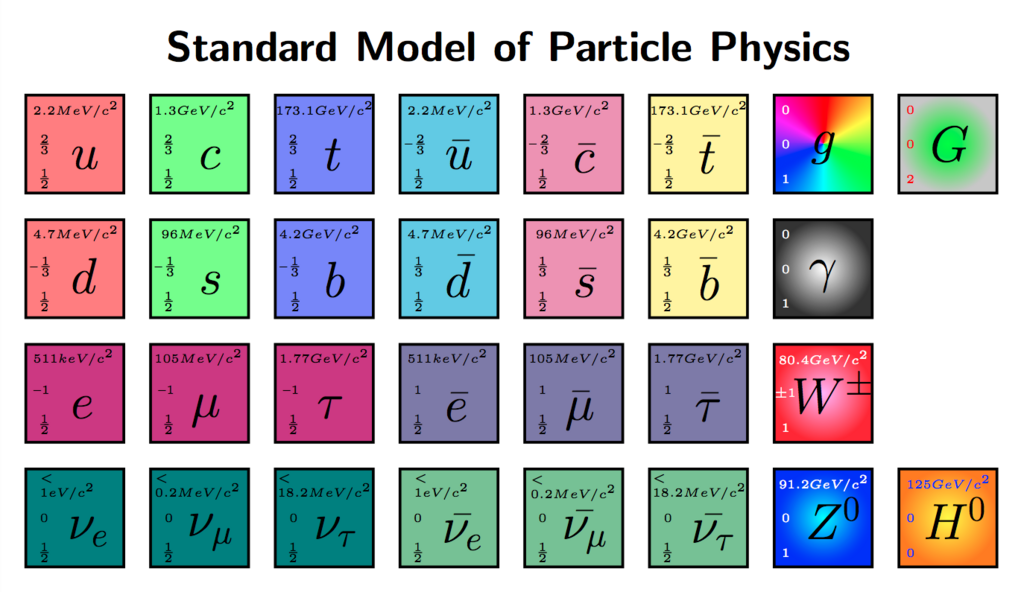
The energy of the ripple determines the properties of the particle. A small, gentle ripple might be one particle, while a more energetic ripple could be a particle with higher momentum. And just as you can have different types of waves in water, there are different types of fields. A ripple in the electron field is what we call an electron. A ripple in the photon field is a photon. A ripple in the Higgs field is a Higgs boson.
This perspective elegantly solves a major puzzle. In particle collisions, particles can be created seemingly from nothing, and they can disappear in a flash of energy. In the old view of particles as tiny balls, this is bizarre. Where do they come from? Where do they go?
In QFT, the answer is simple. Particles aren't indestructible things. They are temporary manifestations of energy in a field. When particles collide, their energy can be transferred to other fields, creating new ripples—new particles. When a particle is annihilated, its ripple simply flattens out, its energy returning to the field or being transferred elsewhere.
Why Quantize Fields?
Classical field theory, like James Clerk Maxwell's theory of electromagnetism, describes fields as smooth, continuous entities. Light, for example, is described as a continuous wave in the electromagnetic field. This works beautifully for large-scale phenomena like radio waves.
But at the turn of the 20th century, physicists discovered that light also behaves like it's made of discrete packets of energy, which we now call photons. A continuous wave can't explain this particle-like nature. You can't have half a photon or 1.3 photons. You either have one, or you have two, or you have none. The energy comes in chunks, or quanta.
One of our concerns is to explain various ways in which quantum field theory differs from quantum mechanics, not just in terms of technical detail, but in terms of physical content.
To account for this, fields must be quantized. Field quantization is the process of applying quantum rules to a classical field. It forces the energy of the field's vibrations to exist only in discrete amounts. These discrete packets of energy are what we perceive as particles.
Quantization is the crucial step that bridges the gap between the smooth, wavy nature of classical fields and the lumpy, particle-like reality of the quantum world. It allows us to have a single, unified framework that describes how particles are born, how they die, and how they interact with one another as disturbances in the fundamental fields that make up our universe.
Understanding fields as the fundamental reality is a major shift from our everyday intuition, but it provides a powerful foundation for describing the universe at its most basic level.