Quantum Encryption for Cybersecurity
Introduction to Quantum Mechanics
The Quantum World
In our everyday lives, things are straightforward. A light switch is either on or off. A coin flip results in either heads or tails. But when we zoom way down to the level of atoms and particles, the rules change completely. This is the realm of quantum mechanics, where things can be in multiple states at once.
To understand this, let's start with a familiar concept: a bit. In classical computing, a bit is the smallest unit of data and can only be a 0 or a 1. Its quantum counterpart is the qubit. A qubit can also be a 0 or a 1, but it can also be both at the same time.
Living in Two States at Once
This 'both at the same time' property is called superposition. Think of a spinning coin. While it's in the air, it's not definitively heads or tails—it's a blur of both possibilities. Only when it lands and you look at it (a process called measurement) does it settle into one definite state. A qubit is like that spinning coin. It exists in a combination of both 0 and 1 until it's measured.
Superposition
noun
A fundamental principle of quantum mechanics where a quantum system, like a qubit, can exist in multiple states at the same time. The superposition collapses into a single state upon measurement.
This isn't just a 50/50 split. A qubit can have a certain probability of being 0 and a certain probability of being 1. We can visualize a qubit's state using a diagram called a Bloch sphere. A classical bit would be stuck at either the North Pole () or the South Pole (), but a qubit can be any point on the sphere's surface, representing an infinite number of possible superpositions.
The moment you measure the qubit to see if it's a 0 or a 1, the superposition collapses. The spinning coin lands. The qubit is forced to 'choose' a classical state, and it will remain in that state for all subsequent measurements.
Spooky Connection
Another strange but powerful quantum concept is entanglement. This happens when two or more qubits become linked in a way that their fates are intertwined, no matter how far apart they are. Albert Einstein famously called it "spooky action at a distance."
Imagine you have two gloves, a left and a right, and you put each into a separate, identical box. You mail one box to a friend in another country. Before anyone opens a box, you don't know which glove is where. But the moment your friend opens their box and sees a left-handed glove, you instantly know that your box contains the right-handed one. There's no delay.
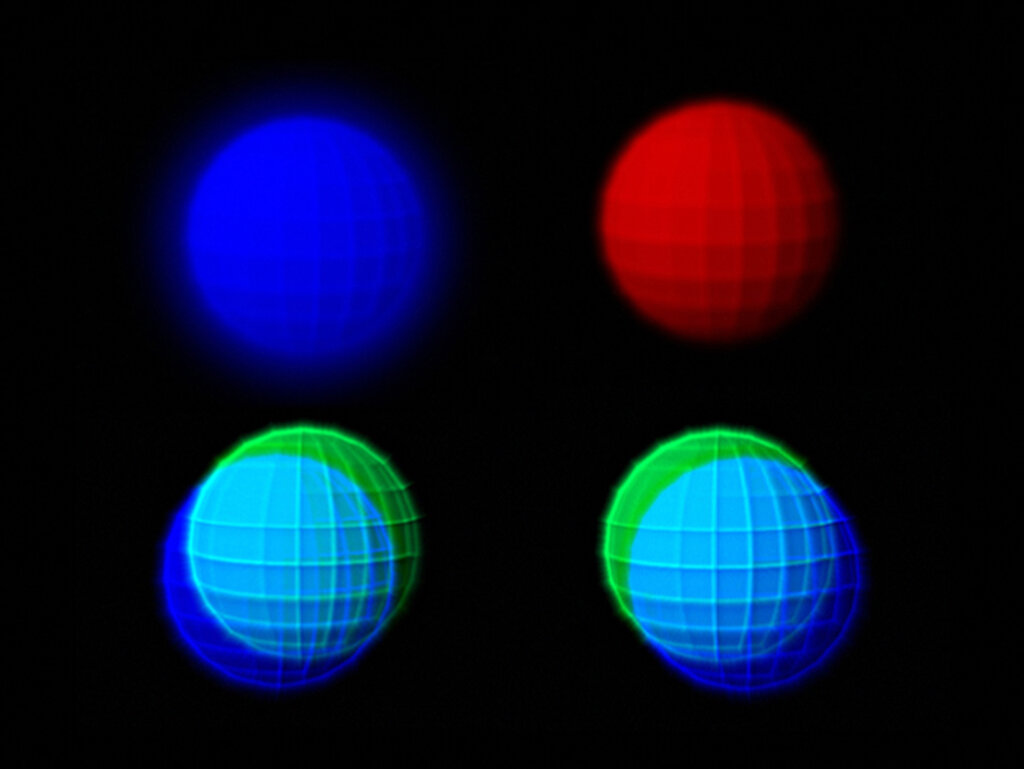
Entanglement works similarly but with a quantum twist. Two entangled qubits might be set up so that if one is measured as a 0, the other will always be a 1, and vice versa. This correlation is instant, seemingly faster than the speed of light. However, it can't be used to send information faster than light, because you still need to communicate classically (say, with a phone call) to compare your measurement results.
Once entangled, two particles behave as a single system. Measuring a property of one particle instantly determines the corresponding property of the other, regardless of the distance separating them.
No Perfect Copies
In the classical world, information is easy to copy. You can photocopy a document or duplicate a file on a computer, creating perfect replicas. In the quantum world, this is impossible.
The no-cloning theorem is a fundamental principle stating that you cannot create an identical copy of an unknown quantum state. It's not a limitation of our technology; it's a basic law of physics.
Why can't we clone a qubit? Because to learn about its state, we have to measure it. And as we saw with superposition, the act of measuring a quantum state fundamentally changes it. You can't get the information needed to make a copy without destroying the original superposition.
Think of it like trying to capture the exact state of a delicate soap bubble by grabbing it. The moment you touch it, you destroy what you were trying to observe. This inability to copy unknown quantum states is not a bug, but a feature of the universe that has profound implications.
These three concepts—superposition, entanglement, and the no-cloning theorem—are the bedrock of quantum information. They defy our everyday intuition but open the door to powerful new ways of thinking about computation and information itself.