Quantum Computing's Impact on Payments
Quantum Computing Basics
Beyond Bits and Bytes
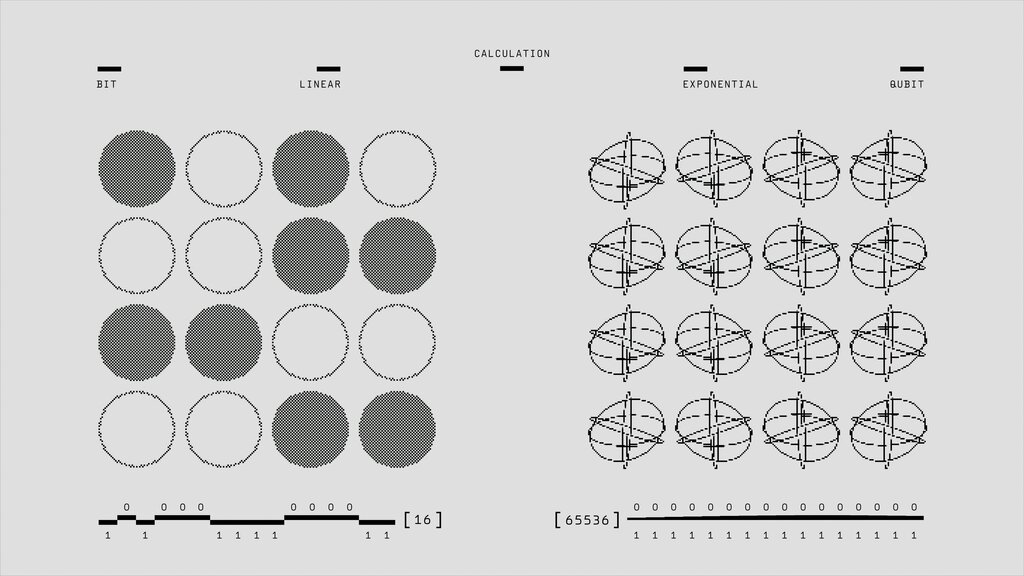
Classical computers, from your smartphone to the most powerful supercomputers, think in a very straightforward way. Everything is broken down into bits, which can be either a 0 or a 1. There are no other options. This binary system is incredibly powerful, but it has its limits.
Quantum computers introduce a new fundamental unit of information: the qubit. While a bit must be either 0 or 1, a qubit can be 0, 1, or a combination of both at the same time. This seemingly small difference opens up a completely new realm of computational possibilities.
qubit
noun
The basic unit of quantum information. Unlike a classical bit, a qubit can exist in a superposition of both the 0 and 1 states simultaneously.
Think of a classical bit as a light switch: it's either on (1) or off (0). A qubit, on the other hand, is more like a dimmer switch. It can be fully on, fully off, or somewhere in between. This “in-between” state is where the magic happens.
Superposition: The "Both" State
The ability of a qubit to be in a combination of states is called superposition. Imagine spinning a coin. While it's in the air, it's neither heads nor tails—it's a blur of both possibilities. Only when it lands (or when we measure it) does it settle into a single, definite state. A qubit in superposition is like that spinning coin.
Mathematically, we can describe the state of a qubit, represented as |\[\psi\]\rangle (pronounced "ket psi"), as a linear combination of its two basis states, and .
Here, and are complex numbers called probability amplitudes. When we measure the qubit, the probability of it collapsing to is |\[\alpha\]|^2, and the probability of it collapsing to is |\[\beta\]|^2. The sum of these probabilities must equal 1, so |\[\alpha\]|^2 + |\[\beta\]|^2 = 1.
Before measurement, the qubit truly exists in a blend of both states. This allows quantum computers to explore a vast number of possibilities simultaneously. A system with just 300 qubits can represent more states than there are atoms in the observable universe.
Entanglement: A Spooky Connection
The second key principle of quantum mechanics is entanglement. It's a phenomenon so strange that Einstein famously called it "spooky action at a distance." When two or more qubits become entangled, their fates are linked. The state of one qubit is instantly correlated with the state of the other, no matter how far apart they are.
Imagine you have two coins that are magically linked. You give one to a friend who travels to the other side of the world. The moment you flip your coin and see it's heads, you know with absolute certainty that your friend's coin has landed on tails. This is the essence of entanglement.
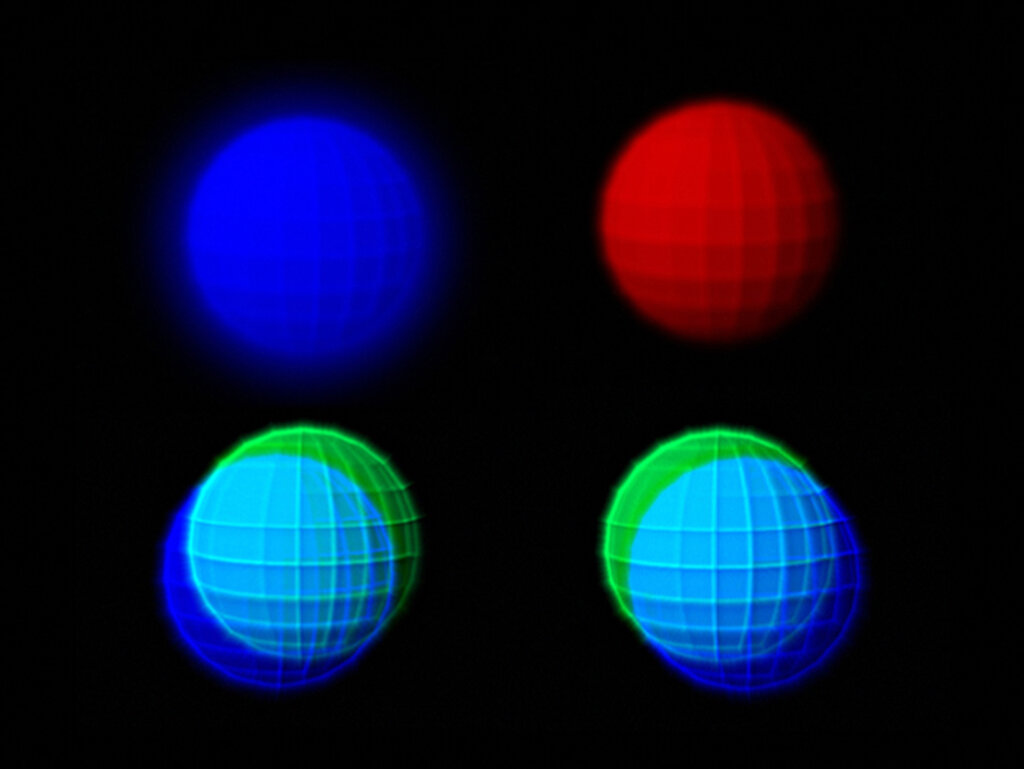
Entangled qubits exist in a single, shared quantum state. Measuring one qubit instantly influences the outcome of measuring the other. For instance, a common entangled state for two qubits is the Bell state:
This equation says the two-qubit system is in a superposition of both qubits being 0 and both qubits being 1. If you measure the first qubit and find it is 0, the entire system collapses, and you are guaranteed to find the second qubit is also 0. The same goes for 1. Entanglement creates correlations that are much stronger than anything possible in the classical world, and it's a crucial resource for powerful quantum algorithms.
Gates and Circuits
Just as classical computers use logic gates like AND, OR, and NOT to manipulate bits, quantum computers use quantum gates to manipulate qubits. These gates are the building blocks of quantum circuits, which in turn form quantum algorithms.
Quantum gates are represented by matrices and perform operations that rotate the qubit's state vector on the Bloch sphere. For example, a common single-qubit gate is the Pauli-X gate, which is the quantum equivalent of a classical NOT gate. It flips the state of a qubit from to and vice-versa.
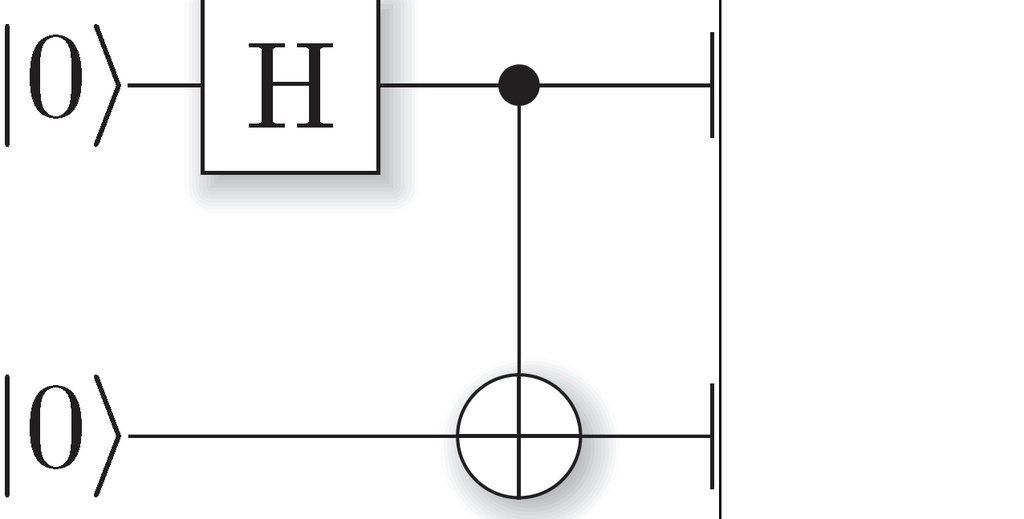
Another fundamental gate is the Hadamard gate (H). This gate is essential because it creates superpositions. Applying an H gate to a qubit in the state or puts it into an equal superposition of both states.
There are also multi-qubit gates, like the Controlled-NOT (CNOT) gate. It acts on two qubits: a control qubit and a target qubit. If the control qubit is , it flips the target qubit (just like a NOT gate). If the control qubit is , it does nothing to the target. The CNOT gate is critical for creating entanglement between qubits.
By arranging these gates in sequence, we form a quantum circuit. This circuit takes an initial state of qubits, applies a series of operations, and produces a final state that we can measure to get a result.
These core concepts—qubits, superposition, entanglement, and quantum gates—are the foundation upon which the entire field of quantum computing is built. They enable a new kind of computation that promises to solve problems far beyond the reach of today's most advanced classical machines.