Quantum Computing Unpacked
Introduction to Quantum Computing
Beyond Bits and Bytes
Classical computers, from your smartphone to the most powerful supercomputers, are built on a simple foundation: the bit. A bit is the smallest unit of data and can exist in one of two states, a 0 or a 1. Think of it like a light switch. It can be either off (0) or on (1). There's no in-between. All the complex tasks your computer performs boil down to manipulating billions of these simple on-or-off switches.
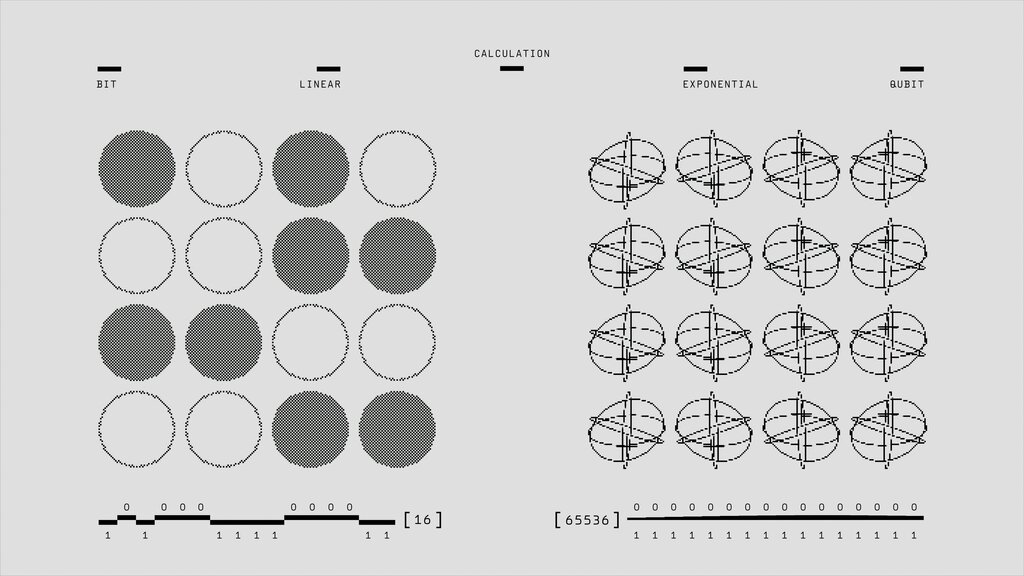
Quantum computers operate on a completely different principle. They use a new kind of bit called a quantum bit, or qubit for short. While a classical bit is like a light switch, a qubit is more like a dimmer switch that can be set to any level between off and on, including both at the same time.
qubit
noun
The basic unit of quantum information, analogous to the classical bit. It can represent a 0, a 1, or a quantum superposition of both states.
The Power of Superposition
The magic of the qubit lies in a quantum phenomenon called superposition. This principle allows a qubit to be in a combination of both 0 and 1 simultaneously. Imagine spinning a coin. While it's in the air, it's not definitively heads or tails—it's a blur of both possibilities. Only when it lands (or when we measure it) does it settle into a single, definite state.
A qubit exists in a mixture of states until it is measured. Upon measurement, it collapses to either a 0 or a 1.
This ability to exist in multiple states at once is what gives quantum computers their power. A single qubit can hold more information than a classical bit. Two qubits can represent four states at once (00, 01, 10, and 11), and the capacity grows exponentially with each added qubit. This opens up the possibility of exploring a vast number of potential solutions to a problem simultaneously.
Mathematically, we can describe the state of a qubit, represented as |\[\psi\]\rangle (pronounced "ket psi"), as a combination of the basis states and :
Here, and are complex numbers called probability amplitudes. When we measure the qubit, the probability of it collapsing to is , and the probability of it collapsing to is . The sum of these probabilities must equal 1, so .
Building a Quantum Computer
Harnessing the power of qubits is an immense engineering challenge. Quantum states are incredibly fragile. Any disturbance from the outside world, like a tiny change in temperature or a stray magnetic field, can cause a qubit to lose its superposition—a process called decoherence. To protect them, quantum computers must be extremely well-isolated from their environment.
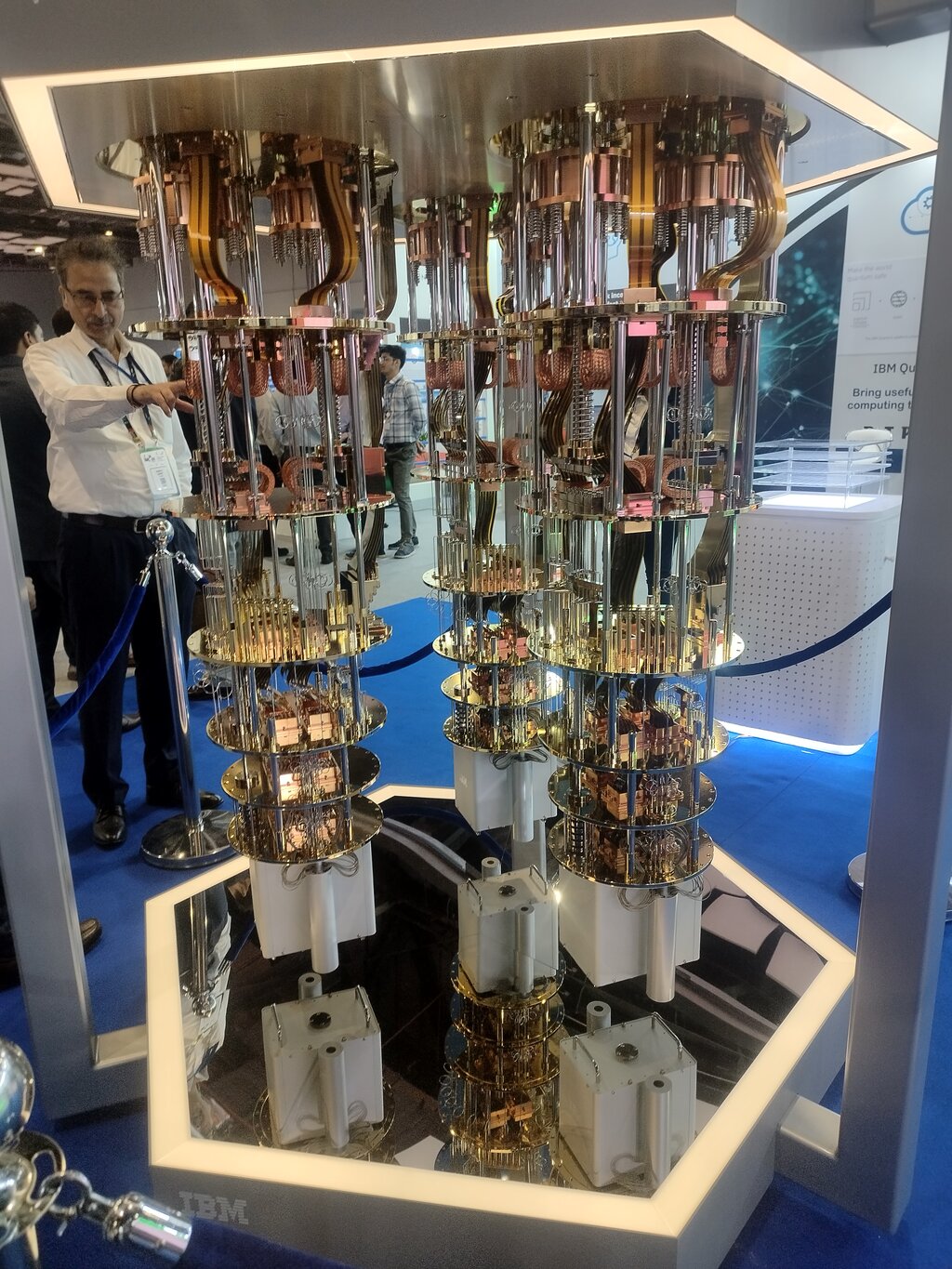
There are several physical systems used to create qubits. Some of the most common approaches include using superconducting circuits, which are tiny loops of metal cooled to near absolute zero, or trapping individual ions (charged atoms) in electromagnetic fields. Each approach has its own strengths and weaknesses, and researchers are actively exploring which will be best for building large-scale, fault-tolerant quantum computers.

While classical computers store and process information as a series of definite 0s and 1s, quantum computers work with probabilities and superpositions. This fundamental difference allows them to tackle certain types of problems that are practically impossible for even the most powerful classical machines.