Quantum Computing Fundamentals
Quantum Mechanics Basics
The Quantum World
At the tiny scale of atoms and particles, the rules of the world we know seem to break down. This is the realm of quantum mechanics, and it's governed by principles that can feel strange and counterintuitive. Understanding a few of these core ideas is the first step to grasping how a quantum computer works.
The Uncertainty Principle
Imagine trying to find the exact location of a fast-moving billiard ball in a dark room. To see it, you need to shine a light on it. But the light particles, called photons, will hit the ball and knock it off course. The very act of observing its position changes its momentum. You can know where it is, or where it's going, but not both with perfect accuracy at the same time.
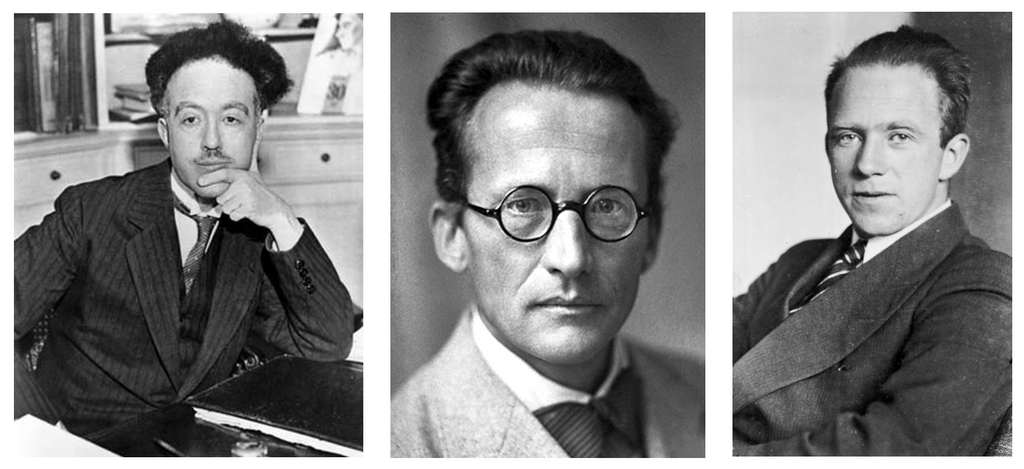
This is the essence of the Heisenberg Uncertainty Principle. It states that there is a fundamental limit to how precisely we can know certain pairs of properties of a particle simultaneously. The more you pin down a particle's position, the less you know about its momentum, and vice versa.
This isn't a limitation of our instruments; it's a fundamental property of nature. At the quantum level, particles don't have definite properties until they are measured. The universe itself maintains a bit of fuzziness.
Superposition
In our everyday world, things are in one state at a time. A light switch is either on or off. A coin flip results in either heads or tails. Quantum mechanics allows for a much stranger possibility: existing in multiple states at once. This is called superposition.
Think of a spinning coin. While it's in the air, it's not definitively heads or tails. It's in a combination of both states. Only when it lands and you measure it does it settle into a single, definite outcome. A quantum particle, like an electron, can be in a superposition of different states, such as having multiple energy levels or locations at the same time.
This ability to hold multiple values at once is what gives quantum computers their power. While a classical computer bit is restricted to being either a 0 or a 1, a quantum bit, or qubit, can be a 0, a 1, or a superposition of both.
Entanglement
Quantum mechanics gets even stranger with a phenomenon called entanglement, which Albert Einstein famously called "spooky action at a distance." When two or more quantum particles become entangled, their fates are linked in a profound way. No matter how far apart they are, the state of one particle instantly influences the state of the other.
Imagine you have a pair of gloves, one left and one right, and you place them into two separate, identical boxes. You send one box to the other side of the world. You don't know which box contains which glove, but the moment you open your box and see a left glove, you instantly know the other box contains the right one.
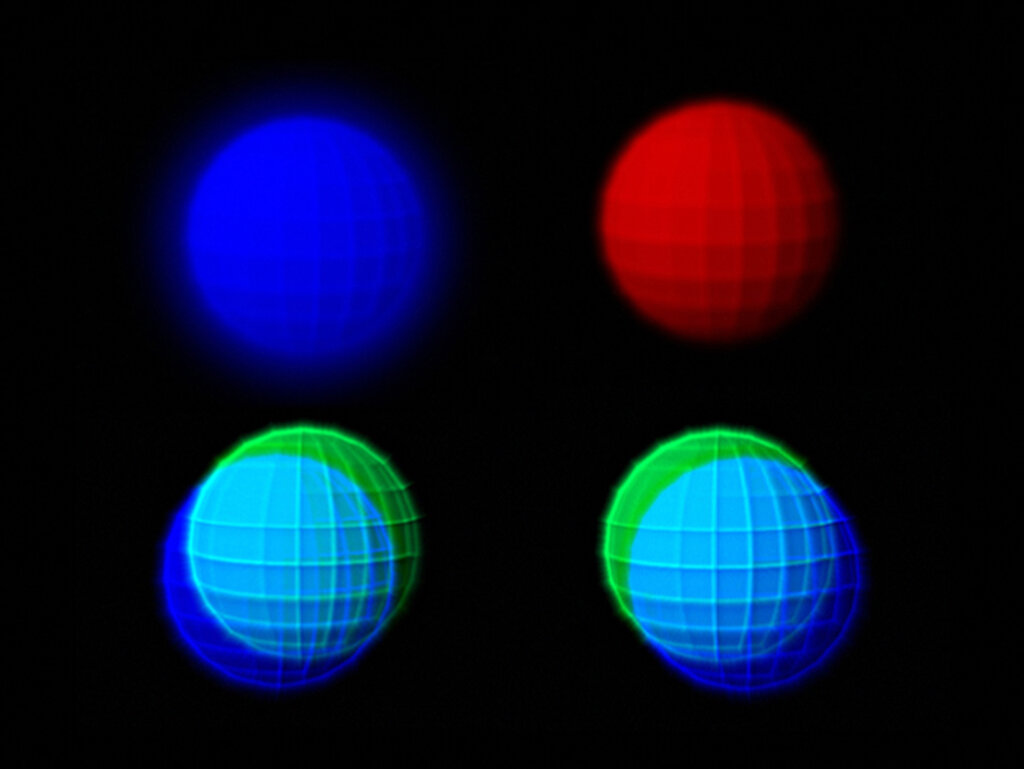
Entangled particles behave similarly. If you have a pair of entangled particles and measure a property of one, like its spin, you will instantly know the corresponding property of its partner, even if it's light-years away. This connection is not about sending information faster than light; rather, it's as if the particles aren't truly separate entities. They are part of a single, interconnected quantum state.
Superposition and entanglement are not just philosophical curiosities. They are the resources that quantum computers harness to perform calculations in ways that classical computers cannot.
What is the core idea of the Heisenberg Uncertainty Principle?
A classical computer bit can be a 0 or a 1. A quantum bit, or qubit, can be a 0, a 1, or both at the same time. This 'both at the same time' state is an example of what?