Quantum Computing Fundamentals
Introduction to Quantum Computing
A New Kind of Computer
Classical computers, from your smartphone to the most powerful supercomputers, work with bits. A bit is a simple switch that can be either on or off, represented by a 1 or a 0. All the amazing things classical computers do come from manipulating billions of these simple switches very, very quickly.
Quantum computing is a completely different approach. It’s built on the principles of quantum mechanics, the strange and counterintuitive rules that govern the universe at the scale of atoms and particles. Instead of bits, quantum computers use qubits.
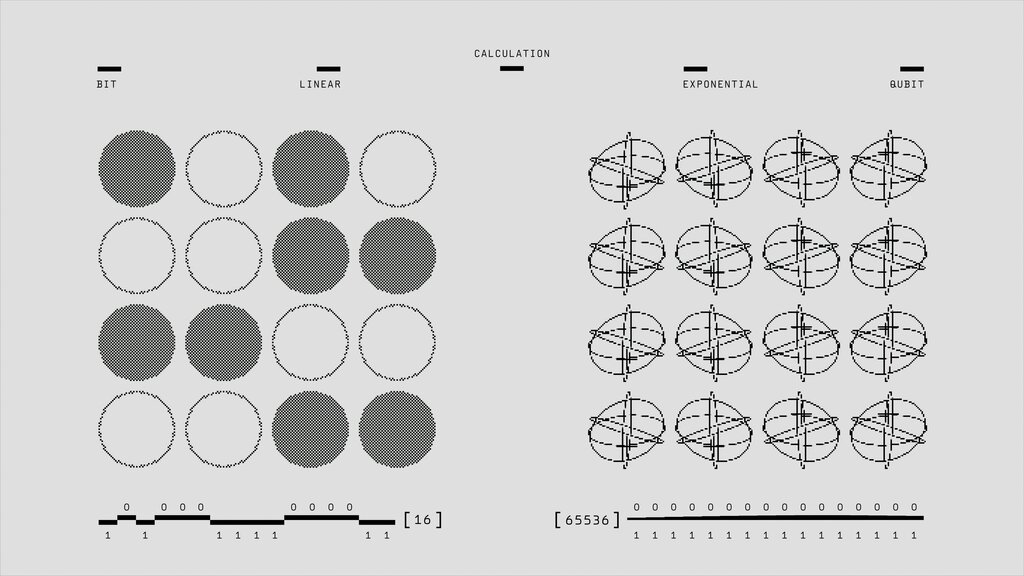
A qubit can be a 0, a 1, or both at the same time. This “both at once” property is called superposition, and it’s one of the keys to a quantum computer’s power. While a classical computer checks possibilities one by one, a quantum computer can explore many possibilities simultaneously.
The Quantum Rules
Two main principles of quantum mechanics make quantum computing possible: superposition and entanglement.
Superposition: Think of a spinning coin. While it’s in the air, it’s not heads or tails—it’s a blend of both possibilities. Only when it lands (when we measure it) does it settle into one state. A qubit in superposition is like that spinning coin, holding the potential for both 0 and 1.
qubit
noun
The basic unit of quantum information. It can exist in a superposition of two states, typically represented as |0⟩ and |1⟩.
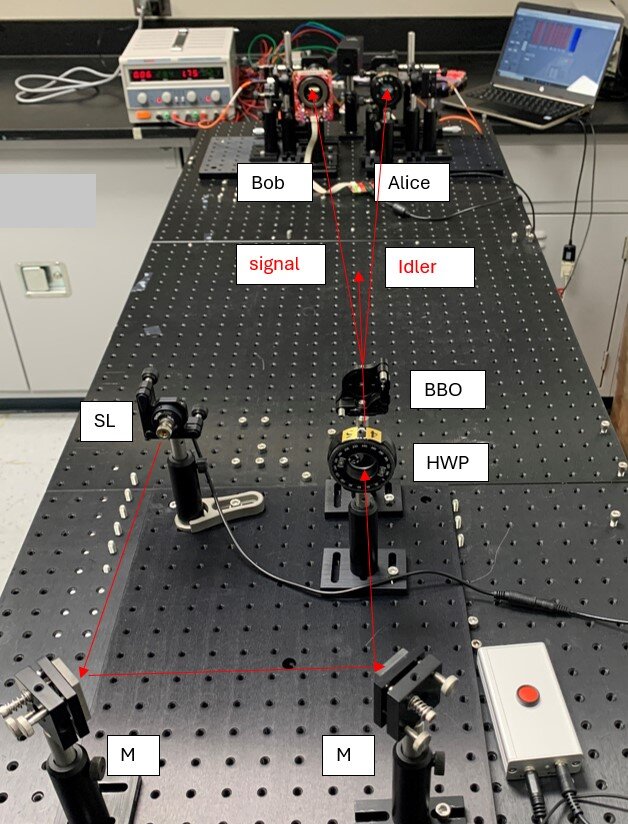
Entanglement is even stranger. You can link two qubits in a way that their fates are intertwined, no matter how far apart they are. If you measure one entangled qubit and find it’s a 0, you instantly know the other one is a 1. Albert Einstein famously called this “spooky action at a distance.”
This connection allows quantum computers to perform complex calculations where the state of one qubit is directly related to the state of another, creating powerful computational shortcuts that aren't possible classically.
Potential and Problems
Quantum computers won't replace your laptop for browsing the web or sending emails. Their power lies in solving specific, incredibly complex problems that are impossible for even the best supercomputers.
Potential applications include:
- Drug Discovery: Simulating molecules to design new medicines.
- Materials Science: Creating new materials with desired properties.
- Financial Modeling: Optimizing investment strategies and assessing risk.
- Cryptography: Breaking current encryption standards and creating new, secure ones.
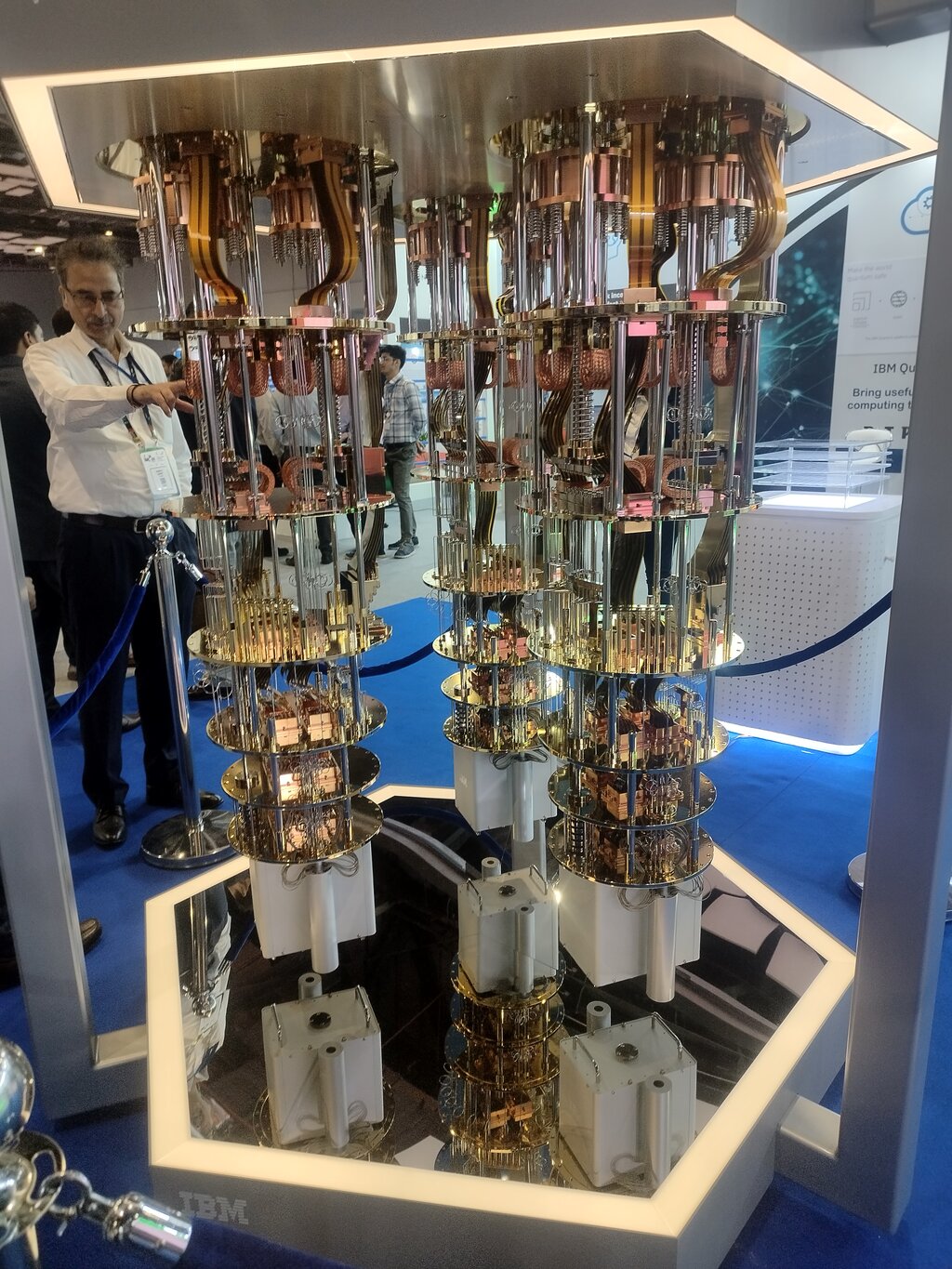
However, building and operating quantum computers is extremely difficult. Qubits are incredibly fragile. Any little disturbance from the outside world, like a tiny change in temperature or a stray magnetic field, can destroy their quantum state in a process called decoherence. This makes them prone to errors.
Engineers must build highly controlled environments, often cooled to temperatures colder than deep space, just to keep the qubits stable long enough to perform a calculation.
Let's check your understanding of these foundational concepts.
What is the fundamental unit of information in a quantum computer called?
The principle that allows a qubit to be a 0, a 1, or both at the same time is known as:
The field is still in its early days, much like classical computing was in the 1950s. While there are many hurdles to overcome, the potential of quantum computing to revolutionize science, medicine, and technology is immense.