Quantum Computing Fundamentals
Introduction to Quantum Computing
Beyond Bits and Bytes
Classical computers, from your smartphone to the most powerful supercomputers, are built on a simple foundation: bits. A bit is like a light switch. It can be either on or off, representing a 1 or a 0. All the amazing things classical computers do boil down to manipulating billions of these switches.
Quantum computing operates on a completely different set of rules, borrowed from the strange world of quantum mechanics. Instead of bits, it uses something far more powerful.
qubit
noun
The basic unit of quantum information. It is the quantum analogue of the classical bit.
A qubit, or quantum bit, can be a 0, a 1, or a combination of both at the same time. This ability to exist in multiple states at once is a core concept called superposition.
Superposition
Imagine a spinning coin. While it's in the air, it’s not definitively heads or tails. It's in a blend of both possibilities. Only when it lands and you measure it does it settle into one state. A qubit in superposition is like that spinning coin. It holds the potential for being a 0 and a 1 simultaneously.
This isn't just a clever trick; it dramatically expands the amount of information a computer can process. While a classical computer with 4 bits can only represent one of 16 possible combinations (from 0000 to 1111) at any given moment, a quantum computer with 4 qubits can represent all 16 combinations at the same time.
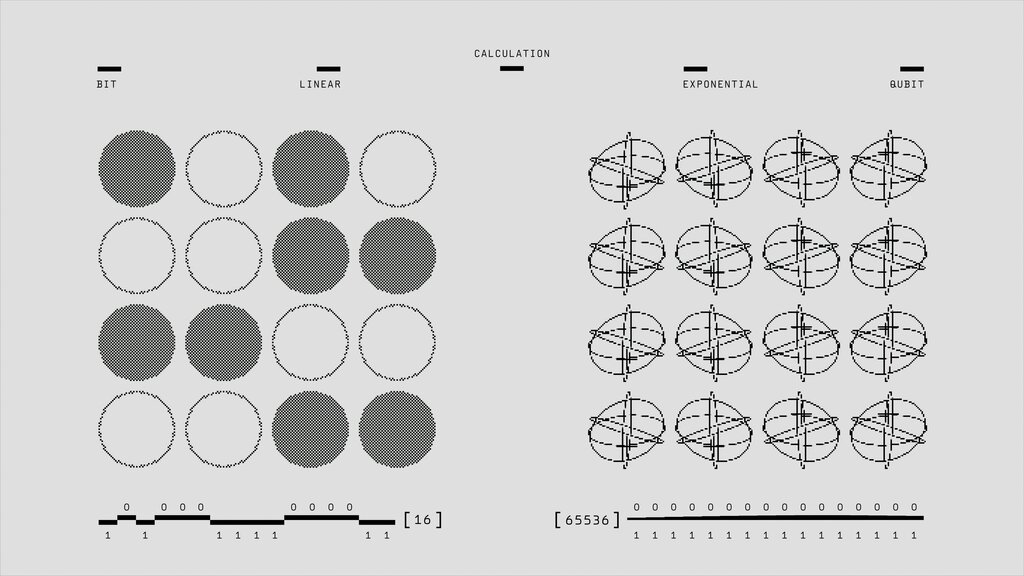
This exponential scaling is where quantum computing gets its power. The state of a qubit is described as a combination of two fundamental states, called and (pronounced 'ket 0' and 'ket 1'). A qubit in superposition is a weighted combination of both.
In this equation, and are complex numbers called probability amplitudes. The probability of the qubit collapsing to when measured is , and the probability of it collapsing to is . The sum of these probabilities must always equal 1, because the qubit has to be in one of the two states upon measurement.
Entanglement
The other mind-bending principle is entanglement. This is a special connection that can link two or more qubits. When qubits are entangled, their fates are intertwined, no matter how far apart they are. Einstein famously called it "spooky action at a distance."
If you measure the state of one entangled qubit, you instantly know the state of the other, even if it's on the other side of the galaxy.
Think of two magic coins. You know that if one lands on heads, the other will always land on tails, and vice versa. Before you look, you don't know the outcome for either. But as soon as you check one, you know the state of both. Entangled qubits behave in a similar, but more complex, way.
This connection allows quantum computers to perform calculations where the results of operations on one qubit can directly depend on the state of another. This creates powerful correlations that are impossible in classical computing and opens up new avenues for solving problems.
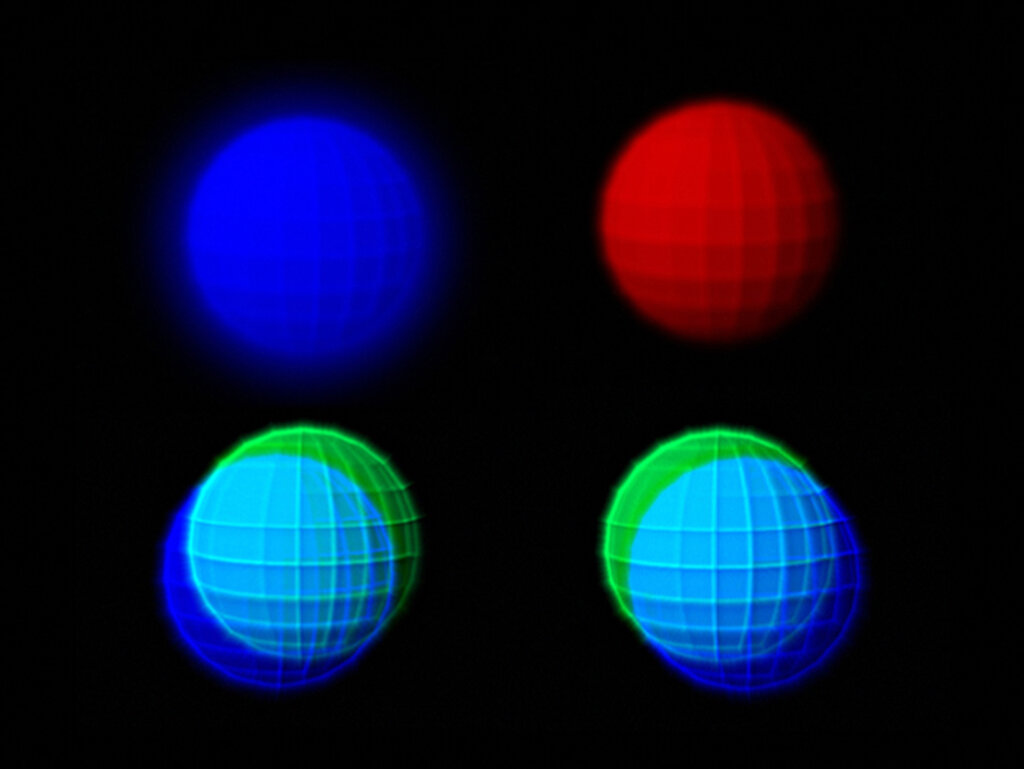
Superposition and entanglement are what make quantum computers fundamentally different. They aren't just faster versions of the computers we have today; they are a whole new type of machine, capable of tackling problems that are currently unsolvable.
Let's check your understanding of these foundational ideas.
What is the fundamental unit of information in a quantum computer?
The principle of superposition means a qubit can be a 0, a 1, or both at the same time.
These core principles—qubits, superposition, and entanglement—form the bedrock of quantum computing. By leveraging these quantum phenomena, scientists and engineers are building machines with the potential to revolutionize fields like medicine, materials science, and artificial intelligence.