Quantum Computing Fundamentals
Introduction to Quantum Computing
Beyond Zeros and Ones
Classical computers, from your smartphone to the most powerful supercomputers, think in a very straightforward way. They use bits, which are like tiny light switches. A bit can be either off (represented by a 0) or on (represented by a 1). Every app, website, and photo is built from billions of these simple choices.
Quantum computers are fundamentally different. They use "qubits" instead of bits. A qubit can be a 0 or a 1, just like a classical bit. But it can also be in a state of superposition, which means it can be both 0 and 1 at the same time. Think of it like a spinning coin. While it's in the air, it's neither heads nor tails. It's a blend of both possibilities. Only when it lands (when we measure it) does it pick one state.
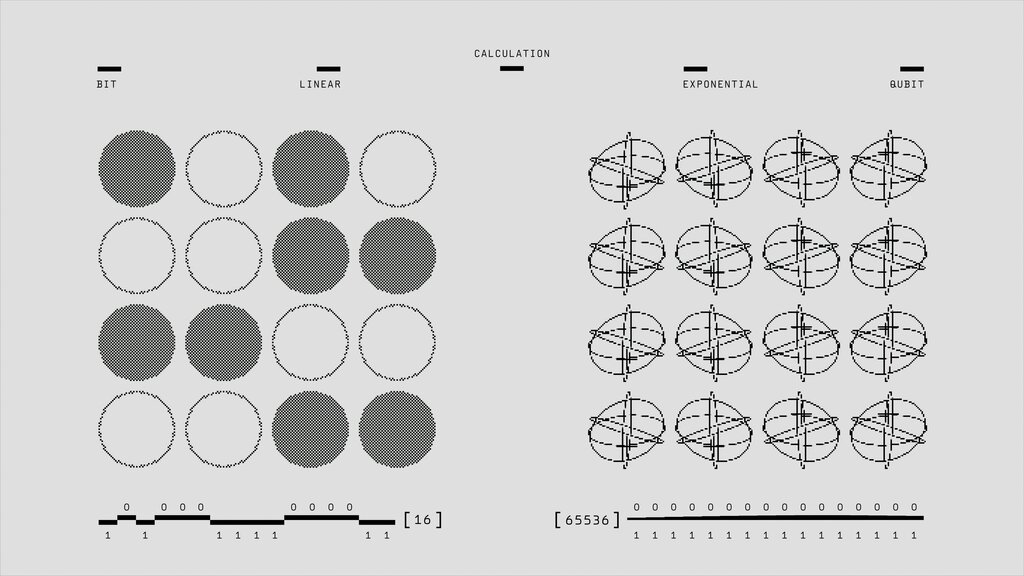
This ability to hold multiple values simultaneously is what gives quantum computers their power. Where a classical computer with 8 bits can only represent one of 256 possible numbers at any given moment, a quantum computer with 8 qubits can represent all 256 numbers at once. This opens up a completely new way of processing information.
Harnessing Quantum Weirdness
Quantum computing works by taking advantage of the strange rules of quantum mechanics, the physics that governs the world of atoms and subatomic particles. Superposition is one key principle, but another is entanglement.
Entanglement is a special connection between two or more qubits. When qubits are entangled, their fates are linked. Measuring the state of one qubit instantly influences the state of the other, no matter how far apart they are. Einstein famously called this "spooky action at a distance."
Imagine you have two entangled coins. If you flip them and send one to the other side of the world, the moment you see that your coin landed on heads, you instantly know the other one landed on tails. Entangled qubits behave in a similarly connected way.
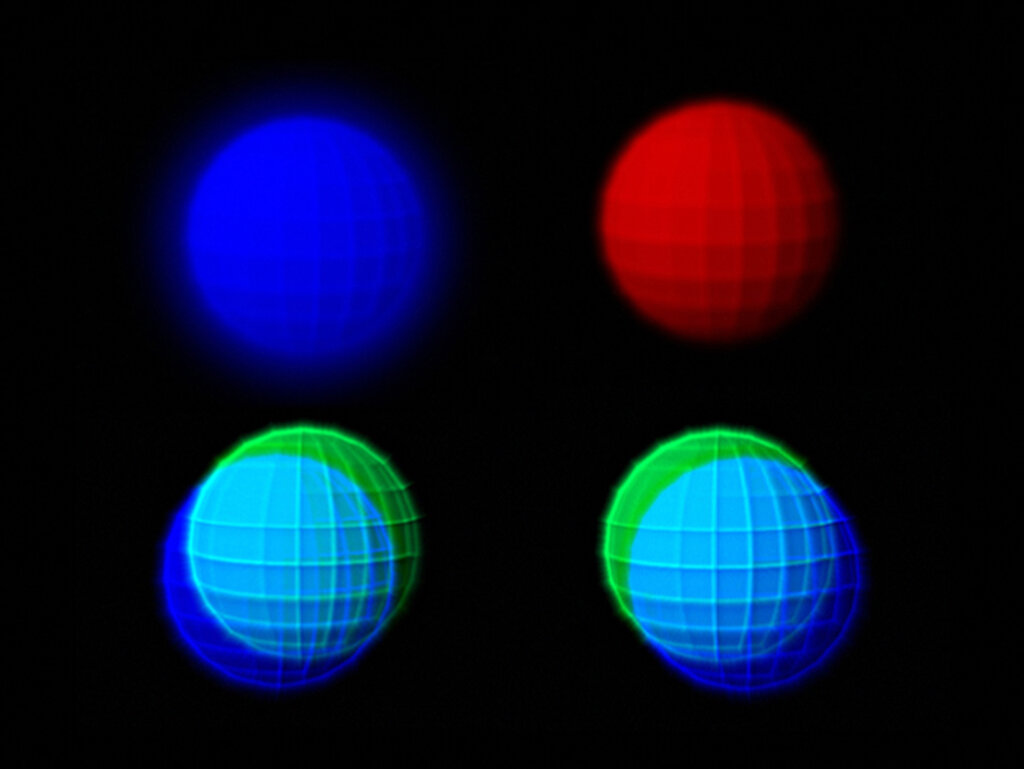
By combining superposition and entanglement, quantum computers can explore a vast landscape of potential solutions to a problem simultaneously. This doesn't make them faster for every task, like sending an email or browsing the web. But for certain types of complex problems, this approach is a game-changer.
Quantum computers approach solving problems in a fundamentally new way.
What's It Good For?
Quantum computers aren't meant to replace your laptop. Instead, they are specialized machines designed to tackle problems that are practically impossible for even the fastest classical supercomputers to solve.
Some of the most promising applications include:
- Drug Discovery and Materials Science: Simulating molecules and materials at the quantum level is incredibly difficult for classical computers. Quantum computers could design new medicines or create novel materials with desired properties, like more efficient solar cells or better batteries.
- Financial Modeling: They could optimize investment strategies and better assess risk by analyzing complex financial systems with countless variables.
- Cryptography: Many modern encryption methods rely on the difficulty of factoring large numbers. A powerful quantum computer could potentially break these codes, leading to the development of new, quantum-resistant encryption.
- Artificial Intelligence: Quantum computing could enhance machine learning by helping algorithms find patterns in massive, complex datasets more efficiently.
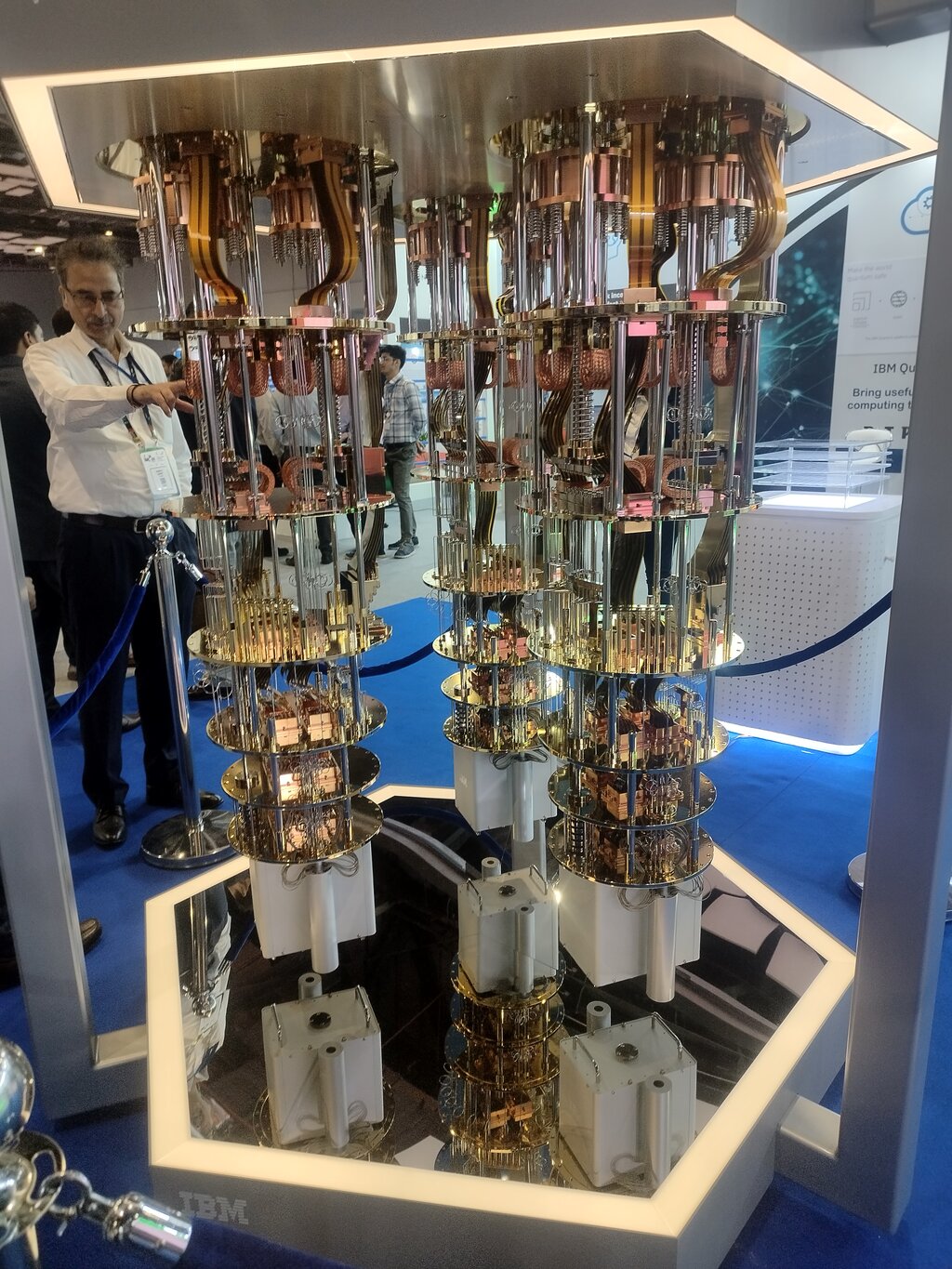
The field is still in its early days. Building and controlling stable qubits is a major engineering challenge. But the potential is enormous, promising to revolutionize fields from medicine to finance and unlock solutions to some of humanity's biggest challenges.
What is the fundamental unit of information used by classical computers?
Which quantum principle allows a qubit to represent both a 0 and a 1 at the same time?