Quantum Computing for Transport Optimization
Introduction to Quantum Computing
Beyond Bits and Bytes
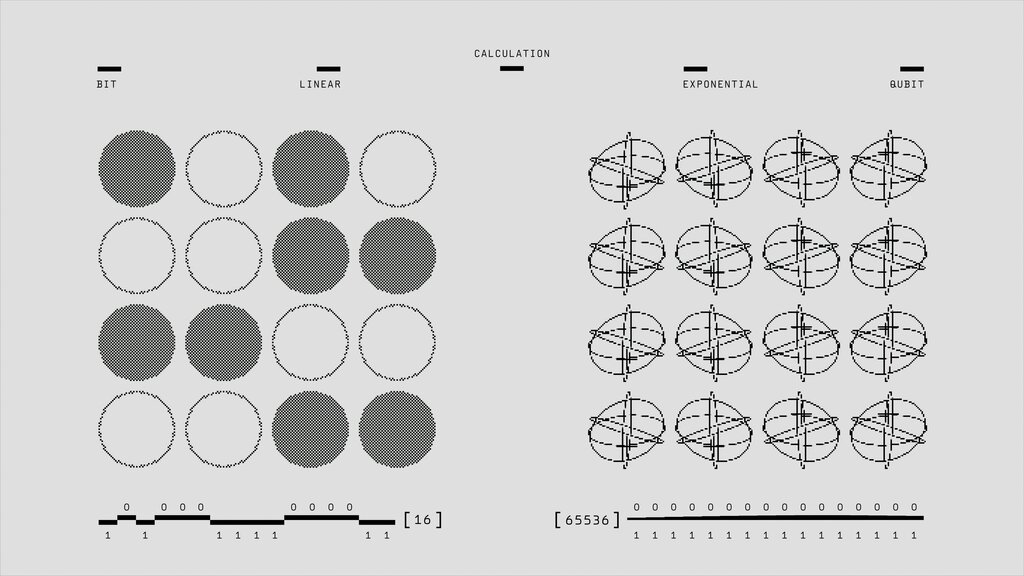
Classical computers think in a very straightforward way. Everything is a 'bit', which can be either a 0 or a 1. Think of it like a light switch: it's either on or off. There's no in-between. This simple binary system is the foundation of all the software, websites, and apps we use every day.
Quantum computers operate on a completely different principle. Instead of bits, they use 'qubits'. A qubit can be a 0, a 1, or a combination of both at the same time. This 'in-between' state is called superposition, and it's one of the key properties that makes quantum computing so powerful.
qubit
noun
The basic unit of quantum information. It is the quantum analogue of the classical binary bit.
Imagine a sphere. A classical bit can only be at the North Pole (representing 1) or the South Pole (representing 0). A qubit, however, can exist at any point on the surface of that sphere. This gives it a vastly larger range of possible states.
The Power of Superposition
Superposition is like a spinning coin. While it's in the air, it's not heads or tails—it's a blend of both possibilities. Only when it lands (or in a qubit's case, when it's measured) does it 'choose' a definite state of 0 or 1.
This ability to exist in multiple states at once is a game-changer. A classical computer with 3 bits can only represent one of 8 possible combinations (000, 001, etc.) at any given time. A quantum computer with 3 qubits can represent all 8 combinations simultaneously. This exponential scaling is what gives quantum computers their incredible potential.
Mathematically, we can describe the state of a qubit, represented by , as a combination of the basis states and .
Here, and are complex numbers called probability amplitudes. The square of their magnitudes, and , tells us the probability of the qubit collapsing to 0 or 1 upon measurement. The sum of these probabilities must always equal 1, because the qubit has to be somewhere.
Entanglement's Spooky Connection
If superposition is strange, entanglement is even stranger. It's a special connection that can exist between two or more qubits. When qubits are entangled, their fates are linked, no matter how far apart they are.
Imagine you have a pair of gloves, and you put each one in a separate box. You send one box to the other side of the world. Before you open your box, you don't know if you have the left or the right glove. But the moment you open it and see a left glove, you instantly know the other box contains the right glove. Entangled qubits behave in a similar way. Measuring the state of one qubit instantly influences the state of the other.
Albert Einstein famously called this phenomenon "spooky action at a distance."
This interconnectedness doesn't allow for faster-than-light communication, but it's a crucial resource for quantum algorithms. It allows for complex correlations and information processing that are impossible in classical systems.
Gates and Hardware
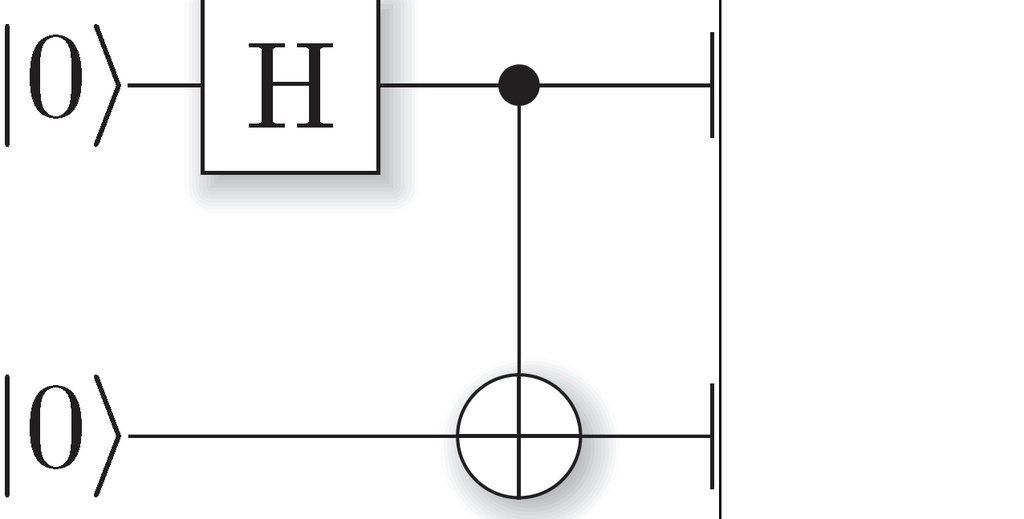
Just as classical computers use logic gates (like AND, OR, and NOT) to manipulate bits, quantum computers use quantum gates to manipulate qubits. These gates are the building blocks of quantum algorithms. For example, a Hadamard gate is used to put a qubit into a superposition state. A Controlled-NOT (CNOT) gate uses one qubit to flip the state of another, which is a key operation for creating entanglement.
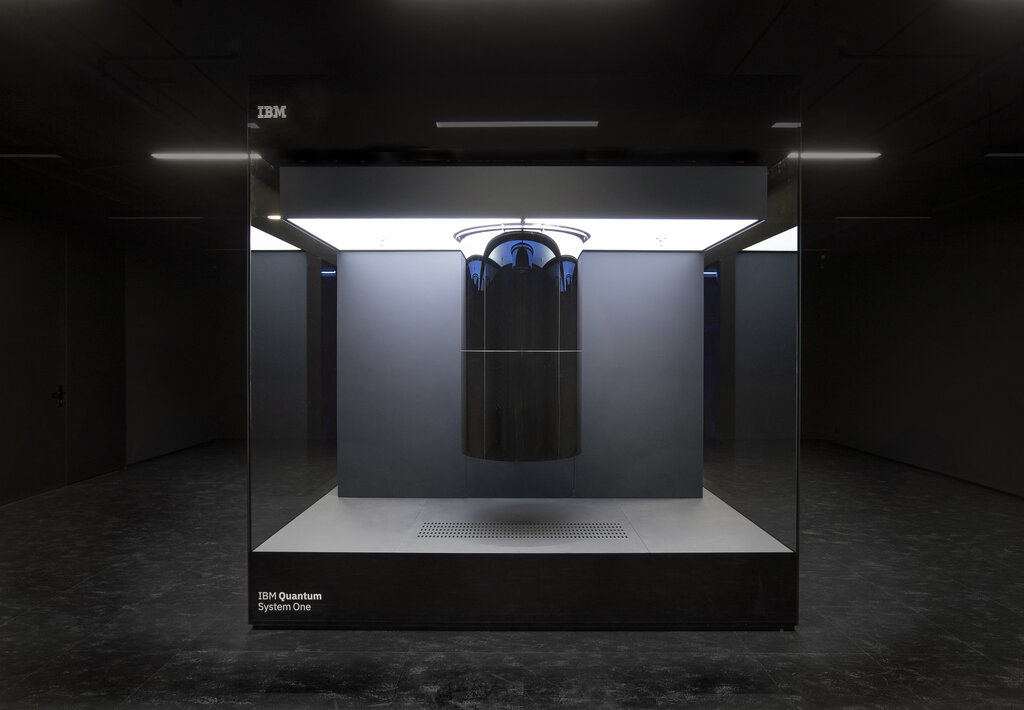
Building the hardware for these machines is an immense challenge. Qubits are incredibly fragile. Any tiny disturbance from the outside world—a stray vibration or a change in temperature—can destroy their delicate quantum state in a process called decoherence.
To protect them, quantum computers are often housed in large, elaborate refrigerators that cool the quantum processors to temperatures colder than deep space, just fractions of a degree above absolute zero. Researchers are exploring many ways to build qubits, from using superconducting circuits to trapping individual ions in electromagnetic fields.
Let's review the core concepts we've covered.
Ready to test your knowledge?
What is the fundamental difference between a classical bit and a quantum qubit?
The quantum phenomenon where the states of two or more qubits are linked, regardless of the distance separating them, is called ________.
While we're still in the early days of quantum computing, these fundamental principles are paving the way for a new era of computation with the potential to solve some of the world's most complex problems.