Quantum Computing Explained
Introduction to Quantum Computing
A Different Kind of Computer
For decades, we’ve built computers that think in a very straightforward way. They use bits, which are tiny switches that can be either on or off, representing a 1 or a 0. Every task, from sending an email to playing a video, is broken down into a massive sequence of these simple choices. This approach has been incredibly successful, but some problems are just too complex for it to handle.
Enter the quantum computer. It’s not just a faster version of the computer on your desk. It’s a completely new kind of machine that operates on the bizarre principles of quantum mechanics, the rules that govern the universe at the subatomic level.
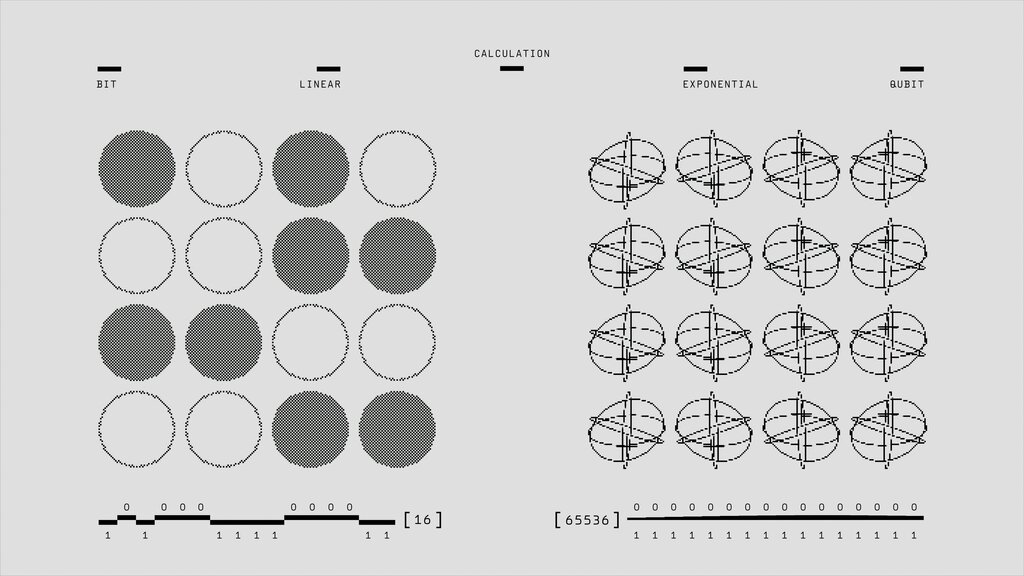
Instead of bits, quantum computers use “qubits.” While a bit must be either a 0 or a 1, a qubit can be a 0, a 1, or a blend of both at the same time. This property, called superposition, allows a quantum computer to explore a vast number of possibilities simultaneously. It's like being able to walk down every possible path in a maze at once, instead of trying them one by one.
Think of it this way: a classical computer is like a light switch, which is either on or off. A quantum computer is like a dimmer switch, which can be on, off, or any shade in between.
Why We Need Them
Quantum computers won't be replacing your laptop for everyday tasks. They are specialized tools designed to solve problems that are currently impossible for even the most powerful supercomputers. These are problems where the number of variables is so enormous that a classical computer would take billions of years to find a solution.
The natural world is fundamentally quantum. To truly understand and simulate it, we need computers that speak the same language. This is where quantum computing shines, offering a new lens through which to view complex systems.
| Field | Problem | Potential Impact |
|---|---|---|
| Drug Discovery | Simulating molecules to predict their behavior | Creating new medicines and treatments faster |
| Materials Science | Designing novel materials with specific properties | Developing more efficient batteries or stronger alloys |
| Finance | Optimizing investment strategies with many variables | Building more accurate financial models for risk management |
| Cryptography | Breaking current encryption standards | Creating unhackable communication networks |
For example, designing a new drug involves understanding how a complex molecule will interact with the human body. A classical computer struggles to simulate this accurately because molecules are quantum systems. It’s like trying to describe a symphony using only two notes. A quantum computer, however, can model the molecule in its full quantum detail, potentially leading to medical breakthroughs that are currently out of reach.

The field is still in its early days, much like classical computing was in the 1950s. The machines are large, sensitive, and difficult to build. But the potential is enormous, promising to revolutionize science, medicine, and technology by allowing us to solve problems we once thought were unsolvable.
What is the fundamental unit of information used by a quantum computer?
The ability of a qubit to be a 0, a 1, or a combination of both simultaneously is known as what?