Quantum Computing Explained
Introduction to Quantum Computing
A New Way to Compute
Classical computers, from your smartphone to the most powerful supercomputers, process information using bits. A bit is like a light switch: it can be either on (represented by a 1) or off (represented by a 0). It’s a binary system, and every calculation boils down to manipulating these ones and zeros.
Quantum computers operate on a completely different principle. They use qubits, which are the quantum equivalent of bits. Unlike a simple on/off switch, a qubit can be a 0, a 1, or a blend of both at the same time. This ability to exist in multiple states at once is a core feature of quantum mechanics.
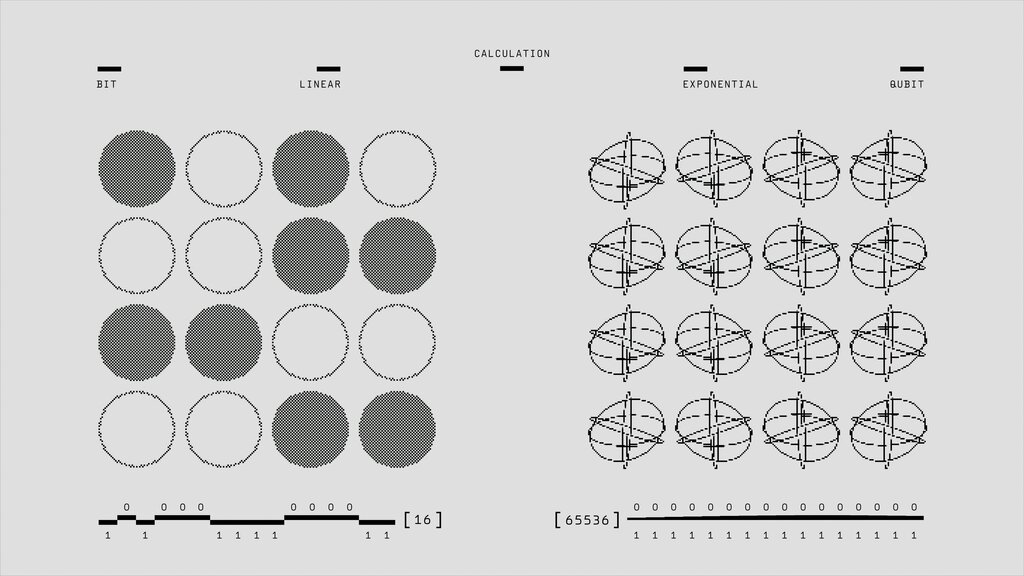
This fundamental difference allows quantum computers to process a vast amount of information simultaneously. While a classical computer checks possibilities one by one, a quantum computer can explore many of them at the same time. This opens the door to solving problems that are currently intractable for even the fastest classical machines.
The Quantum Rules
Two key principles of quantum mechanics give quantum computers their power: superposition and entanglement.
Superposition is the ability of a qubit to be in a combination of the 0 and 1 states. Think of a spinning coin. While it’s in the air, it’s neither heads nor tails—it’s a mix of both possibilities. Only when it lands (or when we measure a qubit) does it settle into a definite state.
The other principle is entanglement. This is a strange and powerful connection between two or more qubits. When qubits are entangled, their fates are linked, no matter how far apart they are. If you measure the state of one qubit, you instantly know the state of the other. Albert Einstein famously called this "spooky action at a distance."
Two concepts in quantum physics that are the building blocks of quantum computing are superposition and entanglement.
Imagine you have a pair of entangled coins. You give one to a friend who travels to the other side of the world. The moment you flip your coin and see it's heads, you know with absolute certainty that your friend's coin, when flipped, will be tails. Entanglement creates correlations between qubits that are much stronger than anything possible in the classical world.
What It's Good For
Quantum computers aren't meant to replace your laptop for browsing the internet or writing emails. They are specialized machines designed to tackle specific, incredibly complex problems. Some of the most promising areas include:
| Application Area | Description |
|---|---|
| Drug Discovery | Simulating molecules and their interactions to design new medicines and materials far faster than today. |
| Optimization | Solving complex logistical problems, like finding the most efficient delivery routes or managing financial portfolios. |
| Cryptography | Breaking many current forms of encryption, but also enabling new, ultra-secure communication methods. |
| Machine Learning | Potentially accelerating the training of AI models and discovering patterns in massive datasets. |
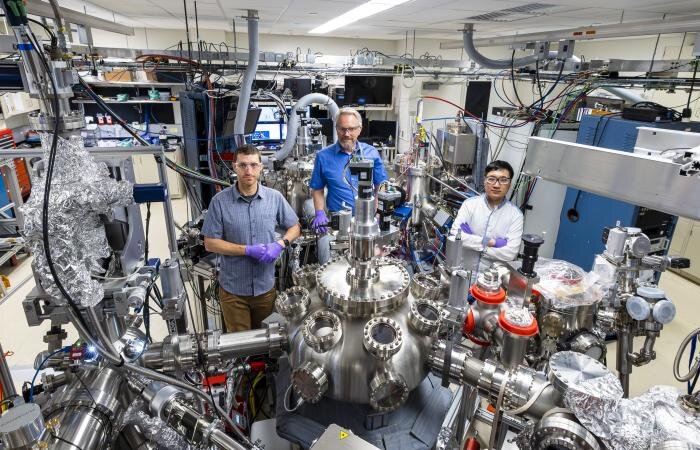
The field is still young, and building stable, large-scale quantum computers is a major engineering challenge. But the potential to solve problems that are currently beyond our reach makes it one of the most exciting frontiers in science and technology.
Time to check your understanding of these core concepts.
What is the fundamental unit of information used by a quantum computer?
The ability of a qubit to be in a state of 0, 1, or a blend of both at the same time is known as what?