Quantum Computing Explained
Introduction to Quantum Computing
A New Kind of Computing
Quantum computing is not just a more powerful version of the computers we use every day. It’s a completely different approach to processing information. While classical computers rely on the definite states of classical physics, quantum computers tap into the strange and wonderful rules of quantum mechanics.
Think of it this way: a classical computer is like a light switch, which can be either on or off. A quantum computer is like a dimmer switch, which can be on, off, or somewhere in between, all at the same time.
This ability to exist in multiple states at once allows quantum computers to tackle certain problems that are practically impossible for even the most powerful supercomputers to solve. To understand how, we need to look at their fundamental building block: the qubit.
Bits vs Qubits
Classical computers store information in bits. A bit is the smallest unit of data and has a single binary value, either 0 or 1. Every photo, website, and video you view is ultimately made up of billions of these 0s and 1s.
Quantum computers use qubits, or quantum bits. A qubit can also be a 0 or a 1. But it can also be in a combination of both states at the same time. This is a core concept in quantum mechanics called superposition.
superposition
noun
A principle of quantum mechanics stating that a quantum system can exist in a combination of multiple states at the same time. It is only when the system is measured that it collapses into one of the definite states.
Imagine a spinning coin. While it's in the air, it’s neither heads nor tails. It's a blur of both possibilities. Only when it lands (when we measure it) does it settle into a definite state. A qubit in superposition is like that spinning coin.
Mathematically, we represent the two basic states of a qubit as (pronounced "ket zero") and ("ket one"). A qubit in superposition can be described as a combination of these two states:
Here, and are probability amplitudes. When we measure the qubit, the probability of it collapsing to is , and the probability of it collapsing to is . The sum of these probabilities must equal 1, so . The possible states of a single qubit can be visualized as points on the surface of a sphere.
This ability to hold more information than a classical bit is powerful. Two classical bits can be in one of four possible combinations (00, 01, 10, 11). But two qubits in superposition can represent all four of those combinations simultaneously. As you add more qubits, this computational power grows exponentially. With 300 qubits, you could represent more states than there are atoms in the observable universe.
Quantum Entanglement
The other mind-bending property that gives quantum computers their power is entanglement. This occurs when two or more qubits become linked in such a way that their fates are intertwined. No matter how far apart they are, the state of one qubit instantly affects the state of the other.
If you measure one entangled qubit and find it in the state, you will instantly know that its partner is in the state (depending on the type of entanglement), and vice versa. Albert Einstein famously called this phenomenon "spooky action at a distance."
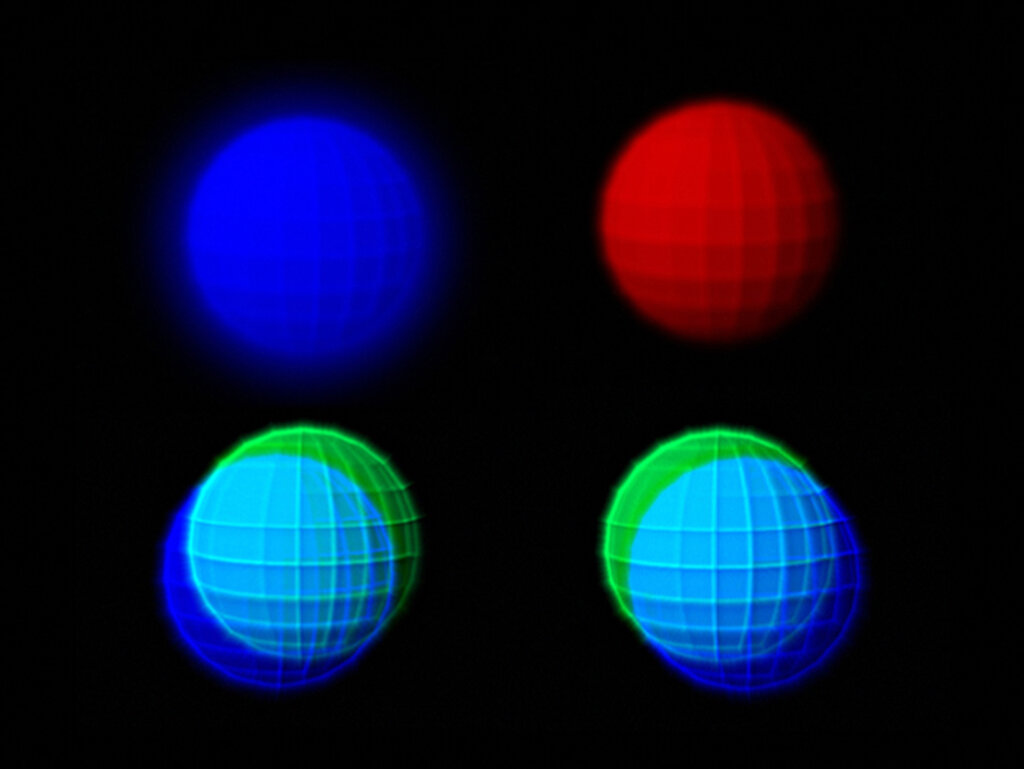
Entanglement is a crucial resource in quantum computing. It allows for complex correlations between qubits, which is essential for running powerful quantum algorithms and performing secure quantum communication.
Why Does It Matter?
Quantum computers won't be replacing your laptop for browsing the internet or writing emails. Their strength lies in solving specific types of complex problems that are intractable for classical computers. Potential applications include:
- Drug Discovery and Materials Science: Simulating molecules and materials at the quantum level to design new drugs and novel materials with desired properties.
- Financial Modeling: Optimizing investment strategies and pricing financial instruments with a level of complexity not currently possible.
- Cryptography: Breaking current encryption standards but also enabling new, ultra-secure methods of communication through quantum cryptography.
- Artificial Intelligence: Enhancing machine learning algorithms to find patterns in vast and complex datasets.
The field is still in its early stages, much like classical computing was in the 1950s. Building stable, large-scale quantum computers is an enormous engineering challenge. However, the potential to revolutionize science, medicine, and technology makes it one of the most exciting frontiers in modern science.
What is the fundamental unit of information in a quantum computer?
The principle that allows a qubit to represent a combination of both 0 and 1 at the same time is known as:
Quantum computing harnesses the principles of quantum mechanics to open up new possibilities for computation, tackling problems far beyond the reach of classical machines.