Quantum Computing Basics
Introduction to Quantum Computing
Beyond Bits and Bytes
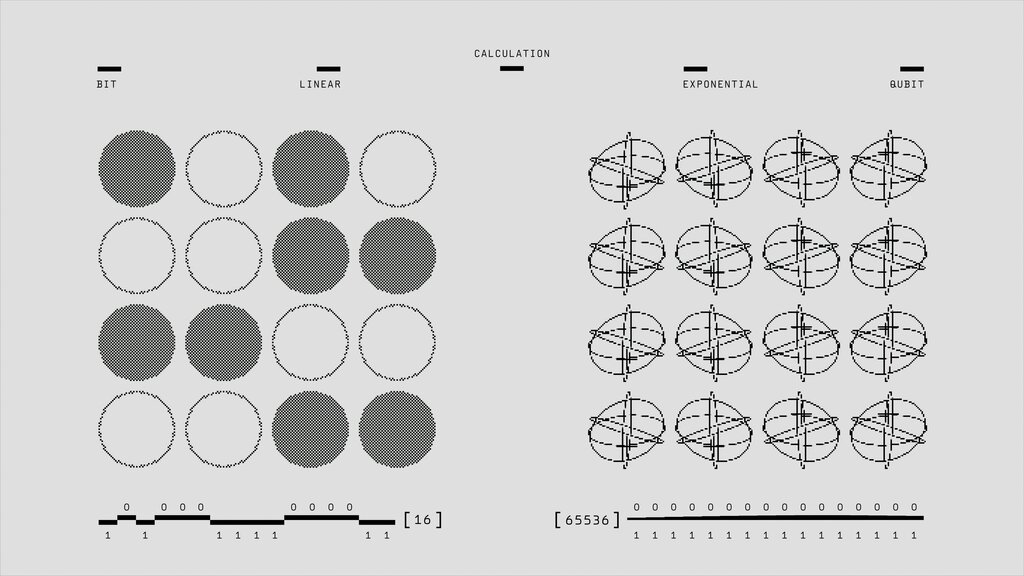
Classical computers, from your smartphone to the most powerful supercomputers, are built on a simple idea: bits. A bit is like a light switch. It can be either on or off, representing a 1 or a 0. All the amazing things classical computers do, from streaming movies to sending spacecraft to Mars, boil down to manipulating billions of these tiny switches.
Quantum computing takes a completely different approach. It's built on a new kind of information unit, one that operates according to the strange and wonderful rules of quantum mechanics.
qubit
noun
The basic unit of quantum information. It is the quantum analogue of the classical bit.
A qubit can be a 0, a 1, or something far more interesting: both at the same time. This ability to exist in multiple states at once is called superposition.
The Power of Superposition
Think of a bit as a coin lying flat on a table. It's either heads (1) or tails (0). A qubit, however, is like a spinning coin. While it's spinning, it’s not definitively heads or tails—it’s a blend of both possibilities. Only when you stop it (by measuring it) does it land on one specific state.
Because a single qubit can represent both 0 and 1, a quantum computer can explore a vast number of possibilities simultaneously. Two qubits can hold four values at once (00, 01, 10, and 11). Three qubits can hold eight. This computational power grows exponentially. A system with just 300 qubits could represent more states than there are atoms in the known universe.
Superposition allows quantum computers to process a massive number of calculations in parallel, tackling problems that would take a classical computer billions of years to solve.
Entanglement: A Spooky Connection
The other key concept is entanglement. It’s a deep, counterintuitive connection that can link two or more qubits. When qubits are entangled, their fates are intertwined, no matter how far apart they are.
Imagine you have a pair of gloves and you put each one in a separate, identical box. You send one box to a friend on the other side of the world. Before anyone opens a box, you don't know which has the left glove and which has the right. But the moment your friend opens their box and finds the right glove, you instantly know your box contains the left one. There’s no message sent between the boxes; the information is revealed instantly.
Entangled qubits behave in a similar way. If you measure the state of one, you immediately know the state of its entangled partner. This connection allows for powerful computational shortcuts and is a fundamental resource in quantum computing.
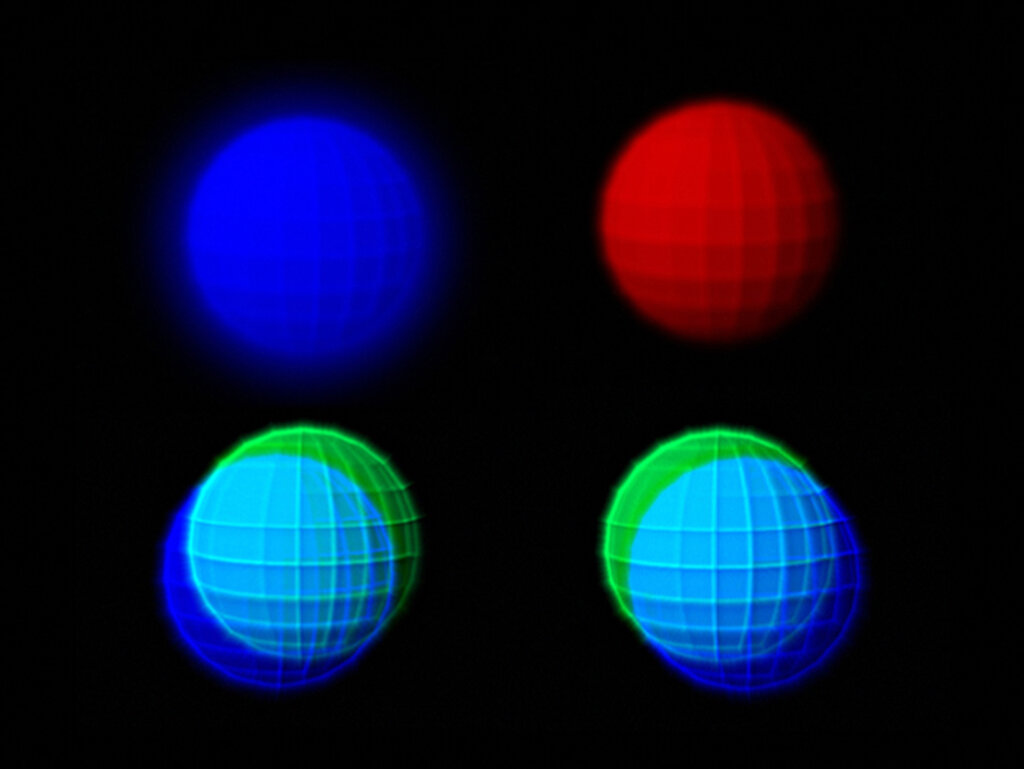
By harnessing superposition and entanglement, quantum computers aren't just faster versions of the computers we use today. They are an entirely new tool for thinking about and solving problems.
Let's check your understanding of these fundamental ideas.
What is the fundamental unit of information in a classical computer?
A classical bit is like a coin lying flat on a table (either heads or tails), while a qubit is like a spinning coin.
These core principles—qubits, superposition, and entanglement—are the building blocks for a new era of computation.