Quantum Computing and Qubit Technologies
Quantum Mechanics Basics
The Quantum Realm
Step into the world of the very small, the realm of atoms, electrons, and photons. Down here, the familiar rules of classical physics—the ones governing a thrown ball or a spinning planet—begin to break down. This is the world of quantum mechanics, and it operates on a completely different set of principles. It's not just a smaller version of our world; it's a fundamentally different one.
To get started, let's talk about the idea of a "state." In our everyday world, a light switch has two possible states: on or off. A coin has two states: heads or tails. It's one or the other, never both. In the quantum world, particles like electrons also have states. A common property is "spin," which can be thought of as being either "up" or "down." To keep things simple, physicists label these two basic states as (spin down) and (spin up).
These aren't the numbers 0 and 1. The special notation , called a "ket," is just a standard way to label a quantum state.
Living in Two States at Once
Here's where things get strange. Unlike a light switch, a quantum particle doesn't have to pick just one state. It can exist in a combination of multiple states at the same time. This is called superposition.
Two concepts in quantum physics that are the building blocks of quantum computing are superposition and entanglement.
Imagine a spinning coin. Before it lands, it's not heads and it's not tails. It's a blur of both possibilities. A particle in superposition is like that spinning coin. It's in a combination of its possible states—part and part —all at once. We can write this mathematically:
Here, represents the superposition state of our particle. The symbols (alpha) and (beta) are numbers called "probability amplitudes." They tell us how much of the state and how much of the state are in the mix. Think of them as recipe ingredients. You might have a state that is 70% and 30% , or one that's a perfect 50/50 split. These amplitudes are the key to understanding what happens when we try to look at the particle.
Waves of Probability
So, if a particle can be in multiple places or states at once, how do we describe it? Physicists use a mathematical tool called the wave function. The wave function, often written as , contains all the information about a quantum system in superposition. It doesn't tell you exactly where a particle is, but rather, it describes the probability of finding it at any given point.
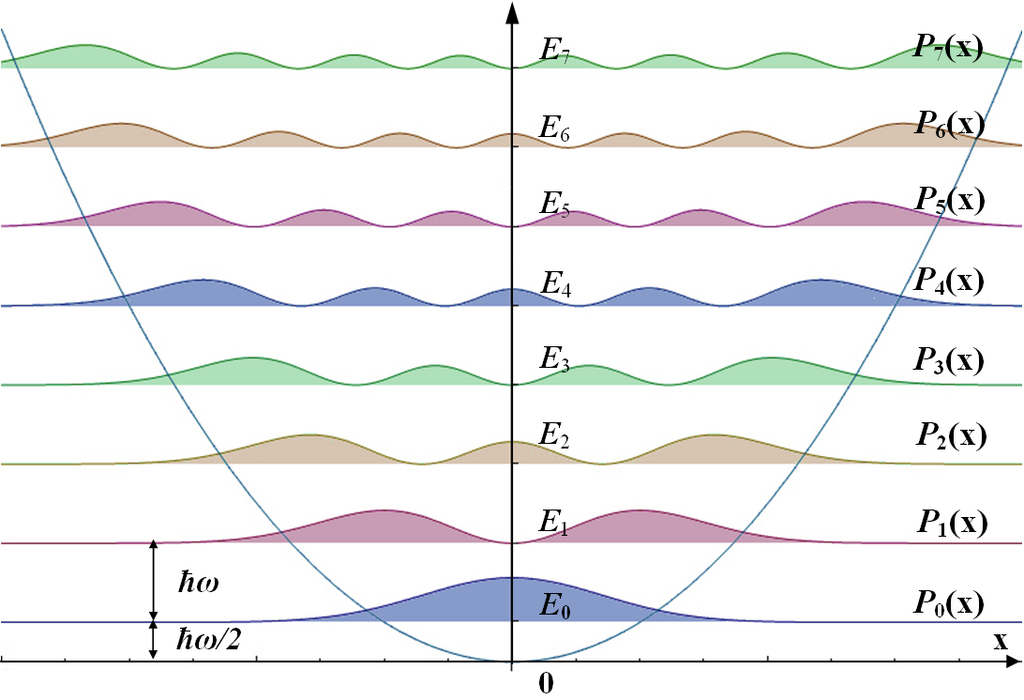
Imagine dropping a pebble into a calm pond. Ripples spread out in waves. The wave function is similar. The height of the wave at any location corresponds to the probability of finding the particle there. Where the wave is high, the probability is high. Where it's low, the probability is low.
The act of measurement forces the quantum system to "choose" a single, definite state. This is called the collapse of the wave function.
Before you measure it, the particle is a wave of possibilities. The moment you perform a quantum measurement—like hitting it with a photon to see where it is—the wave instantly collapses into a single point. The spinning coin lands. The superposition is gone, and the particle is found in one specific state. For our state, the probability of it collapsing to is , and the probability of it collapsing to is . The outcome is fundamentally probabilistic; you can't know the result for sure beforehand, only the odds.
A Spooky Connection
The final core concept is perhaps the most mind-bending of all: entanglement. This is a special connection that can exist between two or more quantum particles. When particles are entangled, their fates are linked, no matter how far apart they are.
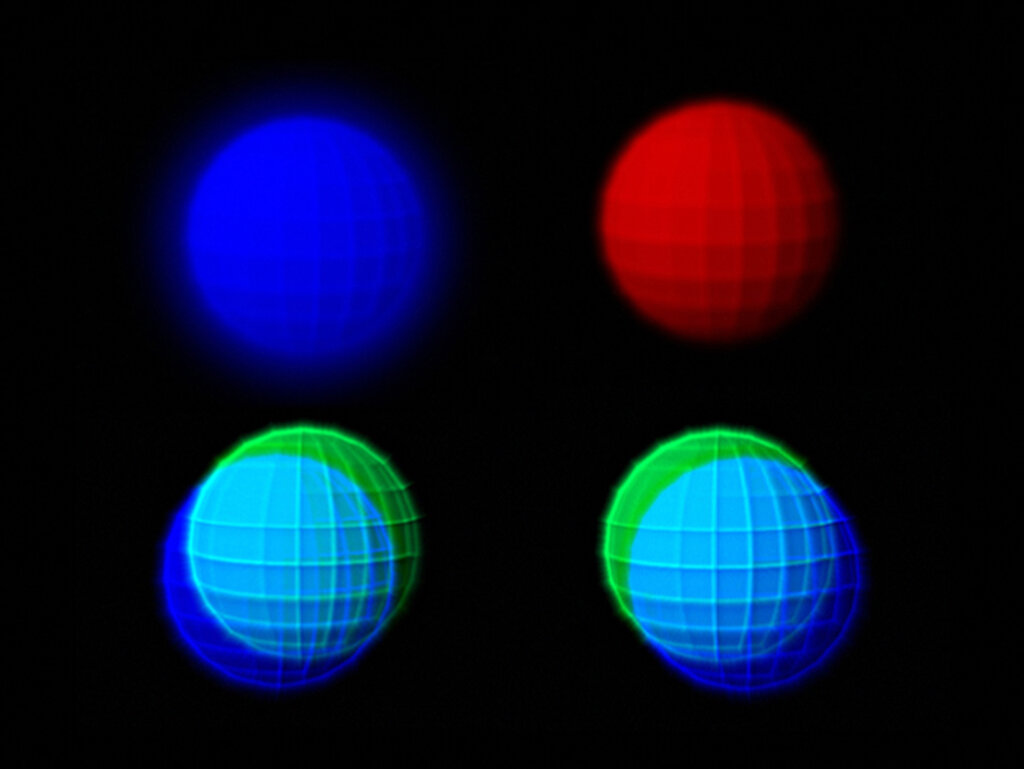
Imagine you have two entangled electrons. We'll call them A and B. They are created in such a way that if electron A has a spin of "up," electron B must have a spin of "down," and vice-versa. Before measurement, both are in a superposition of up and down. But their combined state is definite: they are opposite.
Now, you send electron A to New York and electron B to Tokyo. If the scientist in New York measures electron A and finds its spin is "up," they instantly know that the scientist in Tokyo will measure electron B's spin to be "down." The result isn't a coincidence. The moment one particle's state was measured, the other's was determined, faster than the speed of light. This isn't communication; it's a shared existence. The two particles are not separate entities but two parts of a single quantum state.
Einstein famously called this phenomenon "spooky action at a distance."
These three ideas—superposition, measurement, and entanglement—are the pillars of quantum mechanics. They describe a reality that is probabilistic, interconnected, and far stranger than our everyday intuition suggests.