Quantum Atomic Structure Explained
Introduction to Quantum Mechanics
Beyond Fixed Orbits
The Bohr model of the atom was a significant step forward. It pictured electrons circling the nucleus in neat, defined orbits, much like planets around the sun. This model successfully explained the emission spectrum of hydrogen, a puzzle that classical physics couldn't solve. However, its success was limited. When applied to atoms with more than one electron, the model's predictions broke down. It also couldn't answer a fundamental question: why are electrons confined to these specific orbits and not allowed anywhere in between?
The cracks in the classical model showed that a new, more radical way of thinking was needed. The rules that govern the large-scale world simply don't apply to the tiny realm of the atom. To truly understand atomic structure, physicists had to embrace the strange and counter-intuitive principles of quantum mechanics.
The Electron as a Wave
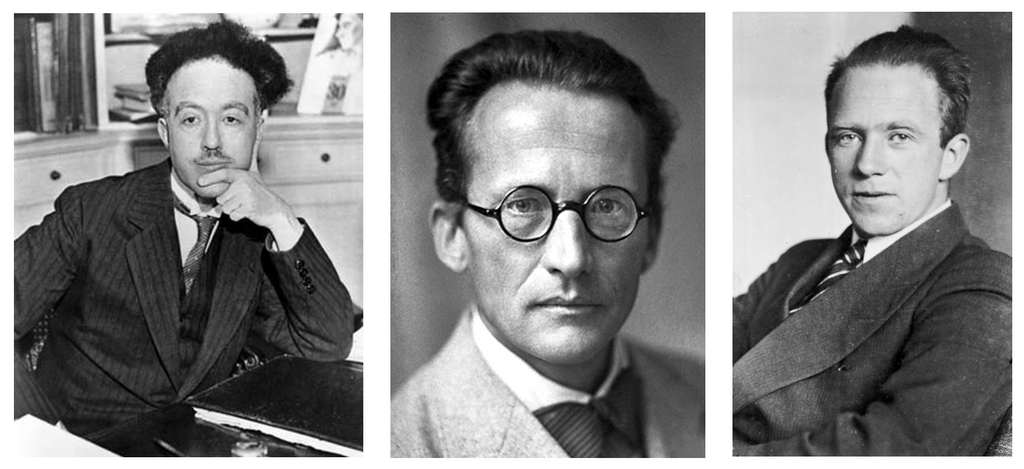
One of the first major leaps was the idea of wave-particle duality. In 1924, Louis de Broglie proposed that if light could behave as both a wave and a particle, perhaps matter could too. He suggested that all moving particles, including electrons, have an associated wave. This wasn't just a philosophical idea; it was a mathematical one.
This concept provides a compelling reason for Bohr's quantized orbits. If an electron is a wave, it must exist as a standing wave around the nucleus. A standing wave is a wave that remains in a constant position. For this to happen, the circumference of the orbit must be an integer multiple of the electron's wavelength. Any other orbit would result in the wave interfering with itself destructively and cancelling out.
Suddenly, the discrete energy levels were no longer arbitrary rules but a natural consequence of the electron's wave-like nature.
A Limit on Knowledge
The wave-like nature of particles leads to another foundational concept: the Heisenberg uncertainty principle. It states that there's a fundamental limit to how precisely we can know certain pairs of properties of a particle at the same time. The most famous pair is position and momentum.
The more precisely you know an electron's position, the less precisely you know its momentum, and vice versa.
Think about trying to measure an electron's position. To "see" it, you have to bounce a photon of light off it. But this very act of measurement transfers energy to the electron, changing its momentum in an unpredictable way. Using a high-energy photon (with a short wavelength) gives you a more precise position measurement but a bigger kick to the electron's momentum. A low-energy photon disturbs the momentum less but gives a fuzzier position. You can't win.
This principle demolishes the classical idea of a well-defined orbit. An electron cannot simultaneously have a precise position and a precise trajectory (which depends on momentum). The concept of an electron as a tiny ball orbiting a nucleus is fundamentally flawed. We are forced to talk about probability instead of certainty.
Describing the Electron Cloud
If we can't know an electron's exact path, how can we describe its behaviour in an atom? Erwin Schrödinger developed a mathematical equation in 1926 that governs the wavelike behaviour of electrons. The Schrödinger equation is a cornerstone of quantum mechanics.
We won't dive into the complex mathematics, but the key output of the equation is a wave function, represented by the Greek letter psi (). The wave function itself doesn't have a direct physical meaning. However, the square of the wave function, , tells us something crucial: the probability of finding the electron at a particular point in space.
The Schrödinger equation doesn't tell us where the electron is. It tells us where the electron is likely to be.
This shifts our view from distinct orbits to fuzzy regions of probability called orbitals. An orbital is a three-dimensional volume of space where there is a high probability (typically 90%) of finding the electron. This "electron cloud" is a more accurate and powerful description of atomic structure, forming the basis of modern chemistry and physics.
Let's test your understanding of these foundational quantum concepts.
What was a major limitation of the Bohr model of the atom?
According to de Broglie's wave-particle duality, why are electron orbits quantised?
These principles—wave-particle duality, uncertainty, and probabilistic descriptions—form the bedrock of the quantum mechanical model of the atom.