Quantitative Trading Fundamentals
Introduction to Quantitative Trading
What Is Quantitative Trading?
Quantitative trading, often called quant trading, uses mathematical models and computer algorithms to make trading decisions. Instead of relying on intuition or gut feelings, quants use data to find patterns and opportunities in financial markets. Think of it as the difference between a trader who says, "I have a good feeling about this stock," and one who says, "My model, based on ten years of data, shows a 75% probability this stock will rise in the next hour."
This data-driven approach has become a huge part of modern finance. It's used by hedge funds, investment banks, and even individual traders to navigate the complexities of the market. The goal is to make objective, logical decisions, removing the emotional biases that can lead to costly mistakes.
quantitative trading
noun
An investment strategy that uses mathematical and statistical models, powered by computers, to identify and execute trading opportunities.
The core idea is to translate a trading idea into a testable, rule-based system. This system is then rigorously backtested on historical data to see how it would have performed in the past. If it proves successful, it can be deployed to trade automatically.
Quantitative trading involves the use of advanced mathematical models and algorithms to identify trading opportunities.
A Quick Trip Through Time
Quantitative trading isn't new, but its power has grown with technology. The roots go back to the 1970s and 80s, when mathematicians and scientists started applying their skills to finance. One of the pioneers was Edward Thorp, a math professor who famously used statistics to beat casinos at blackjack before turning his attention to Wall Street.
Early quants had to work with limited computing power and data. They often built their models by hand and performed calculations on bulky machines. The real revolution came with the rise of personal computers and the internet. Suddenly, vast amounts of financial data were accessible, and the processing power to analyze it became cheaper and more powerful.
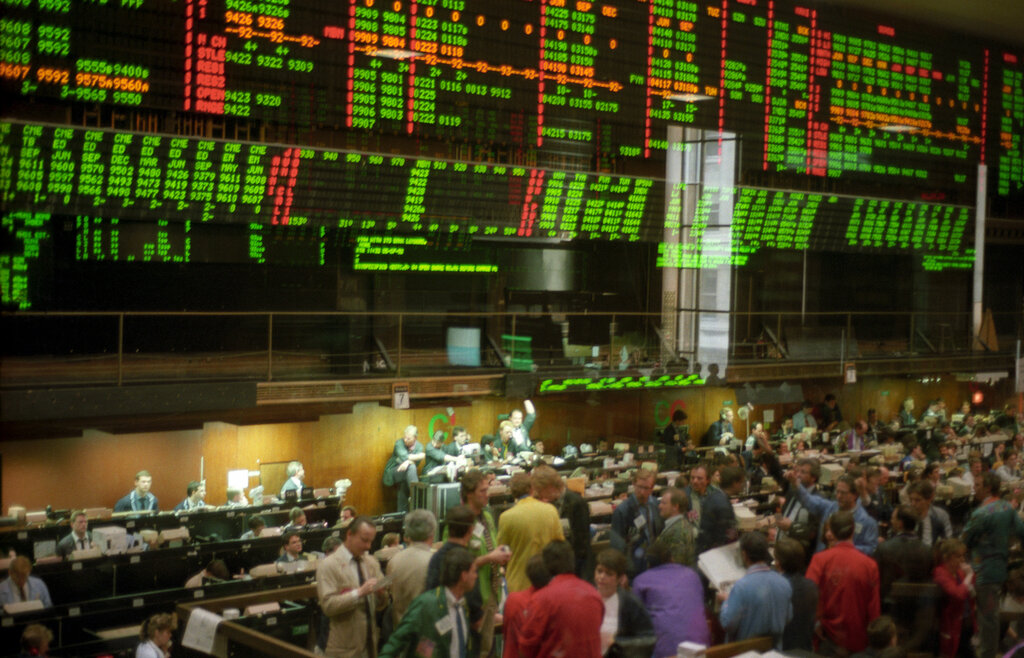
By the 2000s, algorithmic trading was a dominant force. Firms like Renaissance Technologies and D.E. Shaw became famous for their secretive, highly successful quant strategies. This shift transformed markets, making them faster and more efficient, but also introducing new kinds of complexity and risk.
The Brains of the Operation
At the heart of every quant strategy is a model. A quantitative model is essentially a set of rules that tells a computer what to do based on market data. It’s the recipe the computer follows to trade.
These models perform several key functions:
-
Signal Generation: They scan markets for patterns or “signals” that suggest a good trading opportunity. This could be anything from a price moving outside its normal range to a correlation between two different assets.
-
Execution: Once a signal is found, the model determines the best way to place the trade. It decides on the size, price, and timing to minimize costs and maximize potential profit.
-
Risk Management: Models can also be programmed to manage risk, for example, by automatically selling a position if it loses a certain amount of money.
The beauty of a model is its consistency. It follows its programmed rules without fear or greed, operating 24/7 if needed. This removes the emotional rollercoaster that plagues many human traders.
A good quantitative model is like a tireless analyst, constantly searching for opportunities and executing its plan with perfect discipline.
Advantages and Challenges
Quantitative trading offers some clear advantages. It's disciplined, systematic, and can process information far faster than any human. By removing emotion, it helps traders stick to their strategies. It also allows for broad diversification, as a single system can monitor and trade thousands of markets simultaneously.
However, it's not without its challenges. Developing a profitable quant model is extremely difficult. It requires deep expertise in math, statistics, and programming. Models can also fail. A model that worked perfectly on historical data might break down when market conditions change unexpectedly. This is known as "model decay."
Another challenge is the constant competition. As more quants enter the market, profitable patterns get harder to find. What was once a secret edge can quickly become common knowledge, and its profitability disappears. The field is a never-ending race to find new data, build better models, and stay one step ahead.
| Advantages | Challenges |
|---|---|
| Objective, data-driven decisions | Requires specialized expertise |
| Removes emotional biases | Models can fail in new conditions |
| High speed and efficiency | Constant competition erodes profits |
| Can analyze vast amounts of data | Over-optimization on past data |
Ready to test your understanding of these core concepts?
What is the primary basis for decision-making in quantitative trading?
A quantitative strategy that worked successfully for years begins to perform poorly as more traders adopt similar methods. This is an example of what challenge?
This introduction covers the what, why, and how of quantitative trading at a high level. It's a field built on logic, data, and technology, fundamentally changing the way financial markets operate.