Quantitative Stock Trading Essentials
Introduction to Financial Markets
Where Trading Happens
A financial market is a place where people buy and sell things like stocks and bonds. Think of it like a massive, global farmers market. Instead of fruits and vegetables, the products are financial instruments. And instead of a town square, the trading happens on exchanges.
Historically, these were physical locations with traders yelling orders on a crowded floor. Today, most of this activity is electronic. An exchange, like the New York Stock Exchange (NYSE) or Nasdaq, is just an organized market where buyers and sellers come together under a set of rules. Its job is to ensure trading is fair and orderly.
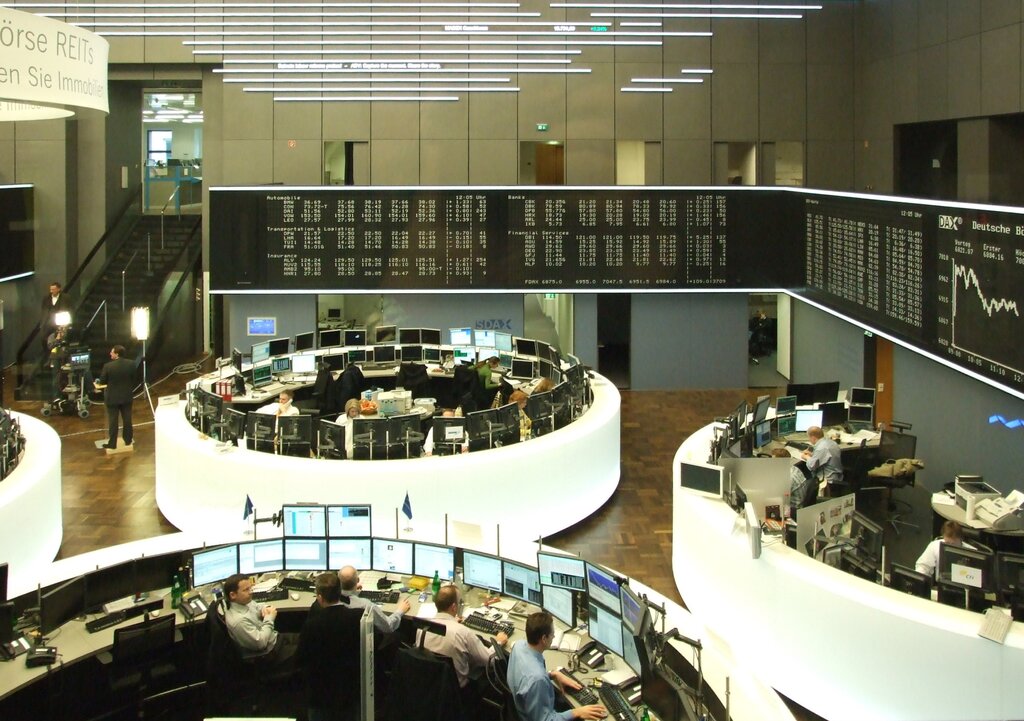
These exchanges don't just exist in a vacuum. They are part of a larger structure that connects millions of people to the market every day.
The Key Players
Several groups interact to make the market work. The most important are investors, brokers, and the exchanges themselves.
Investors are the people or entities buying and selling. This includes individual investors, often called retail investors, as well as large institutional investors like pension funds, mutual funds, and insurance companies. They provide the capital that fuels the market.
Brokers are the intermediaries. An individual investor can't just walk onto the NYSE and buy a stock. They need a broker, which is a firm licensed to trade on the exchange on its clients' behalf. When you place an order through a brokerage app, the broker is responsible for sending that order to an exchange to be executed.
The Exchange is the central marketplace. It receives orders from many different brokers and uses a sophisticated system to match buyers with sellers. It's the hub that connects everyone.
This relationship forms the backbone of the market, allowing an investor in one country to easily buy a piece of a company in another.
What Gets Traded
The items bought and sold in financial markets are called financial instruments. While there are many complex types, most trading revolves around two basic categories: stocks and bonds.
Stocks, also known as equities, represent ownership in a company. When you buy a share of stock, you own a small piece of that business. Its value can rise or fall based on the company's performance and investor sentiment.
Bonds are essentially loans. When you buy a bond, you are lending money to an entity, which could be a corporation or a government. In return for the loan, the issuer promises to pay you periodic interest payments and return the original amount at a future date, known as the bond's maturity.
| Feature | Stocks (Equities) | Bonds (Debt) |
|---|---|---|
| Represents | Ownership in a company | A loan to an entity |
| Return | Potential dividends & price appreciation | Fixed interest payments (coupons) |
| Typical Risk | Higher | Lower |
| Issued By | Corporations | Corporations & Governments |
Other instruments, like Exchange-Traded Funds (ETFs), mutual funds, and derivatives, are also common, but stocks and bonds are the fundamental building blocks.
Making a Trade
Liquidity
noun
The ease with which an asset can be bought or sold at a stable price.
For a market to function well, it needs liquidity. A liquid market has many buyers and sellers, making it fast and easy to trade without causing a big price swing. Think about selling a popular smartphone versus a rare antique coin. The phone has high liquidity; you can find a buyer almost instantly at a predictable price. The coin has low liquidity; it might take weeks to find the right buyer, and the final price is uncertain.
When you're ready to trade, you place an order. This is an instruction to your broker to buy or sell an instrument. The two most basic order types are market orders and limit orders.
A market order tells your broker to buy or sell immediately at the best available current price. It prioritizes speed.
A limit order tells your broker to buy or sell at a specific price or better. It prioritizes price.
If you place a market order to buy a stock, your broker will execute it right away at whatever price sellers are currently asking. If you place a limit order to buy that same stock for $50, your order will only execute if the price drops to $50 or lower.
Once your order is sent to the exchange, its computers look for a matching order from another investor. This matching process is called execution. When a match is found, the trade is complete.
In the structure of a financial market, which participant acts as the intermediary between an investor and an exchange?
An investor wants to buy a stock, but only if its price falls to $50 or less. What type of order should they place?
These core concepts—the market's structure, its players, the instruments, and the mechanics of an order—are the foundation for all trading activity.