PyTorch Cross Attention Fusion for Dual Encoder Autoencoders
Understanding Autoencoders
Learning to Recreate
Imagine you're asked to summarize a long, detailed book into a single, potent sentence. Then, you hand that sentence to a friend and ask them to rewrite the entire book based only on your summary. The closer their version is to the original, the better your summary was at capturing the book's essence.
This is the core idea behind an autoencoder. It's a type of neural network that learns to copy its input to its output. That might sound simple, but there's a catch: it has to squeeze the input data through a narrow bottleneck first. By doing this, the network is forced to learn a compressed representation of the data, capturing only the most important features.
The Architecture
An autoencoder has three main parts: the encoder, the bottleneck, and the decoder.
The Encoder: This part of the network takes the input data and compresses it into a smaller, dense representation. It's like the skilled note-taker, listening to a long lecture and jotting down only the key points.
The Bottleneck: This is the compressed representation itself. It's the smallest layer in the network and holds the summarized information. Because all the data has to pass through this narrow point, the network must learn to discard noise and keep only the meaningful signals.
The Decoder: This part takes the compressed data from the bottleneck and reconstructs the original input from it. It's like the person trying to recreate the full lecture using only the summary notes.
The encoder and decoder are typically symmetrical, like mirror images of each other. If the encoder has layers that get progressively smaller, the decoder will have layers that get progressively larger.
The Learning Process
How does an autoencoder learn to do this effectively? During training, the network compares its reconstructed output to the original input. The difference between them is called the reconstruction loss.
The goal of the training process is to tweak the network's internal parameters to minimize this loss. A common loss function for this is Mean Squared Error (MSE), which calculates the average of the squares of the differences between the original and reconstructed data points.
Here, is the original data point and is the reconstructed data point. By relentlessly trying to reduce this error, the network gets better and better at creating a useful summary in the bottleneck and then reconstructing the data from it.
Practical Applications
This simple architecture is surprisingly powerful and has several uses.
Data Compression: The encoder can be used to create a compressed, low-dimensional version of your data. This is a form of lossy compression, like converting a WAV audio file to an MP3. Some information is lost, but the file size is much smaller.
Feature Extraction: Because the bottleneck forces the network to learn the most important patterns, the encoder becomes an excellent feature extractor. You can feed the compressed features from the bottleneck into another machine learning model, like a classifier, which can often improve its performance.
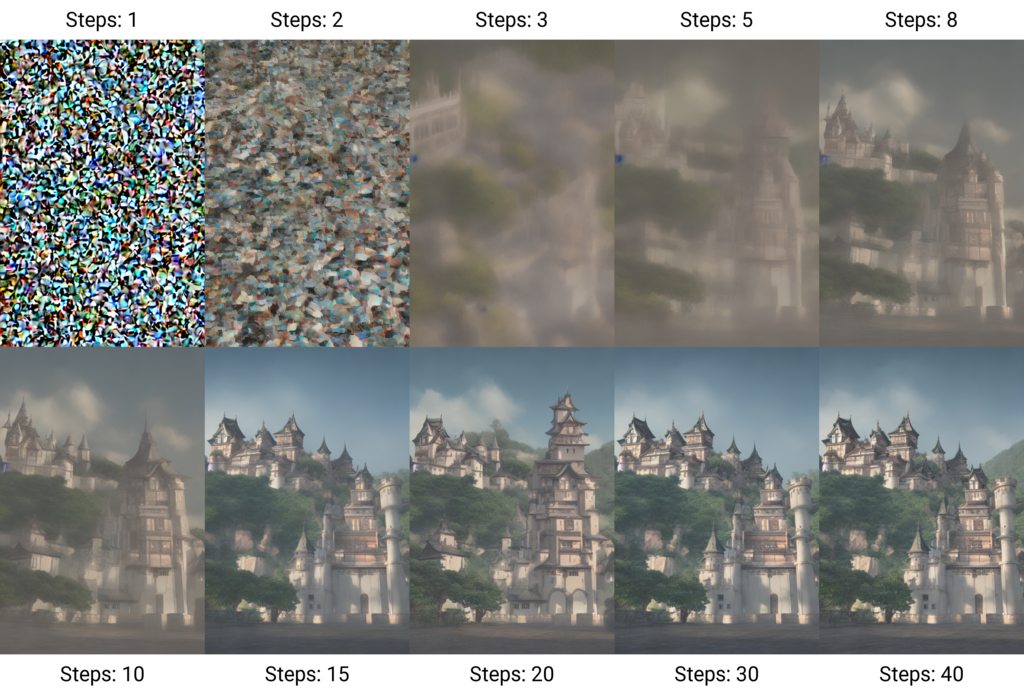
Image Denoising: A clever application is to train an autoencoder on noisy images as input and the original, clean images as the desired output. The network learns to ignore the noise and reconstruct the clean version. It essentially learns to separate the signal (the actual image) from the noise.
Anomaly Detection: You can train an autoencoder on a dataset of "normal" data. For example, data from a healthy jet engine. The network will become very good at reconstructing this normal data. If you then feed it data from a faulty engine (an anomaly), the autoencoder will struggle. The reconstruction loss will be high, flagging the data as unusual and potentially problematic.
Ready to check your understanding?
What is the fundamental goal of an autoencoder?
Which of the following lists the three main architectural components of an autoencoder?
Autoencoders provide a foundational understanding of how networks can learn meaningful representations of data in an unsupervised way, a key concept in modern AI.