Python Programming Fundamentals
Introduction to Python
What Is Python?
Python is a programming language, which is a way to give instructions to a computer. Think of it like a recipe. You write down the steps, and the computer follows them to create something, whether it's a website, a game, or an analysis of data.
What makes Python special is its readability. The syntax, or the rules of the language, is designed to be clean and straightforward, almost like reading English. This makes it one of the easiest languages for beginners to pick up.
Python is a beginner-friendly programming language that is used in schools, web development, scientific research, and in many other industries.
Its simplicity doesn't mean it's not powerful. Python is used by major companies like Google, Netflix, and NASA for a huge range of tasks. This versatility is one of its greatest strengths.
| Application | What It Means |
|---|---|
| Web Development | Building the server-side logic of websites. |
| Data Analysis | Processing and visualizing large datasets. |
| AI & Machine Learning | Creating programs that can learn and make predictions. |
| Automation | Writing scripts to perform repetitive tasks automatically. |
Getting Python on Your Computer
Before you can start writing Python code, you need to install it. The process is slightly different depending on your operating system.
First, head to the official Python website at python.org. You'll find the latest version available for download.
For Windows:
- Download the installer from the website.
- Run the installer. A crucial step: make sure to check the box that says "Add Python to PATH." This allows you to run Python from your computer's command line.
- Click "Install Now" and follow the prompts.
For macOS:
macOS often comes with an older version of Python pre-installed. It's best to get the latest one. Download the installer from python.org and run it, just like any other Mac application.
For Linux:
Most Linux distributions also come with Python. You can check your version by opening a terminal and typing python3 --version. If you need to install it, you can use your distribution's package manager.
# For Debian/Ubuntu-based systems
sudo apt-get update
sudo apt-get install python3
Your Coding Environment
You can write Python code in a simple text editor, but most developers use an Integrated Development Environment, or IDE. An IDE is like a word processor for code. It provides tools that make coding easier, such as syntax highlighting (coloring your code to make it readable), error checking, and a way to run your code with a single click.
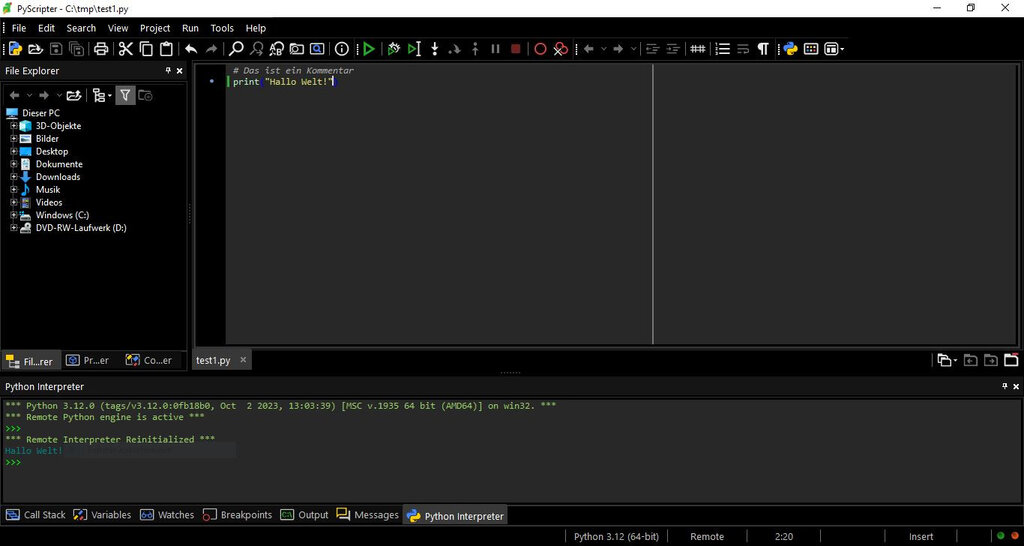
For beginners, a great choice is Thonny. It's a simple, lightweight IDE designed specifically for learning Python. It comes with Python already bundled, so you don't need a separate installation.
To get it, go to thonny.org, download the installer for your operating system, and run it. Once installed, you can open it up and you'll see a clean interface ready for your first lines of code.
With Python and an IDE like Thonny installed, you have everything you need to start programming.