Python Programming Fundamentals
Python Basics
What Is Python?
Python is a high-level programming language known for its readability and simple syntax. Created in the late 1980s by Guido van Rossum, its design philosophy emphasizes code that is easy to write and understand. Think of it less like a rigid set of instructions for a computer and more like a structured way of writing your thoughts.
This simplicity doesn't mean it's not powerful. Python is used everywhere. It powers parts of Instagram and Spotify, it's a favorite for scientific computing at NASA, and it's the backbone of countless AI and data science projects. From building websites to automating repetitive tasks, Python is a versatile tool for almost any programming problem.
Key features include its simple syntax, extensive standard library (pre-built code for common tasks), and its nature as an interpreted language, which means you can run code line by line and see results immediately.
Setting Up Your Environment
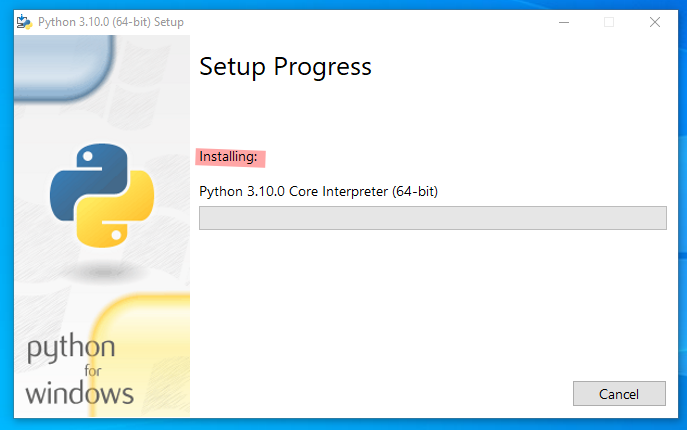
To start writing Python, you need a Python interpreter. The interpreter is a program that reads your Python code and executes it. You can download the official interpreter for free from the official Python website, python.org. The installation is straightforward for Windows, macOS, and Linux.
Once installed, you have two main ways to run Python code. You can use the interactive shell (or terminal), which lets you type and run one line of code at a time. This is great for quick tests. For larger programs, you'll write your code in a file (usually ending in .py) and tell the interpreter to run the whole file.
While you can write Python code in any plain text editor, most developers use an Integrated Development Environment (IDE) or a dedicated code editor. Tools like VS Code, PyCharm, and Sublime Text offer features like syntax highlighting and error checking that make coding much easier.
Your First Program
It's a tradition in programming to make your first program display the message "Hello, World!". In Python, this is incredibly simple. It takes just one line of code. We use the built-in print() function, which does exactly what its name suggests: it prints text to the screen.
# This is a comment. The interpreter ignores it.
# The line below prints a message to the console.

print("Hello, World!")
To run this, you can either type that line directly into your Python interactive shell and press Enter, or you can save it in a file called hello.py and run it from your terminal using the command python hello.py. In both cases, you'll see the text Hello, World! appear.
Basic Syntax and Structure
Python's syntax is designed to be clean and uncluttered. Let's look at a few core concepts.
Comments
As you saw above, any line that starts with a # symbol is a comment. The Python interpreter ignores comments completely. They are for you and other programmers to leave notes and explain what your code does.
Variables and Data Types
A variable is a name that refers to a value. Think of it as a labeled box where you can store information. You create a variable by giving it a name and using the equals sign (=) to assign it a value.
# Assigning a string (text) to a variable
greeting = "Hello again"

# Assigning an integer (whole number) to a variable
year = 2024

# Assigning a float (number with a decimal) to a variable
version = 3.12

# Now we can print the variables
print(greeting)
print(year)
Python automatically detects the data type. In the example above, greeting is a string (text), year is an integer, and version is a float. You don't have to declare the type beforehand.
Whitespace Matters
Unlike many other languages, Python uses indentation, the spaces at the beginning of a line, to define the structure of your code. You don't use curly braces {} to group code. While we haven't covered concepts like loops or functions where this is critical, it's a fundamental rule of Python. For now, just remember to start all your lines of code at the very beginning, with no leading spaces.
Who is the creator of the Python programming language?
What is the correct syntax to display the text "Hello, World!" on the screen in Python?