Python Programming Fundamentals and Application
Optimizing Data Management
Beyond the Basics of Lists
You already know that Python lists are ordered, changeable collections. They're the workhorses of data storage. But their real power comes from more advanced ways to access and manipulate the data inside them. Let's move beyond simple indexing like my_list[0].
The most powerful tool for this is slicing. Slicing lets you grab a sub-section of a list. The syntax is list[start:stop:step]. The start index is inclusive, the stop index is exclusive, and step defines the interval between items.
inventory = ['sword', 'shield', 'potion', 'gold', 'gem', 'key']

# Grab items from index 2 up to (but not including) index 5
print(inventory[2:5])
# Output: ['potion', 'gold', 'gem']

# Grab every second item from the whole list
print(inventory[::2])
# Output: ['sword', 'potion', 'gem']

# A classic trick to reverse a list
print(inventory[::-1])
# Output: ['key', 'gem', 'gold', 'potion', 'shield', 'sword']
Slicing is non-destructive; it always returns a new list, leaving the original unchanged. This is a key concept for writing predictable code. Lists also come with built-in methods for in-place modifications, like .append(), .sort(), and .pop(). Using these directly changes the list itself.
Remember the difference: slicing creates a new copy of a portion of the list, while methods like
.sort()modify the original list directly.
Dictionaries for Fast Lookups
What if you need to store data not by its position, but by a unique identifier? Imagine a user profile. Looking up a user by their list index (like users[42]) isn't very helpful. You want to look them up by username or ID.
This is where dictionaries shine. Dictionaries store data in key-value pairs instead of an ordered sequence. This structure is incredibly efficient for retrieval. Asking for user_profile['username'] is much faster than searching a list to find where the username is stored, especially with large datasets.
key-value pairs
noun
A fundamental data structure where a unique identifier (the key) is associated with a piece of data (the value). This allows for fast data retrieval without knowing the item's position.
user_profile = {
    'user_id': 101,
    'username': 'py_master',
    'level': 15,
    'inventory': ['sword', 'shield']
}

# Accessing data by key
print(f"Welcome, {user_profile['username']}!")

# Adding a new key-value pair
user_profile['last_login'] = '2023-10-27'

# Using the .get() method to avoid errors for missing keys
email = user_profile.get('email', 'Not provided')
print(f"Email: {email}")
The .get() method is a safer way to access dictionary values. If you try user_profile['email'] and the 'email' key doesn't exist, your program will crash. Using .get('email', 'default_value') returns the value if the key exists, or a specified default value if it doesn't, preventing errors.
Sets and Tuples
Two other data structures, sets and tuples, solve specific problems elegantly.
A set is an unordered collection of unique items. If you add a duplicate item to a set, it's simply ignored. This makes sets perfect for tasks like removing duplicates from a list or checking for membership. The syntax for a membership check (item in my_set) is much faster than with lists because sets use a hash table internally.
tags = ['python', 'data', 'code', 'python', 'science', 'data']

# Remove duplicates by converting to a set
unique_tags = set(tags)
print(unique_tags)
# Output: {'science', 'data', 'code', 'python'}

# Check for membership (this is very fast!)
has_python = 'python' in unique_tags
print(has_python)
# Output: True
A tuple, on the other hand, is like a list that cannot be changed. It's immutable and is defined with parentheses instead of square brackets. You use tuples when you have data that should not be modified after it's created, such as coordinates (x, y), RGB color values (255, 0, 128), or function return values that group multiple items together.
Python built-in data structures like lists, sets, and dictionaries provide a large number of operations making it easier to write concise code However, not understanding the complexity of these operations can sometimes cause your programs to run slower than expected.
| Data Structure | Syntax | Mutable? | Ordered? | Use Case |
|---|---|---|---|---|
| List | [1, 2, 3] | Yes | Yes | A general-purpose, ordered collection. |
| Dictionary | {'a': 1} | Yes | No (Yes in Python 3.7+) | Storing key-value data for fast lookups. |
| Set | {1, 2, 3} | Yes | No | Ensuring uniqueness and fast membership tests. |
| Tuple | (1, 2, 3) | No | Yes | Protecting data that should not be changed. |
The distinction about dictionaries being unordered is a historical one. Since Python 3.7, standard dictionaries remember the insertion order of their items. However, you should still rely on them for key-based lookups, not for their order.
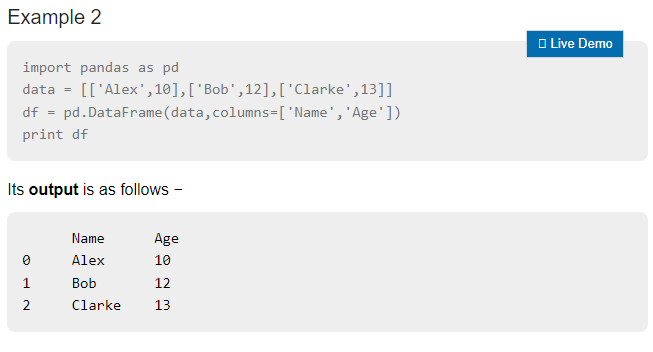
These structures can also be nested. A list can contain dictionaries, a dictionary's value can be another list, and so on. This allows you to model complex, real-world data right inside your Python code.
# A list of dictionaries, a very common data structure
users = [
    {'id': 1, 'name': 'Alice', 'roles': ['admin', 'editor']},
    {'id': 2, 'name': 'Bob', 'roles': ['viewer']}
]

# Accessing nested data
first_user_name = users[0]['name']
first_user_first_role = users[0]['roles'][0]

print(f"User: {first_user_name}, Role: {first_user_first_role}")
# Output: User: Alice, Role: admin
Understanding which data structure to use is key to writing efficient and readable Python code. Choosing the right tool for the job makes your data easier to manage and your programs run faster.
Let's check your understanding of these data management tools.
Given the list letters = ['a', 'b', 'c', 'd', 'e', 'f'], what will the expression letters[1:4] return?
Which data structure is best suited for storing a collection of items where you need to prevent duplicates and perform very fast membership checks (e.g., item in collection)?
By mastering lists, dictionaries, sets, and tuples, you've moved beyond simple variables into the world of structured data management, a critical skill for any Python programmer.