Python Programming Fundamentals
Introduction to Python
What is Python?
Python is a programming language, which is a way to give instructions to a computer. Think of it like a recipe. You write a series of steps, and the computer follows them to get a job done. Python is known for having a clean, readable style, which makes it a great choice for beginners. Its syntax is designed to be straightforward, almost like reading English.
It was created in the late 1980s by Guido van Rossum, who wanted to make a language that was both powerful and easy to learn. Today, it’s one of the most popular programming languages in the world. It’s used for all sorts of things, from building websites and automating repetitive tasks to data analysis and artificial intelligence.
Getting Set Up
Before you can write Python code, you need two things: the Python interpreter and a place to write your code. The interpreter is a program that reads your Python code and translates it into instructions the computer can understand and execute.
The easiest way to get both is to download the official Python distribution from python.org. When you install it, you’ll also get a simple built-in editor called IDLE (Integrated Development and Learning Environment). An IDE is a special text editor that makes writing code easier. It often includes features like syntax highlighting (coloring your code to make it more readable) and tools for running and debugging your programs.
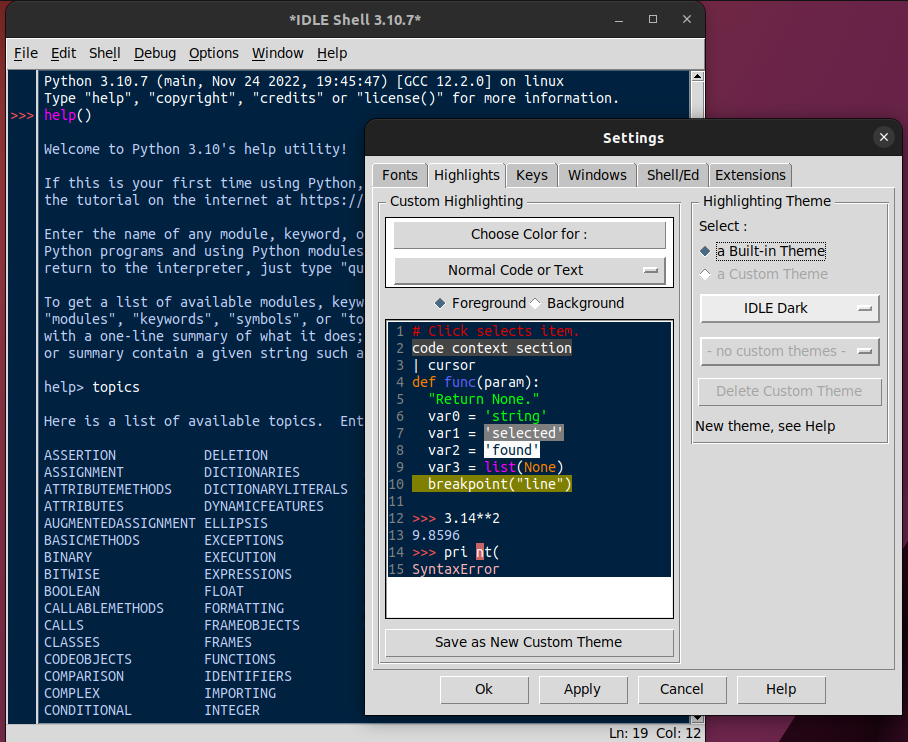
While IDLE works perfectly fine, many beginners find another free IDE called Thonny to be even friendlier. It has a very clean interface and is designed specifically for learning. We'll use it for our examples. You can download it from thonny.org.
Your First Program
It’s a tradition in programming to start by making the computer say "Hello, World!". This simple task confirms that your setup is working correctly. In Python, this is incredibly simple. Open Thonny (or IDLE), and in the main editor window, type the following line:
print("Hello, World!")
Let's break this down. print() is a built-in Python function. A function is a named block of code that performs a specific task. The print() function's job is to display whatever is inside the parentheses on the screen. The text inside the quotation marks is called a string, which is just a sequence of characters.
So, this line of code instructs the computer to display the string "Hello, World!".
Now, to run your program:
- Save the file. Go to File > Save and name it something like
hello.py. The.pyextension is important; it tells the computer this is a Python file. - Run the code. You can either click the green "Run current script" button in Thonny's toolbar or press F5 on your keyboard.
You should see "Hello, World!" appear in the Shell panel at the bottom of the window. That's it! You've just written and executed your first computer program.
Let's test your understanding of these initial concepts.
What is the primary role of the Python interpreter?
Which line of code will correctly display the message Ready to start on the screen?
You've taken your first step into programming. Next, we'll look at how to store information using variables.