Python Programming Fundamentals
Introduction to Python
Why Python?
Python is a programming language, which is just a way to give instructions to a computer. What makes Python special is its simplicity. Writing Python code feels a lot like writing in English, which is why it's a popular choice for beginners. It's considered a high-level language, meaning you can focus on what you want to do without getting bogged down in the computer's technical details.
It's also an interpreted language. Imagine you have a recipe written in a different language. An interpreter would read one step, translate it for the chef, and the chef would do it immediately. Then the interpreter would move to the next step. Python works like that, running your code line by line, which makes it easier to find and fix mistakes.
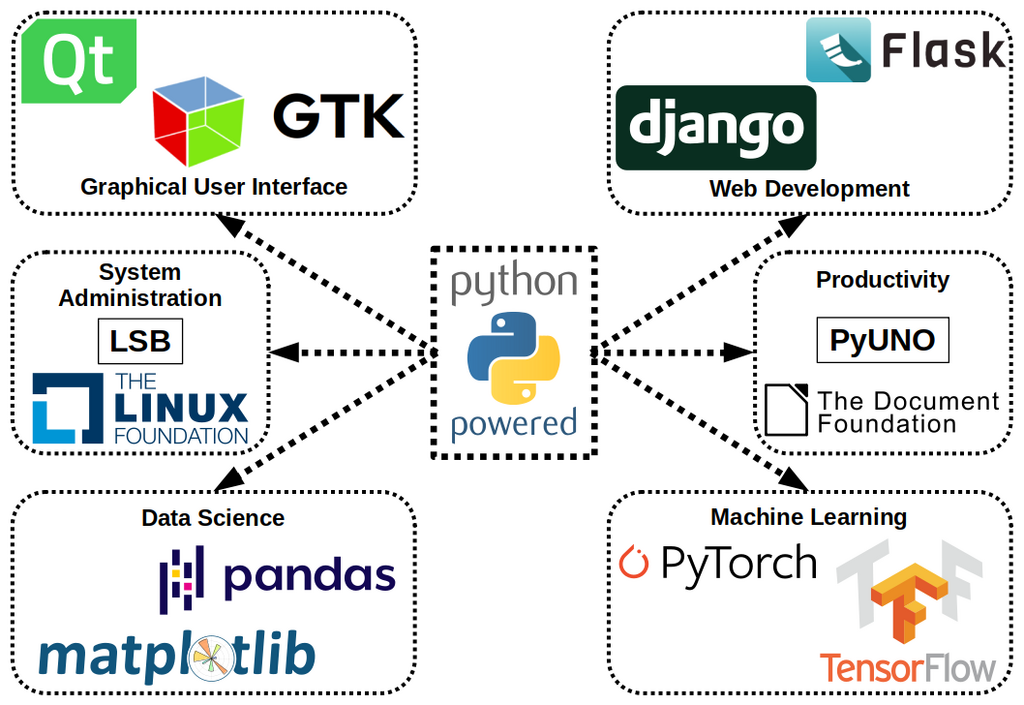
Python is powerful and versatile. It's used for everything from web development and data science to artificial intelligence and simple scripting.
Setting Up Your Workspace
Before you can start writing code, you need to set up your environment. This involves two main steps: installing Python itself and choosing a code editor.
First, you need to install the Python interpreter. This is the program that reads your Python code and carries out its instructions. You can download the official installer directly from the Python website. The installation process is straightforward, much like installing any other software.
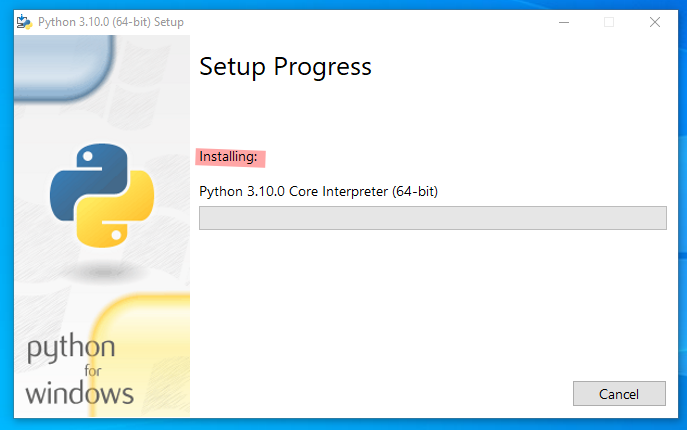
During installation on Windows, make sure to check the box that says "Add Python to PATH." This small step makes it easier to run Python from your computer's command line, which is a useful skill to have.
Your Coding Toolkit
Once Python is installed, you need a place to write your code. While you could use a simple text editor, most developers use an Integrated Development Environment, or IDE. An IDE is a software application that provides everything you need to write, test, and debug your code in one place.
Think of an IDE as a specialized workshop for a programmer. It includes tools like a text editor with syntax highlighting, which colors your code to make it more readable. It also has features like code completion, which suggests code as you type, and a debugger, which helps you find and fix errors.
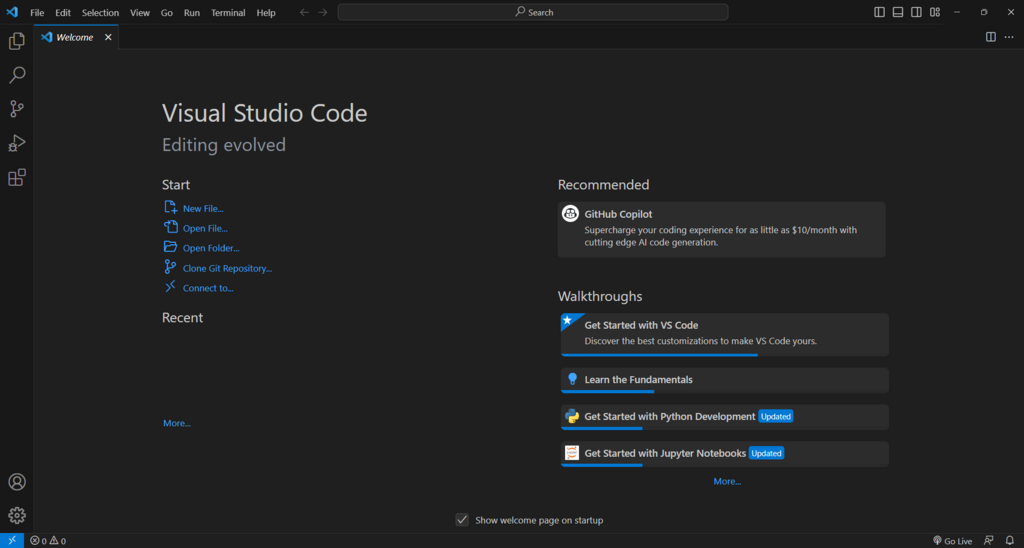
For beginners, Visual Studio Code (VS Code) and PyCharm are excellent choices. Both have great support for Python and offer features that can help you learn faster. For now, just pick one and get started. You can always switch later.
Your First Program
It's a tradition in programming to start by making the computer say "Hello, World!". This simple task confirms that your setup is working correctly and gives you your first taste of writing code. Open your IDE, create a new file, and name it hello.py. The .py extension tells the computer that this is a Python file.
In that file, type the following line of code:
print("Hello, World!")
Let's break this down. print() is a built-in Python function that outputs text to the screen. The text you want to display, "Hello, World!", goes inside the parentheses and is wrapped in quotation marks. This tells Python that it's a string of text.
Now, you need to run the file. Most IDEs have a "Run" button (often a green triangle) that will execute the code for you. When you run it, you should see the words Hello, World! appear in an output window or terminal. Congratulations, you've just written and run your first Python program.
What are the two essential steps for setting up a Python development environment?
Why is Python often described as an "interpreted" language?
That's all it takes to get started. You've set up your environment and written a real program. The next step is to learn the fundamental building blocks of the language.