Python Programming Fundamentals
Introduction to Python
Getting Started with Python
Python is a programming language known for its simple, readable syntax. It reads a lot like plain English, which makes it a great choice for beginners. But don't let the simplicity fool you. Python is incredibly powerful and is used by companies like Google, Netflix, and NASA for everything from web development to machine learning.
The main idea behind Python is to make code easy to write and understand.
Setting Up Your Environment
Before you can start coding, you need two things: the Python interpreter and a code editor. The interpreter is what reads your Python code and runs the commands. You can download it directly from the official Python website, python.org.
A code editor is where you'll write your code. While you could use a basic text editor, most developers use an Integrated Development Environment (IDE). An IDE is a specialized editor that includes helpful tools like code completion, debugging, and project management. For Python, a popular choice is PyCharm, but others like Visual Studio Code are also excellent.
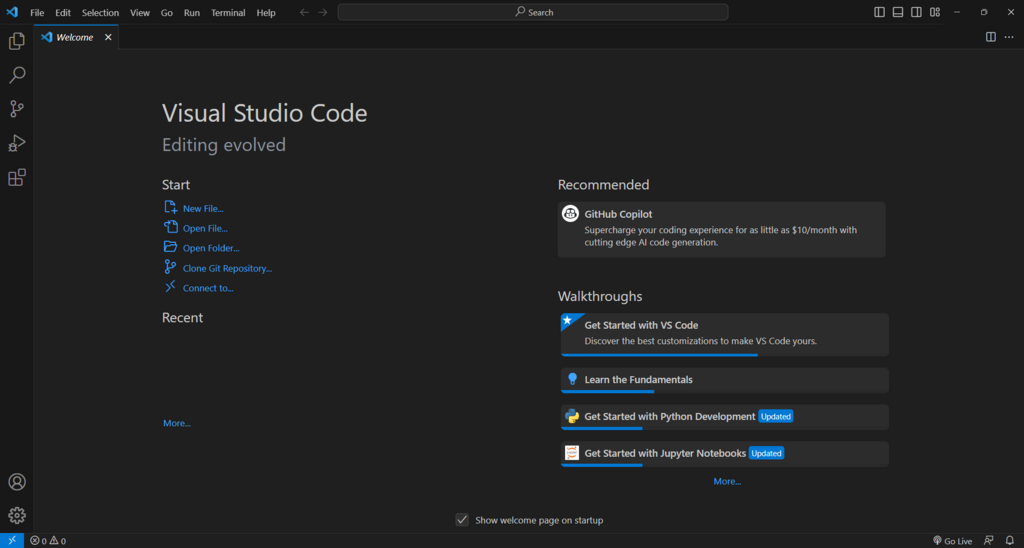
The installation process is straightforward. Visit the official websites for Python and your chosen IDE, download the installer for your operating system (Windows, macOS, or Linux), and follow the on-screen instructions.
Your First Program
It's a long-standing tradition in programming to make your first program display the text "Hello, World!". This simple task confirms that your setup is working correctly and gives you your first taste of the language's syntax.
In Python, this is remarkably easy. All you need is a single line of code.
# This is a comment. Python ignores it.
# The print() function displays text to the screen.
print("Hello, World!")
Open your IDE, create a new file (for example, hello.py), type that line of code, and run it. You should see Hello, World! printed in the output console. Congratulations, you've just written and executed your first Python program!
Syntax and Indentation
One of the most unique features of Python is how it uses indentation. Unlike many other languages that use curly braces {} to define blocks of code, Python uses whitespace. This means the amount of space at the beginning of a line is not just for looks—it's part of the syntax.
Consistent indentation is mandatory in Python. It's how the interpreter understands the structure of your program.
For example, when you write a function or a loop, the code inside that block must be indented. The standard convention is to use four spaces for each level of indentation. Most IDEs will handle this for you automatically when you press the Tab key.
This rule might seem strange at first, but it forces programmers to write clean, readable code that is easy to follow.
What Is Python Used For?
Python is a general-purpose language, which means it can be used to build almost anything. Its versatility is one of its biggest strengths.
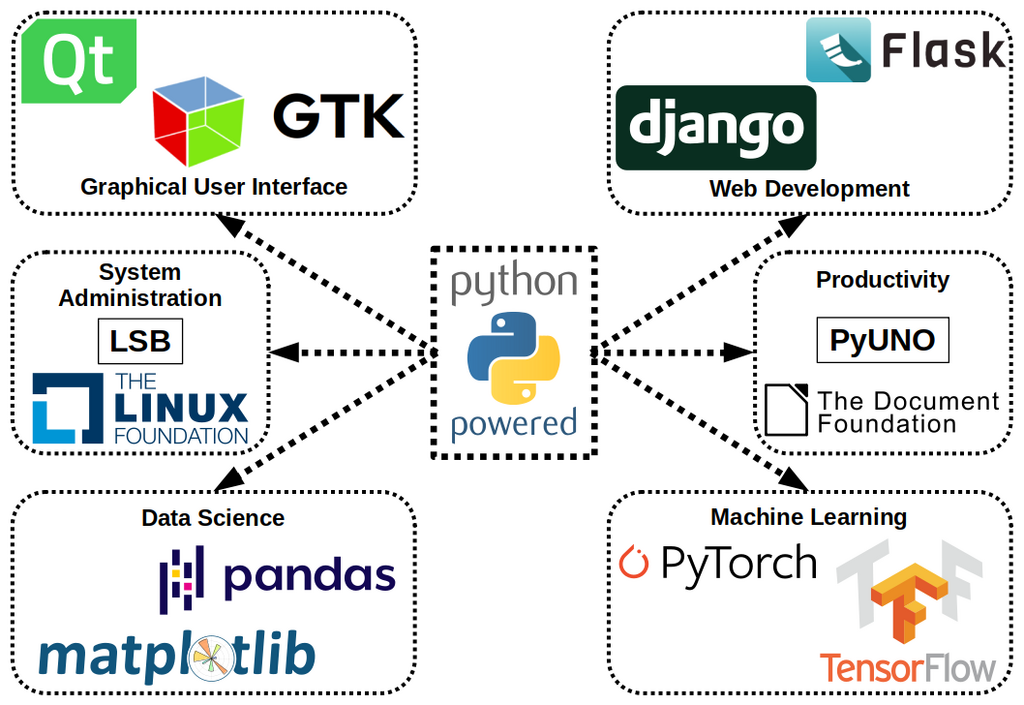
Here are a few popular areas where Python shines:
- Web Development: Frameworks like Django and Flask allow developers to build powerful and scalable web applications and APIs.
- Data Science & Machine Learning: Libraries such as Pandas, NumPy, and TensorFlow have made Python the leading language for data analysis, visualization, and artificial intelligence.
- Automation and Scripting: Python is perfect for writing small scripts to automate repetitive tasks, like organizing files, sending emails, or scraping data from websites.
- Software Testing and Prototyping: Its simplicity allows developers to quickly build prototypes and write automated tests for their software.
This is just the beginning. As you learn more, you'll discover that you can use Python to tackle nearly any problem you can imagine.