Python Programming Fundamentals
Introduction to Python
Meet Python
In the late 1980s, a Dutch programmer named Guido van Rossum was looking for a new project to keep him busy during a holiday week. The result was Python, a programming language he named after the British comedy troupe Monty Python's Flying Circus.
Van Rossum wanted to create a language that was easy to read and write. He focused on a clean, uncluttered syntax that emphasizes readability, believing that code is read far more often than it is written. This philosophy makes Python a fantastic starting point for anyone new to programming.
This focus on simplicity is often called the "Zen of Python." It's a collection of 19 guiding principles for writing computer programs. One of the most famous lines is:
Beautiful is better than ugly. Explicit is better than implicit. Simple is better than complex.
What Can You Do With It?
Python is a general-purpose language, which means it’s not specialized for one specific task. Think of it as a multi-tool for software development. Its versatility has led to its adoption in countless industries and for a wide range of applications.
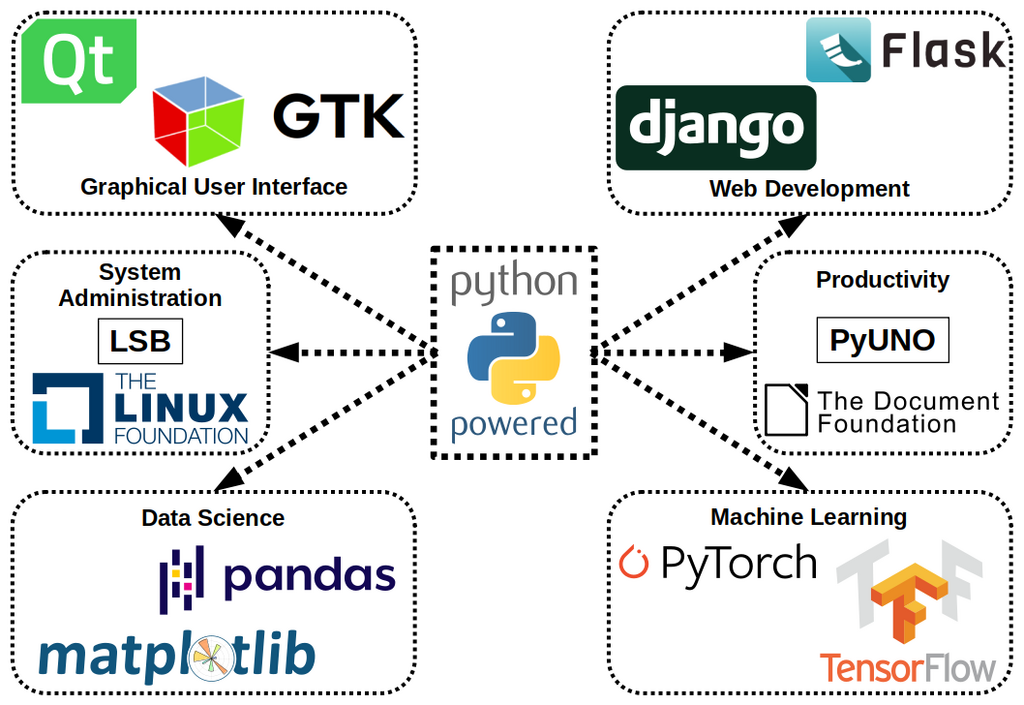
Here are just a few of the areas where Python shines:
| Field | Common Uses | Popular Tools |
|---|---|---|
| Web Development | Building the server-side logic of websites and applications. | Django, Flask |
| Data Science & Analysis | Cleaning, manipulating, analyzing, and visualizing data. | Pandas, NumPy, Matplotlib |
| Machine Learning & AI | Creating and training models for tasks like prediction and classification. | TensorFlow, PyTorch, Scikit-learn |
| Automation & Scripting | Automating repetitive tasks, like organizing files or sending emails. | Built-in libraries |
| Game Development | Creating simple games and prototypes. | Pygame |
This flexibility is powered by a massive collection of third-party packages and a supportive community. If you have a problem to solve, there's a good chance someone has already built a Python tool to help you.
Getting Your Tools Ready
Before you can start coding, you need two things: the Python interpreter and a code editor. The interpreter is what reads your Python code and carries out its instructions. The code editor is a program where you'll write and save your code.
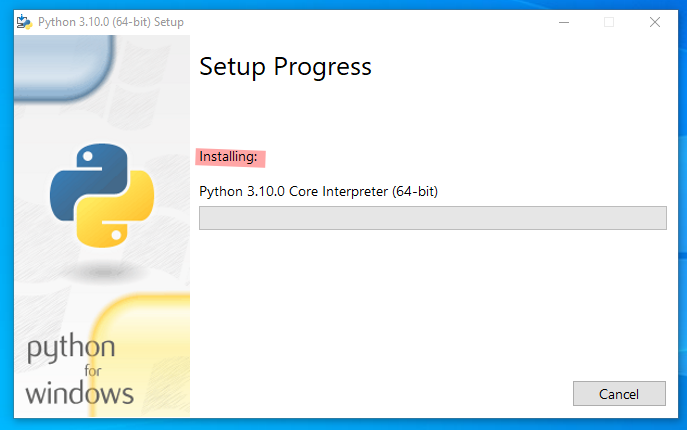
First, you'll need to install Python. You can download the latest version for your operating system directly from the official website, python.org.
Next, you'll need a place to write your code. While you could use a simple text editor like Notepad, a dedicated code editor offers features like syntax highlighting and debugging that make programming much easier. Python's installer comes with a basic editor called IDLE, which is great for starting out.
As you progress, you might want to try more powerful editors like Visual Studio Code, PyCharm, or Sublime Text. For now, IDLE is all you need.
Your First Program
It's a long-standing tradition in programming to make your first program display the message "Hello, World!". Let's do that in Python.
Open IDLE (or your chosen code editor) and create a new file. Type the following line of code:
print("Hello, World!")
Save the file with a .py extension, for example, hello.py. The .py tells your computer that it's a Python file.
The print() part is a built-in function in Python. It tells the computer to display whatever you put inside the parentheses on the screen.
To run your program, you can typically select an option like "Run Module" from your editor's menu. If you're using the command line, navigate to the directory where you saved your file and type python hello.py. You should see the output:
Hello, World!
Congratulations! You've just written and executed your first Python program.
Who is the original creator of the Python programming language?
Python is described as a "general-purpose language." What does this mean?
That's your first step into the world of Python. You've learned where it comes from, what it's used for, and how to write a simple program. From here, you can start exploring the building blocks of the language.