Python Programming Fundamentals
Introduction to Python
What Is Python?
Python is a programming language, a way to give instructions to a computer. It was created in the late 1980s by Guido van Rossum, who wanted to make a language that was easy to read and write. He named it after the British comedy troupe Monty Python, not the snake.
What makes Python so popular is its philosophy. It emphasizes code readability and simplicity. This means you can often write a program in Python with fewer lines of code than in other languages. Think of it like giving directions. Some languages are like giving turn by turn directions with exact coordinates, while Python is more like saying, "Go to the end of the block and turn left at the big tree." Both get you there, but one is much simpler to follow.
Python is also incredibly versatile. It's used for building websites, analyzing data, creating artificial intelligence, automating tasks, and much more. This versatility comes from its huge standard library and a massive community of developers who create and share tools.
Setting Up Your Workspace
Before you can write Python code, you need two things: the Python interpreter and a place to write your code. The interpreter is a program that reads your Python code and translates it into instructions the computer can understand and execute.
You can download the official Python interpreter for free from the official website, python.org. Be sure to download the latest stable version.
Next, you need a code editor. While you could technically use a basic text application like Notepad, most programmers use a specialized tool. There are two main types:
-
Text Editors: These are lightweight programs focused on writing code. Many have features like syntax highlighting, which colors your code to make it easier to read. Popular choices include Visual Studio Code, Sublime Text, and Atom.
-
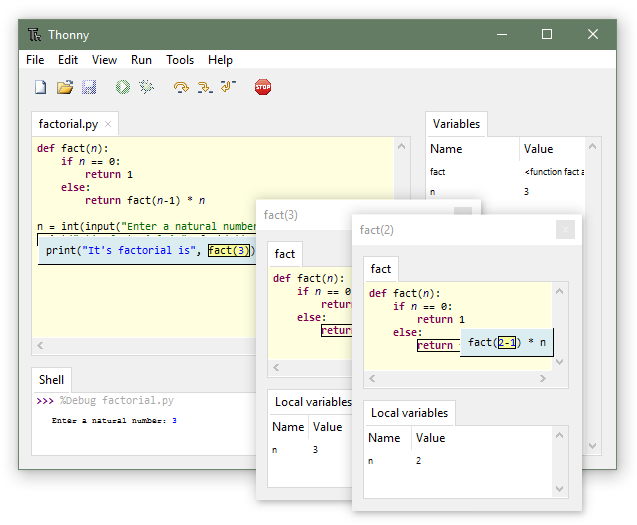
Integrated Development Environments (IDEs): These are more powerful suites of tools that bundle a code editor with other features like a debugger (for finding errors) and an integrated terminal. For beginners, an IDE like Thonny is excellent because it's designed for learning. PyCharm is another very popular and powerful option.
Your First Program
In programming, there's a tradition. The very first program you write in a new language is one that simply displays the message "Hello, World!" on the screen. It's a simple way to confirm that your setup is working correctly.
In Python, this is incredibly straightforward. Open your IDE or text editor, create a new file, and save it with a .py extension, like hello.py.
Now, type the following line of code into your file:
print("Hello, World!")
That's it. This one line tells Python to use the built-in print function to display the text inside the parentheses and quotation marks.
To run the program, you can usually click a "Run" button in your IDE. If you're using a text editor, you'll need to open your computer's command line or terminal, navigate to the directory where you saved your file, and type python hello.py (or python3 hello.py on some systems). If everything is set up correctly, you'll see Hello, World! printed in the output.
Let's check your understanding of these first steps.
What is the core philosophy behind the Python programming language?
Which line of code will correctly display the message "Hello, World!" on the screen?