Python Programming Fundamentals
Introduction to Python
What is Python?
Python is a programming language, a set of instructions we can give to a computer. Think of it like a recipe. You write the steps, and the computer follows them to create something. What makes Python special is its readability. It's designed to look a lot like plain English, which makes it one of the easiest languages for beginners to learn.
It's considered a "high-level" language. This means you don't have to worry about the computer's nitty-gritty details, like managing memory. You can focus on the logic of what you want to build. It's also an "interpreted" language. Instead of compiling your entire program into machine code before running it, an interpreter reads and executes your code line by line. This makes testing small changes quick and easy.
This simplicity doesn't mean it's not powerful. Python is used by companies like Google, Netflix, and NASA for everything from web development and data analysis to artificial intelligence and scientific computing.
Setting Up Your Workspace
To start writing Python, you need two things: the Python interpreter itself and a good text editor. The interpreter is the program that reads your code and carries out the instructions. The best place to get it is from the official source.
Download the latest version of Python from python.org.
Once Python is installed, you need a place to write your code. While you could use a simple text editor like Notepad, most programmers use an Integrated Development Environment, or IDE. An IDE is like a supercharged text editor designed specifically for coding. It usually includes:
- A Text Editor: With syntax highlighting that colors your code to make it easier to read.
- An Executor: A button or command to run your code directly from the editor.
- A Debugger: A tool to help you find and fix errors in your code.
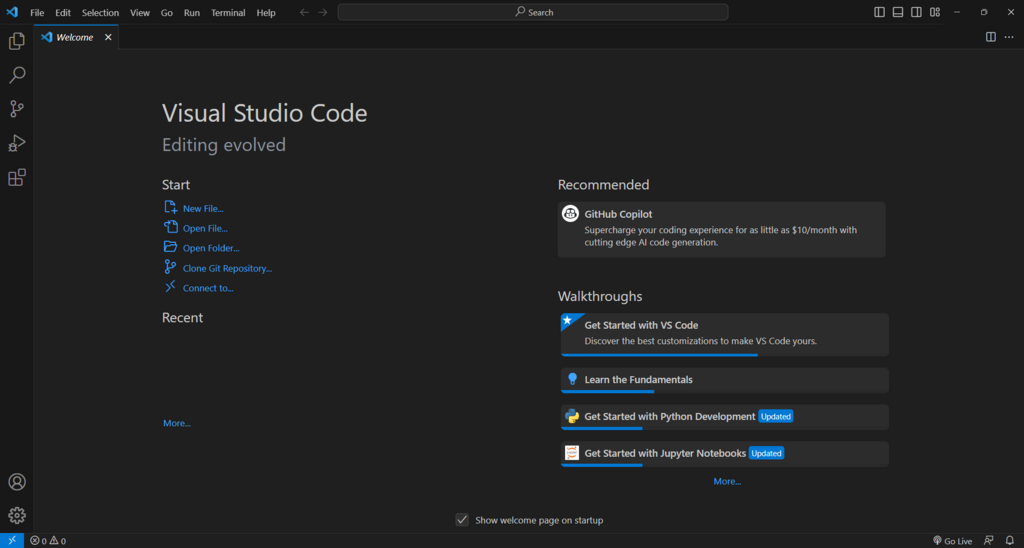
Two of the most popular IDEs for Python are Visual Studio Code (VS Code) and PyCharm. Both are excellent choices for beginners and professionals. They offer helpful features like code completion, which suggests code as you type, and tools for managing larger projects.
Your First Program
It's a tradition in programming to make your first program print the words "Hello, World!" to the screen. This simple task confirms that your setup is working correctly. Let's write one in Python.
Open your IDE, create a new file, and save it as hello.py. The .py extension is important because it tells the computer that this is a Python file.
Now, type the following line of code into your file:
print("Hello, World!")
That's it. The print() part is a built-in Python function that tells the computer to display whatever you put inside the parentheses. The text inside the quotation marks is called a string, which is just a sequence of characters.
Now, run the file. In most IDEs, you can do this by clicking a "Run" button (often a green triangle) or by opening a terminal panel and typing python hello.py.
If everything is set up correctly, you should see
Hello, World!printed in the output console.
Congratulations, you've just written and executed your first Python program. You've taken the first step in telling computers what to do.
Python is considered a 'high-level' language. What does this mean for the programmer?
What is the primary role of an Integrated Development Environment (IDE)?
You're on your way to becoming a Python programmer.