Python Programming Fundamentals
Python Basics
What Is Python?
Python is a versatile programming language used for everything from web development to data science and artificial intelligence. It was created in the late 1980s by Guido van Rossum, who named it after the British comedy troupe Monty Python. He wanted a language that was simple, readable, and fun to use.
One of Python's core principles is that code should be easy to read and write. Its syntax is clean and straightforward, which is why it's often recommended for beginners. You can express complex ideas in fewer lines of code compared to languages like Java or C++. This focus on readability doesn't sacrifice power; Python is used by major companies like Google, Netflix, and NASA.
Key features that make Python popular include:
- Beginner-Friendly: The simple syntax lets you focus on learning programming concepts rather than getting bogged down by complicated rules.
- Large Community: Millions of developers use Python, which means there's a huge community to offer support and answer questions.
- Extensive Libraries: Python has a massive collection of pre-written code, called libraries or modules, that you can use to perform complex tasks without starting from scratch. Think of them as toolkits for specific jobs like creating charts, building websites, or analyzing data.
Getting Your Tools Ready
To start programming in Python, you need two things: the Python interpreter and a place to write your code. The interpreter is the program that understands and runs your Python code. A good code editor or an Integrated Development Environment (IDE) is where you'll write it.
Think of it like baking a cake. The interpreter is the oven that does the actual baking, while the IDE is your kitchen countertop, complete with mixing bowls and measuring spoons, making the whole process easier.
First, we'll install Python itself. Then, we'll pick an IDE to serve as our coding workspace.
Installing Python
The best place to get Python is from its official website, python.org. You'll want to download the latest stable version for your operating system (Windows, macOS, or Linux).
The installation process is straightforward. On Windows, there's one very important step: make sure to check the box that says "Add Python to PATH." This allows you to run Python from your computer's command line, which is a useful skill to have. On macOS, Python might already be installed, but it's often an older version, so it's best to install the latest one from the website.
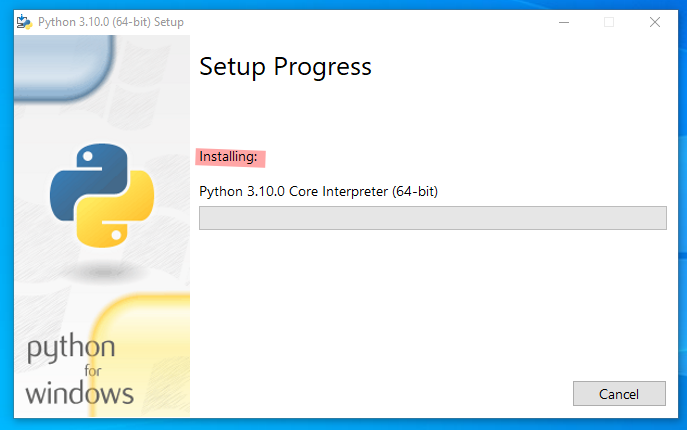
Once the installation is complete, you have the Python interpreter on your machine. You can technically write code in a plain text editor, but an IDE makes the experience much better.
Choosing an IDE
An Integrated Development Environment (IDE) is a software application that provides comprehensive facilities to computer programmers for software development. An IDE normally consists of at least a source code editor, build automation tools, and a debugger.
For beginners, a good IDE can feel like a helpful guide. It will highlight your code in different colors to make it more readable, point out simple errors before you even run your code, and help you organize larger projects. Here are a few popular choices:
- IDLE: This is the IDE that comes bundled with the official Python installation. It's very basic but perfectly fine for getting started.
- Visual Studio Code (VS Code): A free, highly popular code editor from Microsoft. It's lightweight but can be extended with thousands of plugins, including a very powerful one for Python.
- Thonny: An IDE built specifically for learning and teaching programming. It has a very simple interface and features that help you see what Python is doing step-by-step.
We recommend starting with VS Code or Thonny. Let's get one set up and write our first program.
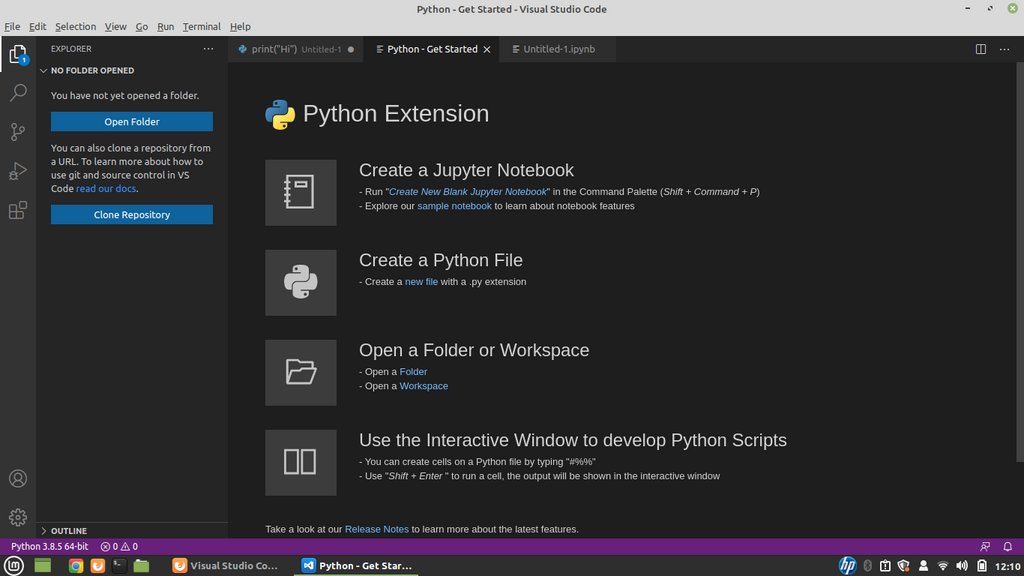
After installing your chosen IDE, open it and create a new file. Make sure to save it with a .py extension, like hello.py. This extension tells the computer that it's a Python file.
Now, let's write the traditional first program for any new language: "Hello, World!"
# This is a comment. Python ignores lines starting with a #.
# The print() function displays text to the screen.

print("Hello, World!")
Type that single line of code into your file, save it, and run it. Most IDEs have a "Run" button (often a green triangle) that will execute the code. You should see the text Hello, World! appear in an output window or terminal.
Congratulations! You've just set up your development environment and written your first Python program.