Python LLM Prompt Engineering
Introduction to Large Language Models
What Are Large Language Models?
A Large Language Model, or LLM, is a type of artificial intelligence designed to understand and generate human-like text. Think of it as a very advanced autocomplete, but instead of just suggesting the next word, it can write paragraphs, answer questions, translate languages, and even create computer code.
The significance of LLMs lies in their versatility. They learn from an enormous amount of text data, which allows them to grasp grammar, context, facts, and different styles of writing. This makes them powerful tools for a huge range of tasks.
Large Language Model
noun
A type of artificial intelligence model trained on vast quantities of text data to understand context, discern patterns, and generate human-like language.
The "large" in their name refers to two things: the immense size of the datasets they're trained on and the huge number of parameters they contain. A parameter is like a knob that the model adjusts during training to improve its predictions. Models like GPT-3 have hundreds of billions of parameters, allowing for an incredibly nuanced understanding of language.
How LLMs Learn Language
At its core, an LLM learns by playing a very sophisticated guessing game. It's trained to do one primary thing: predict the next word in a sentence. It looks at a sequence of words and calculates the probability for every possible word that could come next.
For example, given the phrase, "The sun rises in the...", the model would assign a very high probability to the word "east".
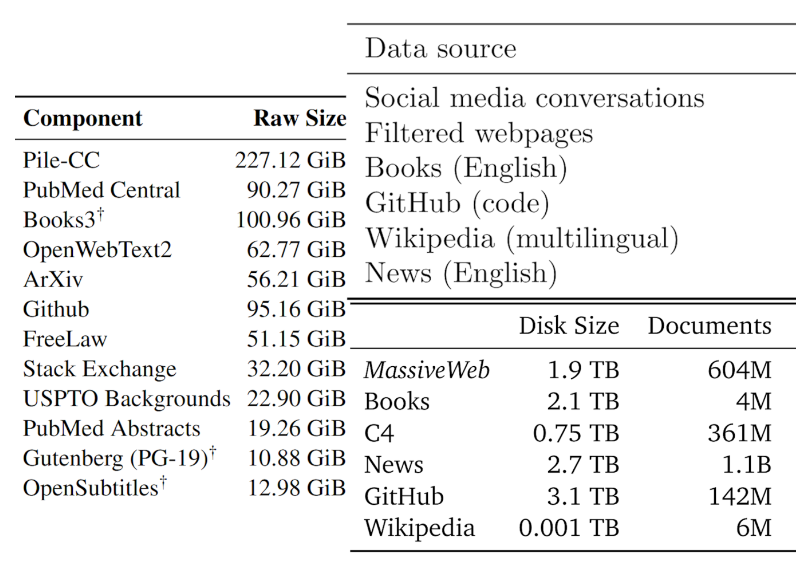
To get good at this game, the model needs a lot of practice material. LLMs are trained on massive datasets containing text from books, articles, websites, and other sources. By processing this information, they learn patterns, grammar, factual associations, and even stylistic nuances. It's not just memorizing; it's learning the statistical relationships between words and concepts.
Under the Hood Architectures
Modern LLMs are built on a type of neural network architecture called the Transformer, introduced in 2017. Before the Transformer, models processed text sequentially, word by word. This made it difficult to keep track of context in long sentences.
The Transformer's key innovation is the "attention mechanism." This allows the model to weigh the importance of different words in the input text when it's generating an output. It can "pay attention" to words that are far apart but contextually related, giving it a much better grasp of the overall meaning.
Two of the most well-known LLM architectures are:
- GPT (Generative Pre-trained Transformer): These models are great at generating text. They read a sequence of text and are optimized to produce a coherent continuation. They are called "decoder-only" models because their main job is to decode an input prompt into a longer text.
- BERT (Bidirectional Encoder Representations from Transformers): Unlike GPT, BERT is designed to understand the context of a word based on all the other words in a sentence, both before and after it. This makes it excellent for tasks that require a deep understanding of text, like sentiment analysis or question answering. It is an "encoder-only" model, focused on creating a rich numerical representation of the input text.
Common Applications
Because LLMs are so flexible, they've been applied in countless ways across many different fields. Their ability to process and generate natural language has opened up new possibilities for automation and human-computer interaction.
| Application | Description |
|---|---|
| Content Creation | Writing articles, marketing copy, emails, and even poetry. |
| Chatbots & Assistants | Powering conversational AI for customer service and personal assistants. |
| Code Generation | Translating natural language descriptions into functional computer code. |
| Summarization | Condensing long documents or articles into key bullet points. |
| Translation | Translating text between different languages with improved accuracy. |
| Sentiment Analysis | Determining the emotional tone (positive, negative, neutral) of a piece of text. |
These are just a few examples. As the technology continues to evolve, LLMs are being integrated into more and more tools, changing how we interact with information and technology.
At its core, what is the fundamental task a Large Language Model is trained to do?
The 'large' in Large Language Model refers to which two aspects?
Now that you have a foundational understanding of LLMs, you're ready to see how they can be put to work.