Python Fundamentals: Your First Program
Introduction to Python
What is Python?
Think of a programming language as a special way to talk to a computer. You give it a set of instructions, and the computer follows them precisely. Python is one of these languages, and it's famous for being one of the friendliest and most readable.
Its syntax, or grammatical rules, is designed to be clean and simple. This means you can often write programs in Python with fewer lines of code than in other languages. It’s a high-level language, which means it handles a lot of the complex computer-level details for you, so you can focus on what you want to build.
Python is also a general-purpose language. That’s a fancy way of saying you can use it for almost anything. From building websites and automating repetitive tasks to analyzing data and creating artificial intelligence models, Python is a versatile tool in a programmer's toolbox.
A Quick History
Python was created in the late 1980s by a Dutch programmer named Guido van Rossum. He wanted to design a language that was easy to read and fun to use. At its core is a philosophy known as "The Zen of Python," which emphasizes simplicity and readability over complexity.
Beautiful is better than ugly. Explicit is better than implicit. Simple is better than complex.
This focus on clarity has helped Python grow into one of the world's most popular programming languages. Today, it powers parts of major applications like Instagram, Spotify, and Netflix. It's the go-to language for data scientists, academics, and web developers.
Getting Set Up
To start writing Python, you need two things: the Python interpreter and a place to write your code, like a text editor or an Integrated Development Environment (IDE).
Interpreter
noun
A program that reads your code line by line, translates it into computer-readable instructions, and executes it immediately.
Think of the interpreter as a live translator. You speak a line of Python, and the interpreter instantly translates it into a language the computer's hardware understands and acts upon.
You can download the official Python interpreter for free from python.org. It's best to get the latest stable version available for your operating system (Windows, macOS, or Linux).
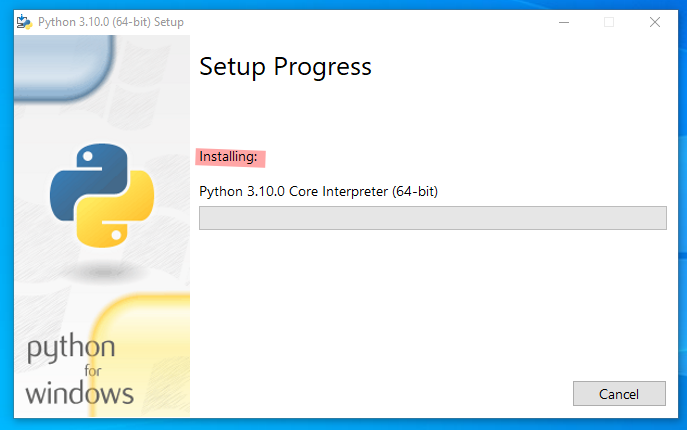
During installation on Windows, it's very important to check the box that says "Add Python to PATH." This allows you to run Python from your computer's command line, which is a useful tool for any developer.
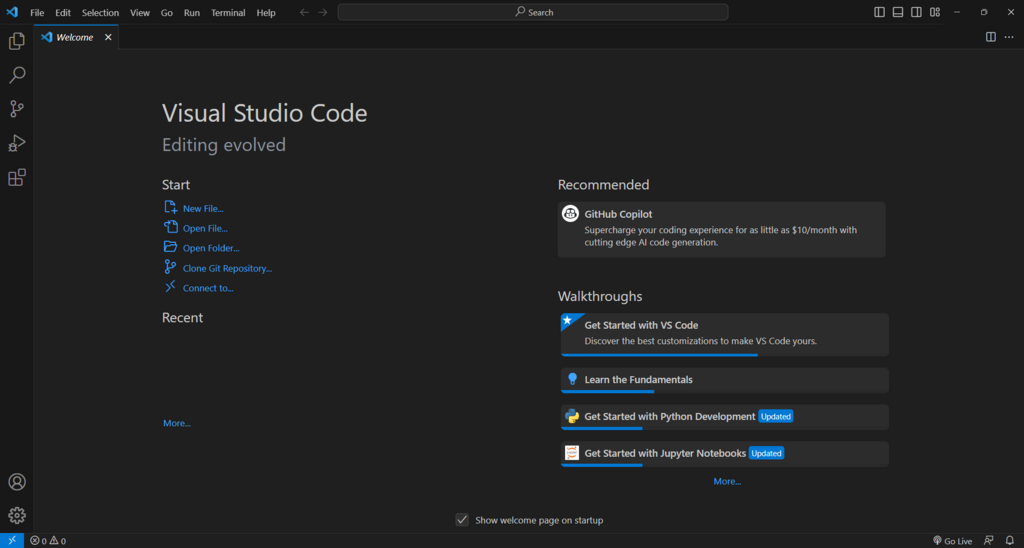
Next, you need an IDE. An IDE is a special text editor built for programming. It provides helpful features like syntax highlighting (coloring your code to make it easier to read), auto-completion, and tools to run and debug your programs. For beginners, popular choices include VS Code (with the Python extension), PyCharm Community Edition, and Thonny.
Your First Program
Once you have Python and an IDE installed, you're ready to write your first program. It's a tradition in programming to start with a "Hello, World!" program. Its only job is to display the text "Hello, World!" on the screen.
Open your IDE, create a new file, and save it as hello.py. The .py extension tells the computer that this is a Python file. Now, type the following line of code into the file:
print("Hello, World!")
That's it. This one line is a complete Python program.
print() is a built-in function in Python that displays text on the screen. Whatever you put inside the parentheses and quotation marks will be printed.
To run your program, most IDEs have a "Run" button (often a green triangle icon). You can also run it from the command line by navigating to the folder where you saved your file and typing python hello.py. You should see the output:
Hello, World!
Congratulations, you've just written and executed your first Python script. You've taken the first step into the world of programming.
Which of the following best describes Python?

Quiz Completed
0/1
Questions answered correctly