Python Fundamentals for Beginners
Introduction to Python
What is Python?
Python is a programming language, which is a way to give instructions to a computer. Think of it like a recipe. You write down the steps, and the computer follows them to create something, whether it's a website, a game, or a tool to analyze data.
What makes Python special is its simplicity. The code often reads like plain English, making it one of the easiest languages for beginners to learn. But don't let its simplicity fool you. Python is incredibly powerful and versatile.
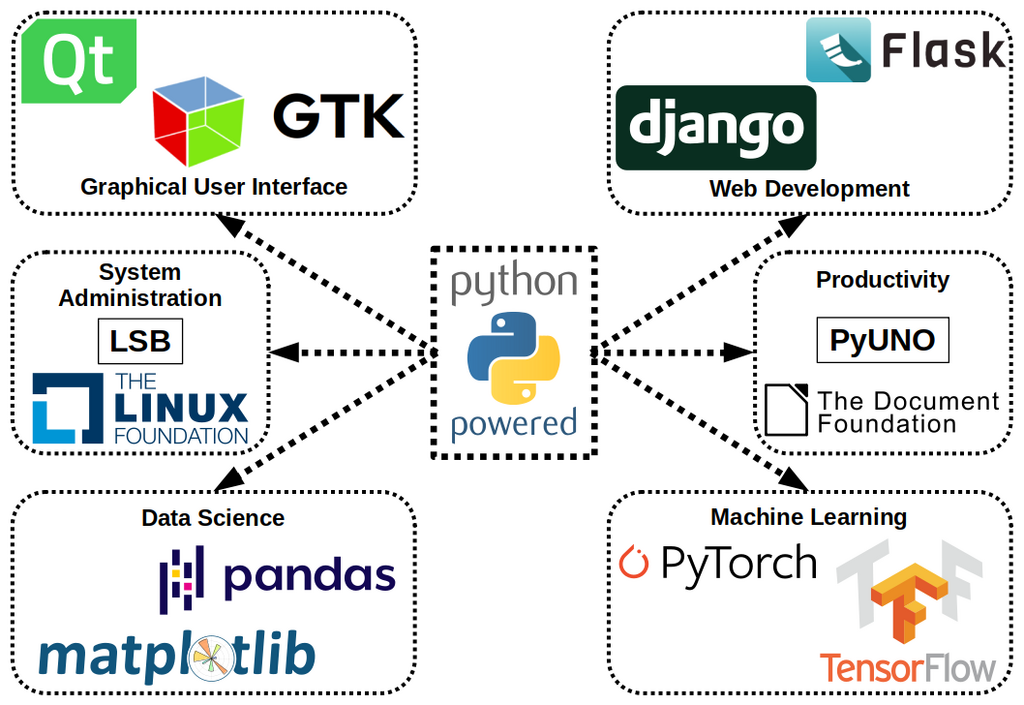
Companies like Netflix use it to power their data analysis and backend services. Instagram runs on a web framework written in Python. Even artists at Pixar use it to automate tasks in their animation software. It's a go-to language for web development, artificial intelligence, scientific computing, and simple task automation.
The core idea behind Python is that code should be easy to read and write. This makes it faster to develop projects and easier to maintain them later.
Getting Python on Your Computer
Before you can start writing code, you need to install the Python interpreter. This is a program that reads your Python code and translates it into instructions the computer can understand. It’s the engine that makes your scripts run.
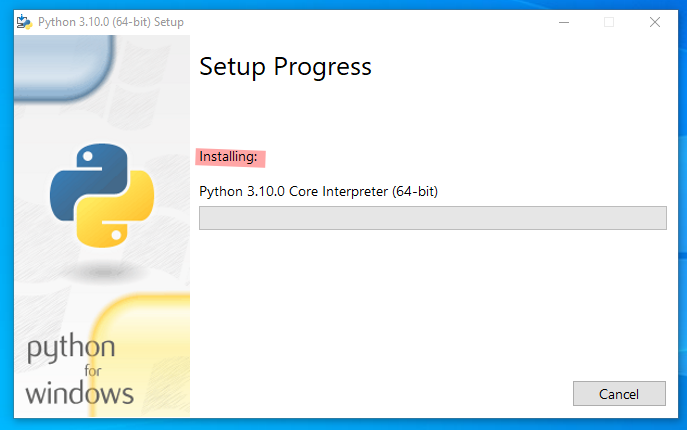
The installation process is slightly different depending on your operating system:
-
Windows: Go to the official Python website (python.org) and download the latest installer. When you run it, make sure to check the box that says "Add Python to PATH." This lets you run Python from your computer's command line easily.
-
macOS: The process is similar. Download the installer package from python.org and follow the on-screen instructions. macOS comes with an older version of Python, but it's best to install the latest version to get all the new features.
-
Linux: Most Linux distributions come with Python pre-installed. You can check by opening a terminal and typing
python3 --version. If it's not there or you want a newer version, you can usually install it with your system's package manager, likesudo apt-get install python3.
Your Coding Workspace
You can write Python code in any plain text editor, but it's much easier to use an Integrated Development Environment, or IDE. An IDE is like a workshop for programmers. It bundles all the essential tools into one application: a text editor for writing code, a way to run your code, and tools for finding and fixing mistakes (called debugging).
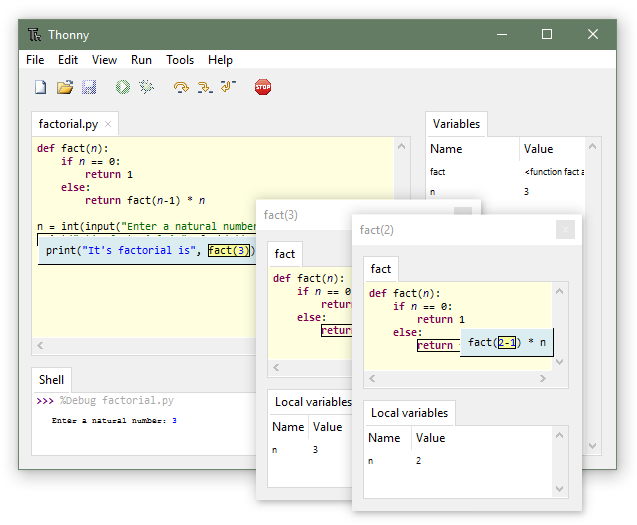
For beginners, a great choice is Thonny. It's designed specifically for learning and teaching programming. It has a very simple interface and comes with Python built-in, so you don't have to worry about separate installations. It also has features that help you see what your code is doing step-by-step, which is incredibly helpful when you're just starting out.
To get it, just go to thonny.org and download the installer for your operating system. Once it's installed, you're all set to write your first line of Python code.
What is the primary characteristic that makes Python a popular choice for beginners?
What is the main function of the Python interpreter?