Python Fundamentals
Introduction to Python
What is Python?
Python is a programming language, a tool for telling computers what to do. Unlike many languages that are cryptic and full of complex symbols, Python is designed to be readable. In fact, it's often described as being close to plain English. This makes it a great language for beginners.
Its design philosophy emphasizes code readability. One way it does this is by using indentation—the spaces at the beginning of a line—to group code together. Where other languages might use brackets or keywords, Python uses whitespace. This enforces a clean, organized layout that's easy to follow.
Python is also incredibly versatile. You can use it for building websites, analyzing data, creating artificial intelligence, or just automating tedious tasks. It supports several styles of programming, including procedural (step-by-step instructions), object-oriented (organizing code into objects), and functional (treating computation as the evaluation of mathematical functions).
Simplicity and flexibility are the core reasons so many people choose to learn and use Python.
Getting Python on Your Machine
Before you can write Python code, you need to install a program called the Python interpreter. Think of the interpreter as a translator. It takes the Python code you write and translates it into instructions that your computer's processor can understand and execute.
You can download the official interpreter for free from the Python website, python.org. The site will automatically suggest the best version for your operating system, whether it's Windows, macOS, or Linux. The installation process is similar to installing any other application.
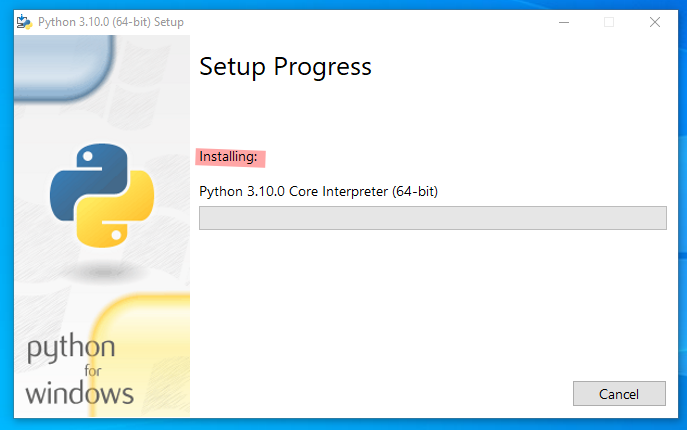
Important tip for Windows users: During installation, make sure you check the box that says "Add Python to PATH." This will allow you to run Python from your computer's command line easily.
Your Coding Workspace
You can write Python code in any plain text editor, but most developers use an Integrated Development Environment (IDE). An IDE is a software application that combines a text editor with other helpful tools, like a debugger for finding errors and a shell for running your code.
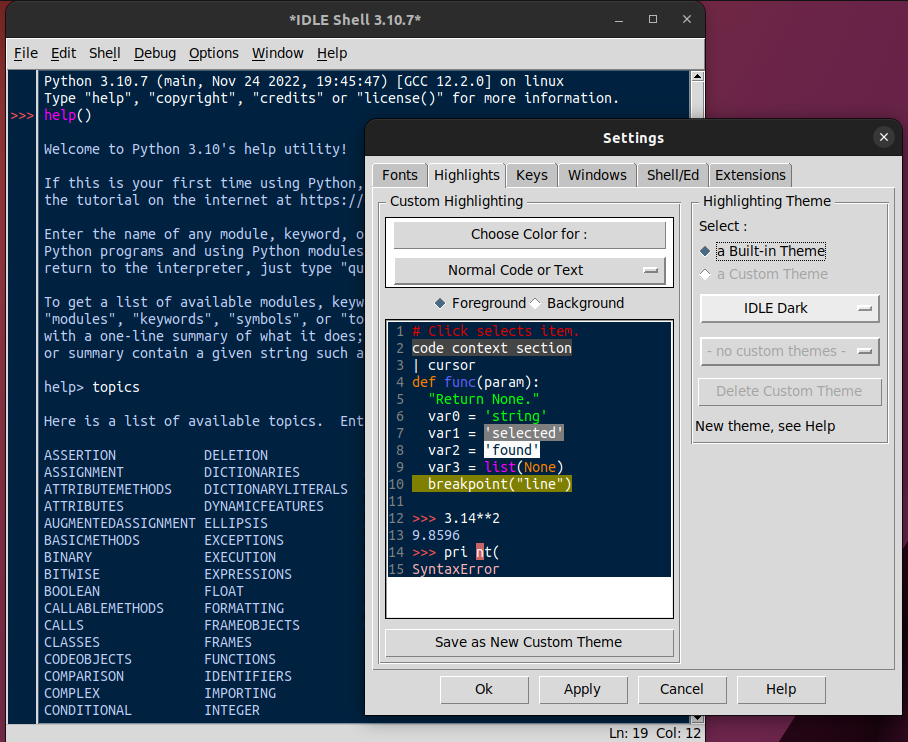
When you install Python, it comes with a simple, built-in IDE called IDLE (Integrated Development and Learning Environment). It's a great place to start because it's lightweight and easy to use. As you get more experienced, you might explore other popular IDEs like Visual Studio Code or PyCharm, which offer more advanced features.
Your First Python Program
Let's write a classic first program: one that simply prints "Hello, World!" to the screen. It's a long-standing tradition in programming that serves as a simple test to make sure your environment is set up correctly.
First, open IDLE. You'll be greeted by the Python Shell, which lets you run commands one at a time. For writing a script, you'll want to open a new file. Go to File > New File. This will open a new, blank text editor window.
In this new window, type the following line of code:
print("Hello, World!")
That's it. This line tells Python to use its built-in print function to display the text inside the parentheses.
Now, save the file. Go to File > Save and name it something like hello.py. The .py extension is important—it tells your computer that this is a Python file.
To run your program, go to Run > Run Module in the editor window (or just press F5). The output, "Hello, World!", will appear back in the Python Shell window.
What is a key feature of Python's design philosophy that makes it different from many other programming languages?
What is the primary function of the Python interpreter?
Congratulations! You've just installed Python, set up a basic development environment, and run your first script.