Python Fundamentals
Introduction to Python
What is Python?
Python is a programming language, which is a way for us to give instructions to a computer. Think of it like a recipe. You write down the steps, and the computer follows them to create something, whether it's a website, a game, or an analysis of data.
What makes Python special is its simplicity. Its rules, or syntax, are designed to be clean and readable, almost like plain English. This makes it one of the easiest languages for beginners to learn. But don't let its simplicity fool you. Python is incredibly powerful and versatile.
It's used by major companies like Google, Netflix, and NASA for everything from web development and data science to machine learning and automation. This wide range of applications means that learning Python opens a lot of doors.
Setting Up Your Workspace
Before you can start writing Python code, you need two things: Python itself and a place to write your code.
1. Install Python First, you need to install the Python interpreter. This is the program that reads your Python code and translates it into instructions the computer can execute. You can download it for free from the official Python website, python.org. The site usually detects your operating system (like Windows or macOS) and suggests the best version to download.
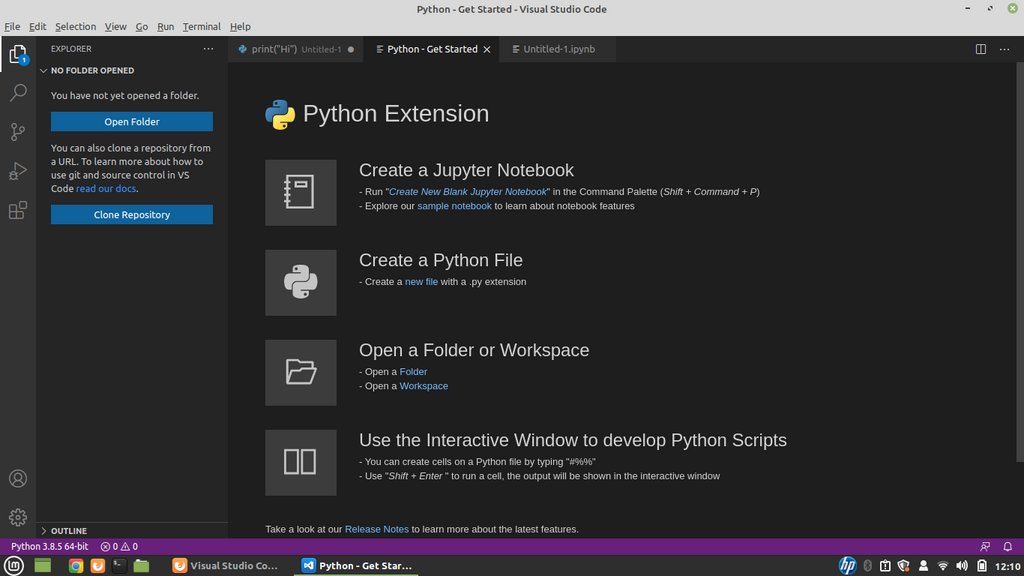
2. Choose a Code Editor While you can write Python in a simple text editor, it's much easier to use a code editor. A good code editor helps by highlighting your code in different colors to make it more readable, catching simple errors, and offering suggestions as you type. A great, free, and popular option for beginners is Visual Studio Code (often called VS Code). You can download it from code.visualstudio.com. Once it's installed, you'll also want to add the official Python extension to get the best experience.
Your First Python Program
It's a tradition in programming to make your first program display the message "Hello, World!". Let's do it in Python.
First, open your code editor (like VS Code) and create a new file. Save it with a .py extension, which tells the computer it's a Python file. For example, you could name it hello.py.
Inside this file, type the following line of code:
print("Hello, World!")
That's it. That's the entire program.
print() is a built-in Python function that displays whatever you put inside the parentheses on the screen. The text inside the quotes is called a string, which is just a sequence of characters.
To run your program, open a terminal or command prompt, navigate to the folder where you saved your
hello.pyfile, and typepython hello.py(orpython3 hello.pyon some systems) and press Enter.
If everything is set up correctly, you should see this output:
Hello, World!
Congratulations! You've just written and executed your first Python program. You gave the computer an instruction, and it followed it perfectly. This simple act of printing a message is the foundation for all the amazing things you can build with code.
Ready to check your understanding?
What is the primary role of the Python interpreter?
When saving a Python file, what file extension should you use?
You now have a basic setup for writing Python and you've run your first script. From here, you're ready to explore what makes Python such a powerful tool.