Python for AI Agents
Introduction to Artificial Intelligence
What Is Artificial Intelligence?
Artificial intelligence, or AI, is the science of making computers do things that normally require human intelligence. This includes tasks like learning from experience, solving problems, understanding language, and recognizing objects in images.
Think of it less as a single technology and more as a broad field of study, like biology or physics. It's an umbrella term that covers many different methods and goals. The common thread is the quest to create systems that can sense, reason, and act on their own.
AI isn't about building a person out of code. It's about creating tools that can extend our own abilities by processing information and spotting patterns at a scale we can't.
A Quick Trip Through Time
The idea of intelligent machines has been around for centuries, but the actual field of AI research kicked off in the 1950s. Early AI was based on rules. Programmers would write countless lines of code to tell a computer exactly what to do in every possible situation. This worked for simple, predictable tasks, like playing tic-tac-toe, but it fell short in the complex, messy real world.
A major shift came with the rise of machine learning. Instead of being explicitly programmed, systems could now learn from data. This led to breakthroughs in everything from spam filters to medical diagnoses. Over the decades, bursts of progress have been followed by periods of slower development, but the overall trend has been one of accelerating advancement.

The AI Family Tree
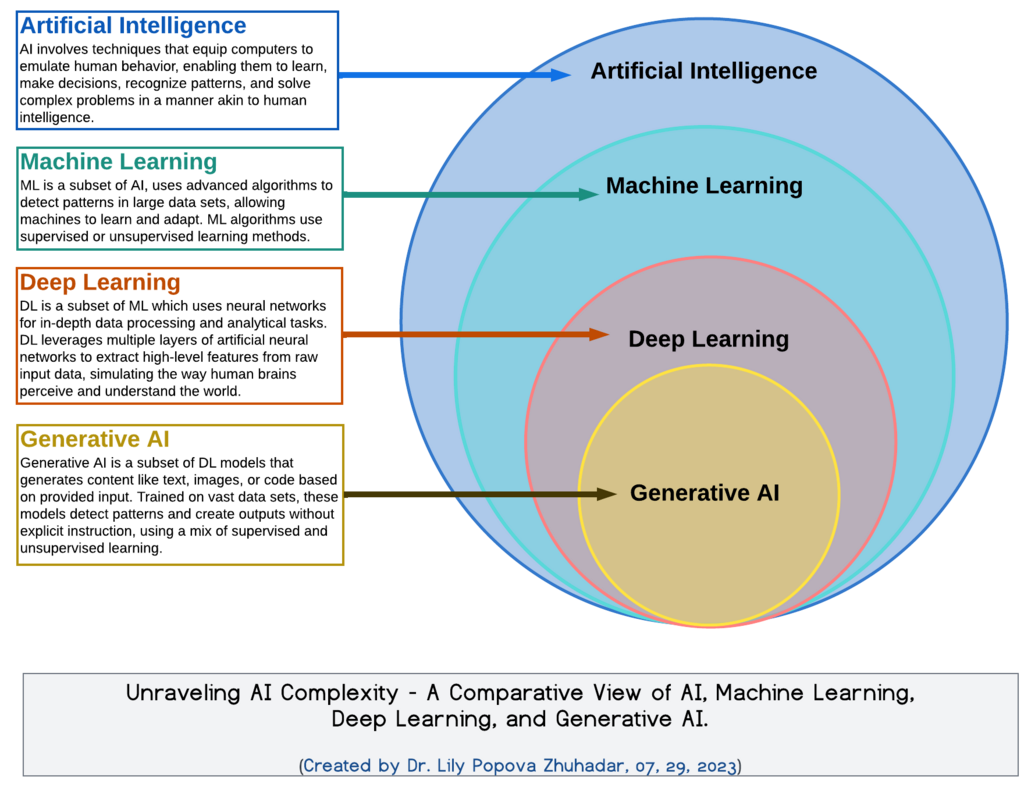
AI is a big family with many branches. Understanding a few of the most important ones helps clarify what people mean when they talk about "AI."
Machine Learning
noun
A subfield of AI where algorithms are trained on data to find patterns and make predictions without being explicitly programmed for that task.
Another key branch is Natural Language Processing (NLP), which focuses on the interaction between computers and human language. When you talk to a virtual assistant like Siri or use an online translation service, you're using NLP.
Deep Learning is a specialized type of machine learning that uses structures called neural networks, which are loosely inspired by the human brain. It's the powerhouse behind many recent AI advances, including image recognition and sophisticated language models.
Finally, Generative AI is a subset of deep learning that can create new content—like text, images, or music—that resembles the data it was trained on. This is the technology that powers tools like ChatGPT and DALL-E.
Two Kinds of Intelligence
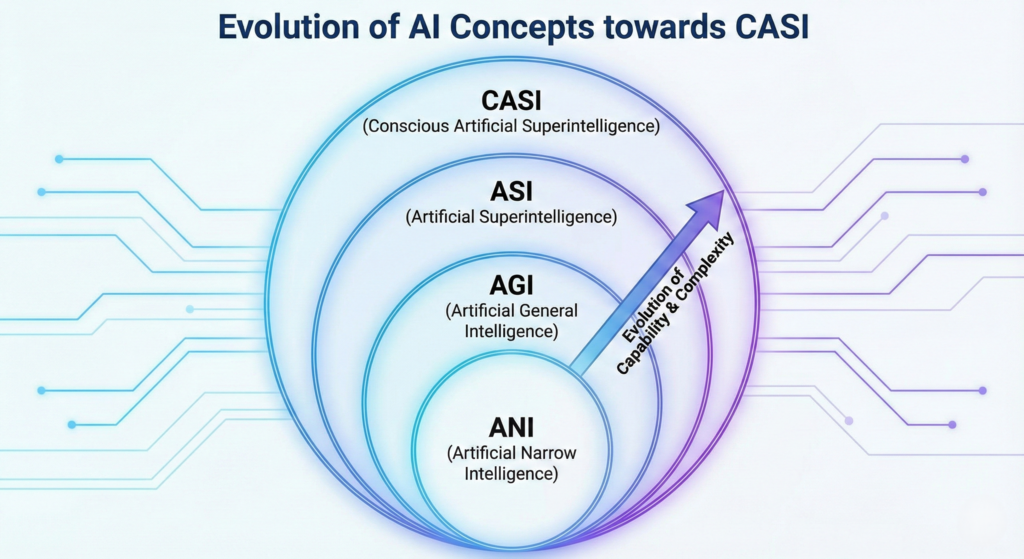
In the world of AI, it's important to distinguish between two main types: narrow and general intelligence.
| Type | Description | Example |
|---|---|---|
| Artificial Narrow Intelligence (ANI) | Designed to perform a specific, narrow task. | A chess-playing program, a recommendation engine, a self-driving car. |
| Artificial General Intelligence (AGI) | A hypothetical AI with the ability to understand, learn, and apply knowledge across a wide range of tasks at a human level. | Does not currently exist. A single system that could write a novel, compose music, and conduct scientific research. |
All the AI we use today is ANI. While these systems can be incredibly powerful at their specific jobs, they lack general understanding or common sense. A chess AI can't write an email, and a spam filter can't drive a car. AGI remains the long-term, and still distant, goal for many researchers in the field.
Big Power, Big Responsibility
As AI becomes more integrated into our lives, it brings up important ethical questions. One major concern is bias. Since AI systems learn from data, they can inherit and even amplify biases present in that data. For example, if a hiring tool is trained on historical data from a company that favored male applicants, it might learn to discriminate against female candidates.
Privacy is another key issue. AI systems often require vast amounts of data to function, raising questions about how personal information is collected, stored, and used. There are also broader societal concerns, such as the impact of automation on jobs and the potential for AI to be used for malicious purposes, like creating deepfakes or autonomous weapons.
Developing AI responsibly means building systems that are fair, transparent, and accountable. The goal is to ensure that these powerful tools benefit everyone and minimize potential harm.
From navigating our cities with GPS to getting personalized movie recommendations, AI is already here. It helps doctors detect diseases earlier, scientists model climate change, and artists create new forms of media. Understanding its basic principles is the first step toward navigating the future this technology is helping to shape.
Ready to test your knowledge? Let's see what you've learned.
What is the core goal of artificial intelligence?
What was the primary limitation of early, rule-based AI systems?
By grasping these core ideas—the history, the subfields, the different types of intelligence, and the ethical considerations—you now have a solid foundation for understanding the world of AI.