Python for Advent of Code Mastery
Advanced Data Structures
Beyond Lists and Dictionaries
You've mastered Python's lists and dictionaries, the workhorses of data storage. They're fantastic for many challenges, but sometimes a problem requires a more specialized tool. To write truly efficient and elegant solutions, you need to expand your toolkit.
Let's explore three powerful data structures: heaps, deques, and graphs. They might sound complex, but they solve common problems in a surprisingly clean way. Understanding them will unlock new strategies for tackling tough computational puzzles.
Heaps for Priority Tasks
Imagine an emergency room. Patients aren't treated in the order they arrive; they're treated based on the severity of their condition. This is the core idea behind a priority queue. It's a data structure that always lets you access the highest-priority item instantly.
Heaps are Python's go-to implementation for priority queues. A heap is a special kind of tree that makes it extremely fast to find the smallest (or largest) element. Python’s built-in heapq module provides all the tools you need.
A key feature of
heapqis that it implements a min-heap, meaning it always keeps track of the smallest item. Popping from the heap will always return the item with the lowest value.
The two main operations are adding an item and removing the smallest item.
import heapq

# Start with a regular list
priority_queue = []

# Add items to the heap
heapq.heappush(priority_queue, 5)
heapq.heappush(priority_queue, 2)
heapq.heappush(priority_queue, 8)

# priority_queue is now [2, 5, 8]
# The smallest item is always at index 0

# Remove and return the smallest item
smallest = heapq.heappop(priority_queue) # returns 2

# The heap is now [5, 8]
What if you need a max-heap to find the largest item? A simple trick is to store the negative of each number. The smallest negative number corresponds to the largest positive number.
Deques for Efficient Edges
A regular queue, like a checkout line, lets you add to the back and remove from the front. But what if you needed to add or remove from both ends? For that, we have the deque (pronounced "deck"), which stands for double-ended queue.
A deque is like a train car where passengers can get on or off at either the front or the back. This flexibility is incredibly useful for problems involving a "sliding window" of data or for certain search algorithms.
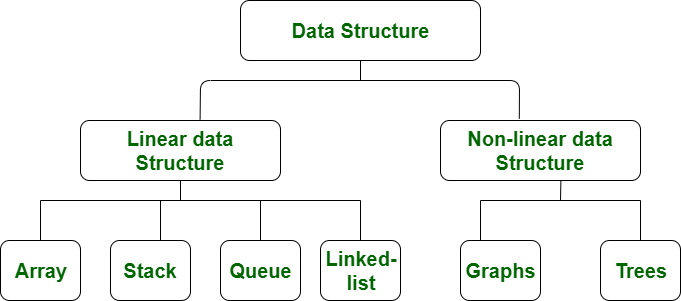
Python’s collections module provides an optimized deque object. Its main advantage is speed. Appending or popping from either end of a deque takes the same amount of time, regardless of how large it gets. Doing the same at the start of a regular list can be very slow.
from collections import deque

d = deque(['c', 'd', 'e'])

# Add to the right side (like list.append)
d.append('f')
# d is now deque(['c', 'd', 'e', 'f'])

# Add to the left side
d.appendleft('b')
# d is now deque(['b', 'c', 'd', 'e', 'f'])

# Pop from the right side
d.pop()
# d is now deque(['b', 'c', 'd', 'e'])

# Pop from the left side
d.popleft()
# d is now deque(['c', 'd', 'e'])
Deques are perfect for breadth-first search (BFS) algorithms, where you explore all neighbors at the current level before moving to the next. You add nodes to one end of the deque and process them from the other.
Graphs for Connections
Many problems are really about relationships between things: cities connected by roads, tasks that depend on each other, or a grid of rooms connected by doors. These are all graphs.
A graph consists of nodes (or vertices) and edges that connect them. Unlike a list or tree, a graph can have cycles and complex connections. The first step in solving a graph problem is choosing how to represent it in code.
node
noun
A fundamental part of a graph that represents an entity or a point.
The most common way is an adjacency list. This is typically a dictionary where each key is a node, and its value is a list of all the nodes it's connected to.
# Representing a simple graph
# A is connected to B and C
# B is connected to A
# C is connected to A

graph = {
    'A': ['B', 'C'],
    'B': ['A'],
    'C': ['A'],
    'D': [] # D has no connections
}
Once you have a representation, you can traverse the graph to find paths or explore its structure. Two fundamental traversal algorithms are Depth-First Search (DFS) and Breadth-First Search (BFS).
- DFS goes as deep as possible down one path before backtracking. It's often implemented with recursion or a stack.
- BFS explores all neighbors of a node before moving to the next level of neighbors. It's perfect for finding the shortest path in an unweighted graph and is typically implemented with a queue (or a deque!).
Learning to spot when a problem can be modeled as a graph is a huge step forward. Once you see the graph structure, you can apply standard, powerful algorithms to solve it.
You are managing tasks in a system where each task has a priority level. The system must always process the task with the highest priority first. Which data structure is specifically designed to handle this 'highest-priority-out' model most efficiently?
Python's heapq module implements a min-heap, meaning it's designed to quickly find the smallest item. How would you use it to simulate a max-heap to efficiently find the largest number among a set of positive integers?
Adding these advanced data structures to your problem-solving repertoire will make you a more effective and efficient coder. When a simple list or dictionary isn't cutting it, consider if a heap, deque, or graph is the right tool for the job.