Python Algorithmic Trading for Beginners
Algorithmic Trading Basics
What Is Algorithmic Trading?
At its core, algorithmic trading is about using computer programs to make trades for you. Instead of a person clicking "buy" or "sell," an algorithm does it automatically based on a set of predefined rules. These rules can be simple, like "buy a stock if it goes up 2%," or incredibly complex, involving many different data points.
Algorithmic trading refers to the use of computer programs that follow defined sets of instructions (algorithms) to execute trades at speeds and frequencies impossible for human traders.
Why let a machine do the trading? There are a few key advantages.
First, speed. Algorithms can analyze market data and execute trades in fractions of a second, far faster than any human. This is crucial in fast-moving markets where prices change instantly.
Second, accuracy. A well-programmed algorithm will follow its instructions perfectly every time. It won't make typos or accidentally buy the wrong stock.
Finally, algorithms remove emotion from the equation. Fear and greed can lead human traders to make irrational decisions. An algorithm simply follows the logic it was given, which leads to more disciplined and consistent trading.
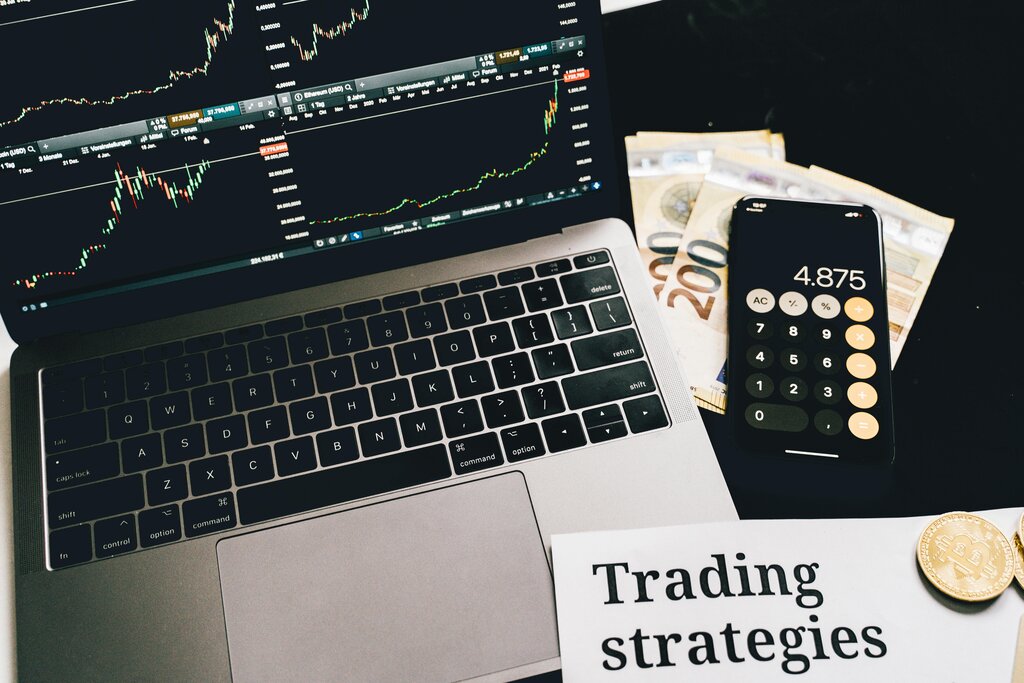
Common Trading Strategies
An algorithm is only as good as the strategy behind it. Traders have developed countless strategies over the years, many of which can be automated. Here are a few foundational approaches.
| Strategy | Core Idea |
|---|---|
| Trend Following | Assumes that assets moving in a certain direction will continue to do so. The algorithm buys assets in an uptrend and sells them in a downtrend. |
| Arbitrage | Seeks to profit from tiny price differences for the same asset on different markets. An algorithm can spot and act on these fleeting opportunities instantly. |
| Mean Reversion | Based on the idea that an asset's price will eventually return to its long-term average. The algorithm buys when the price is unusually low and sells when it's unusually high. |
| Market Making | Involves placing both buy and sell orders for the same asset to profit from the difference, known as the spread. This provides liquidity to the market. |
These are just starting points. Many modern strategies are hybrids of these concepts or use advanced machine learning models to find patterns that aren't obvious to the human eye.
Testing Before Trading
You wouldn't drive a new car design on a public highway without testing it first. The same principle applies to trading algorithms. Before risking real money, you need to see how your strategy would have performed in the past. This process is called backtesting.
Backtesting
noun
The process of applying a set of trading rules to historical market data to determine how a strategy would have performed.
Backtesting helps answer critical questions:
- Would the strategy have been profitable?
- How much risk did it involve? What was the largest loss it would have incurred?
- How did it perform during different market conditions, like a bull market or a crash?
While good backtesting results don't guarantee future profits, they are an essential first step. A strategy that fails on historical data is highly unlikely to succeed in the live market.
Backtesting is where you separate a good idea from a costly mistake.
Managing Your Risk
Even the best strategy can lose money. That's why risk management is a non-negotiable part of algorithmic trading. It's about setting up guardrails to protect your capital when the market doesn't behave as you expect.
One fundamental tool is the stop-loss. This is an automatic order to sell an asset if it drops to a certain price, limiting your potential loss on a single trade. Another is position sizing, which means deciding how much of your total capital to risk on any given trade. A common rule is to never risk more than 1-2% of your portfolio on one idea.
Effective risk management also involves diversification—not putting all your eggs in one basket. A robust algorithmic system might trade multiple, uncorrelated strategies at once, so a loss in one area can be offset by a gain in another.
Think of risk management as the brakes and seatbelt of your trading system. The strategy is the engine that drives profits, but risk management is what keeps you safe on the road.
What is a primary advantage of using algorithms for trading compared to human traders?
What is the main purpose of backtesting a trading strategy?