Python Algorithmic Trading
Introduction to Algorithmic Trading
What Is Algorithmic Trading?
Algorithmic trading, often called algo trading, is the process of using computer programs to execute trading orders automatically. Instead of a human manually buying and selling stocks, currencies, or other assets, a pre-programmed set of instructions does the work.
Think of it like giving a chef a detailed recipe. The chef (the algorithm) follows the instructions precisely: when to add ingredients (buy), when to stir (hold), and when to take the dish off the heat (sell). The recipe is based on factors like price, timing, and trading volume.
The core idea is to let a computer make trading decisions based on data and rules, removing human emotion and hesitation from the equation.
This approach has several key benefits. Computers can analyze market data and execute trades much faster than any human ever could, often in fractions of a second. They can also monitor multiple markets and securities at once, something that would be overwhelming for a person. By sticking strictly to the programmed rules, algorithms avoid emotional decisions like panic selling or chasing a trend out of greed.
Algorithmic trading refers to the use of computer programs that follow defined sets of instructions (algorithms) to execute trades at speeds and frequencies impossible for human traders.
Why Use Python?
While you can build trading algorithms in many programming languages, Python has become a favorite in the financial world. Its syntax is clean and relatively easy to learn, which allows traders and developers to move from an idea to a working strategy quickly.
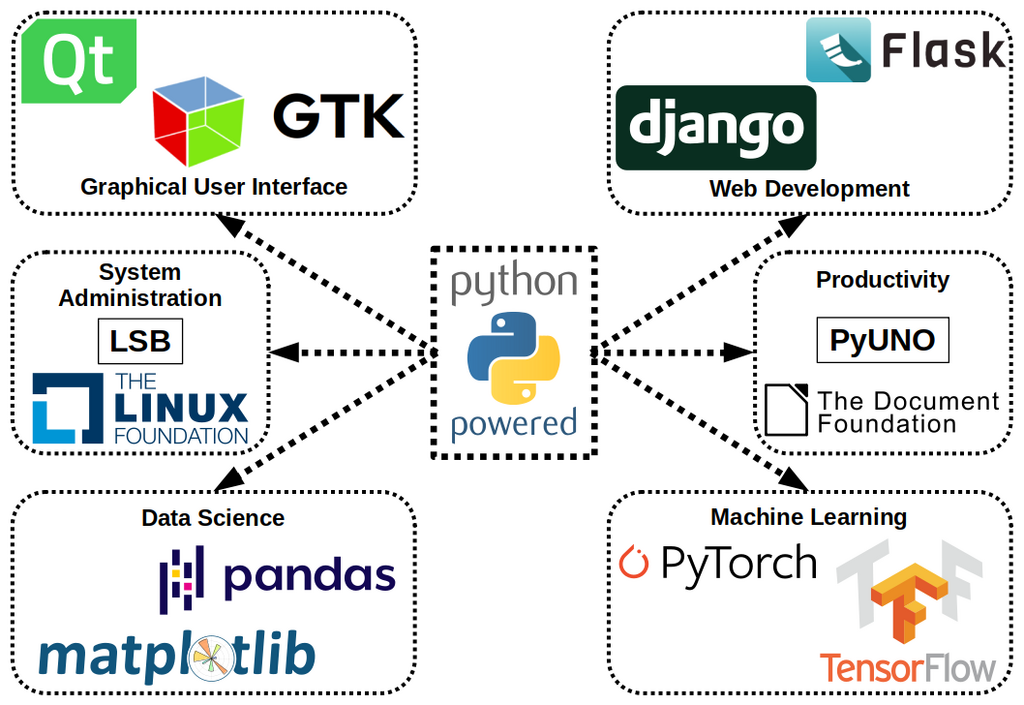
More importantly, Python has a massive ecosystem of open-source libraries built for data analysis, mathematical computation, and machine learning. Libraries like Pandas make it simple to handle financial time-series data, NumPy is perfect for complex numerical operations, and scikit-learn offers tools for building predictive models. This powerful toolkit lets developers focus on creating the trading logic rather than building foundational tools from scratch.
Essential Trading Terms
Before diving deeper, let's clarify a few fundamental concepts.
Algorithm
noun
A finite sequence of well-defined, computer-implementable instructions, typically to solve a class of problems or to perform a computation. In trading, it's the set of rules that dictates when to buy or sell.
An algorithm is the heart of your automated system. It could be simple, like "buy 100 shares of stock XYZ if the price drops below $50," or incredibly complex, incorporating dozens of market indicators.
Backtesting
noun
The process of testing a trading strategy on prior time periods. Instead of applying a strategy for the time period forward, a strategy is applied to relevant historical data to see how it would have performed.
Backtesting lets you see how your algorithm would have fared in the past. It's a crucial step for validating a strategy before risking real money.
Execution
noun
The completion of a buy or sell order. When an order is executed, the trade is made.
This is the final step where the trading system interacts with the market to place the trade. The goal of an algorithmic system is to achieve the best possible execution price with minimal delay.
| Feature | Manual Trading | Algorithmic Trading |
|---|---|---|
| Speed | Slow, limited by human reaction time | Nearly instantaneous |
| Emotion | Prone to fear, greed, and bias | Completely objective and rule-based |
| Capacity | Can track a few markets at once | Can monitor hundreds of markets simultaneously |
| Accuracy | Susceptible to human error | Highly precise and consistent |
Now that you understand the basics, let's check your knowledge.
What is the primary role of an algorithm in algorithmic trading?
Why is Python a widely used programming language for developing trading algorithms?
Understanding these core concepts is the first step toward building and deploying your own automated trading strategies.