Python Agents Explained
Introduction to Intelligent Agents
What Are Intelligent Agents?
In artificial intelligence, an agent is anything that can observe its environment and then act upon that environment. Think of a robotic vacuum cleaner. It uses sensors to perceive its surroundings—the layout of the room, the location of furniture, and the presence of dirt. Based on this information, it takes action by moving around and suctioning up debris. That’s an agent in a nutshell.
An AI agent is a software program that can perceive its environment, make decisions, and take actions to achieve specific goals.
Intelligent agents, however, take this a step further. They don't just act; they act autonomously to achieve specific goals. They have a degree of independence, allowing them to make decisions without constant human intervention. Key characteristics include:
- Autonomy: They operate on their own to perform tasks.
- Reactivity: They perceive their environment and respond to changes in it in a timely fashion.
- Pro-activeness: They don't just react to the environment; they take initiative to achieve their goals.
- Social ability: They can interact or communicate with other agents (and humans).
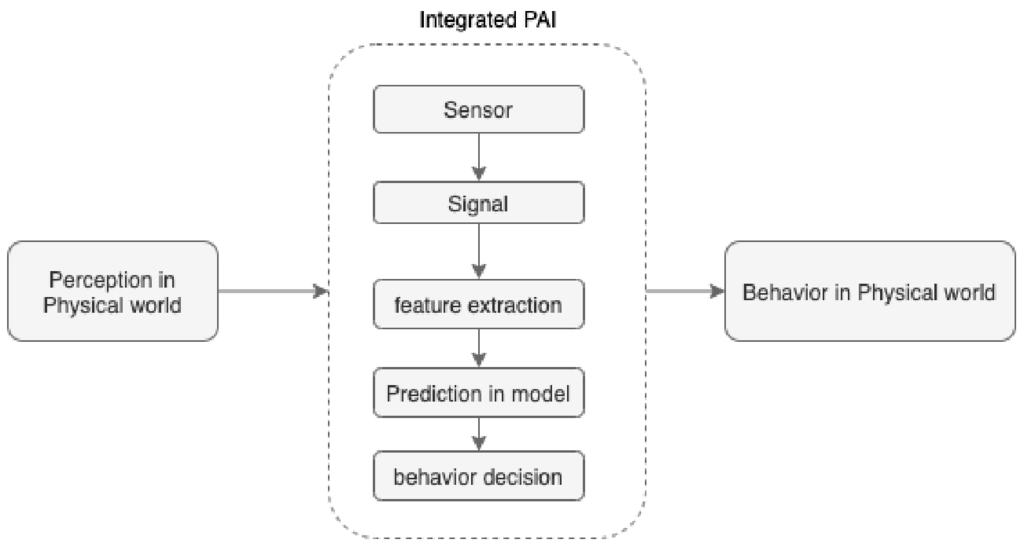
This perception-action loop is the fundamental process for all agents. The agent uses its sensors to gather information, its internal logic to make a decision, and its actuators to perform an action. The complexity of that decision-making process is what separates different types of agents.
Types of Agents
Agents can be categorized based on their intelligence and capabilities. They range from very simple to highly complex.
Simple Reflex Agents: These are the most basic agents. They make decisions based solely on the current situation, ignoring past history. They follow a simple condition-action rule, like "if it's cold, turn on the heater."
Model-Based Reflex Agents: These agents are a step up. They maintain an internal state, or a "model," of how the world works. This model helps them handle situations where the current perception isn't enough to make a decision. For instance, a self-driving car needs to know where other cars were a moment ago to predict where they might be now, even if they're temporarily hidden behind an obstacle.
Goal-Based Agents: These agents have explicit goals. They don't just react; they think ahead. When faced with a decision, they consider different sequences of actions and choose the one that will lead them to their goal. A GPS navigation app is a perfect example. Its goal is your destination, and it calculates the series of turns that will get you there most efficiently.
Utility-Based Agents: These agents are more sophisticated. They have goals, but they also have a way to measure how "good" a particular outcome is. This measure is called utility. When multiple paths can lead to a goal, a utility-based agent will choose the one that maximizes its utility. An airline booking system might look for flights to your destination (the goal) but will also weigh factors like price, travel time, and number of layovers (the utility) to find the best option for you.
Agents in the Wild
You interact with intelligent agents every day, often without realizing it. Your spam filter is an agent that perceives incoming emails and acts by sorting them. The recommendation engine on your favorite streaming service is a utility-based agent, trying to find the content that will give you the most enjoyment.
Other examples include:
- Virtual Personal Assistants: Siri and Alexa perceive voice commands and act by playing music, setting reminders, or searching the web.
- Autonomous Vehicles: Self-driving cars use a complex system of sensors and models to navigate roads safely.
- Supply Chain Automation: Agents manage inventory, predict demand, and optimize logistics to ensure products get from the factory to the store shelf.
What is the fundamental process that all AI agents follow to interact with their environment?
A spam filter analyzes an incoming email and decides whether to move it to the inbox or the junk folder. Which key characteristic of an intelligent agent does this primarily demonstrate?
Understanding these core agent types is the first step toward building intelligent systems that can reason, plan, and act in the world.