Python Adventures for Young Coders
Introduction to Python
What is Python?
Python is a programming language, which is a way of giving instructions to a computer. Think of it like learning a new spoken language, but instead of talking to a person, you're talking to a machine. What makes Python special is its simple and readable style. The code often looks a lot like plain English, which makes it one of the best languages for people who are just starting to code.
It was created in the late 1980s by Guido van Rossum, who wanted to make a language that was both powerful and easy to understand. Because it's so straightforward, you can focus on solving problems instead of getting stuck on complicated rules.
What Can You Do with Python?
Python is incredibly versatile. It's not just for one specific task; it's used by professionals in many different fields. Big companies like Google, Netflix, and NASA use it for everything from web development to space exploration.
Here are a few examples:
- Web Development: Python is used to build the server-side of websites. Frameworks like Django and Flask make it easier to create complex, data-driven sites.
- Data Science & Machine Learning: It's the top language for analyzing data, creating visualizations, and building artificial intelligence models.
- Automation: Python can automate repetitive tasks, like organizing files, sending emails, or filling out online forms. This saves a lot of time and effort.
Getting Ready to Code
To start writing Python, you need a couple of things on your computer. The first is the Python interpreter. This is the program that reads your Python code and translates it into instructions the computer can execute.
Interpreter
noun
A program that directly executes instructions written in a programming language, without requiring them to have been compiled into machine language first.
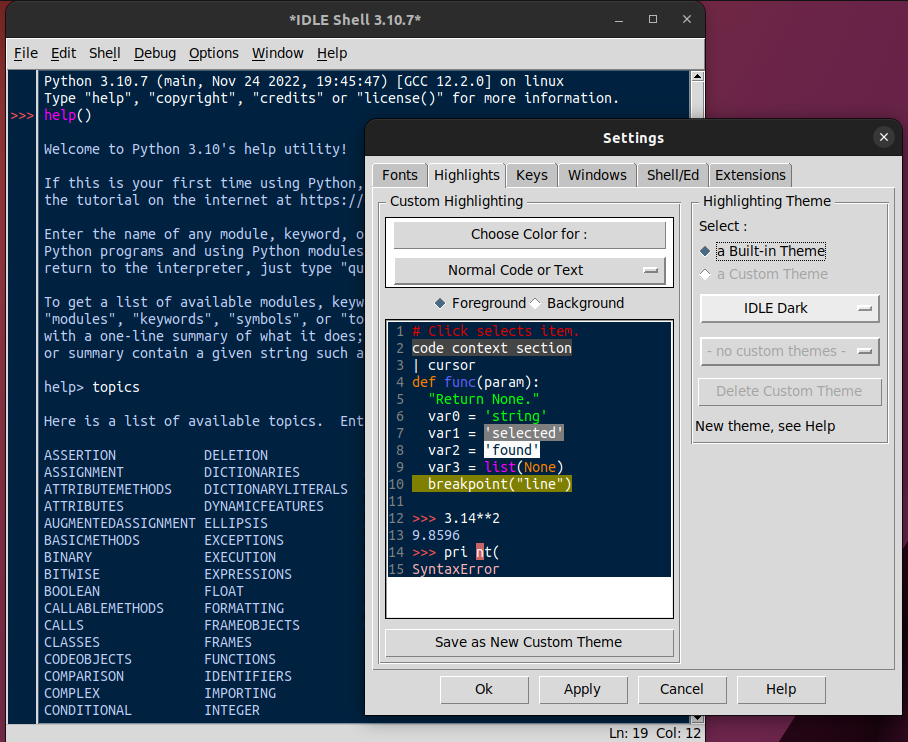
You also need a place to write your code. While you could use a basic text editor, most programmers use a special editor called an Integrated Development Environment, or IDE. An IDE gives you helpful features like syntax highlighting (coloring your code to make it easier to read) and debugging tools.
A great IDE for beginners is IDLE, which comes bundled with the official Python installation. It's simple and gets the job done.
Your First Program
It's a tradition in programming to make your first program print the phrase "Hello, World!" to the screen. It's a simple way to confirm that your setup is working correctly.
In Python, this is incredibly easy. It only takes one line of code.
print("Hello, World!")
Let's break that down:
print()is a built-in Python function. A function is a named block of code that performs a specific task. Theprint()function's job is to display things on the screen."Hello, World!"is the text we want to display. In programming, text is called a string, and you almost always wrap it in quotation marks.
To run this, you would type that line into your editor or IDE and execute the file. The text Hello, World! would then appear in an output window. Congratulations, you've just written and run your first Python program!
What is the primary design philosophy behind Python?
In the code print("Hello, World!"), what is the part inside the quotation marks, "Hello, World!", called?
That's a quick look at what Python is and how to get started. You've learned that it's a readable, versatile language and you've even written your first line of code.