Pythagorean Theorem Fundamentals
Right Triangles
Meet the Right Triangle
Triangles are one of the most fundamental shapes in geometry. They have three sides and three angles. A special and very important type of triangle is the right-angled triangle, often just called a right triangle.
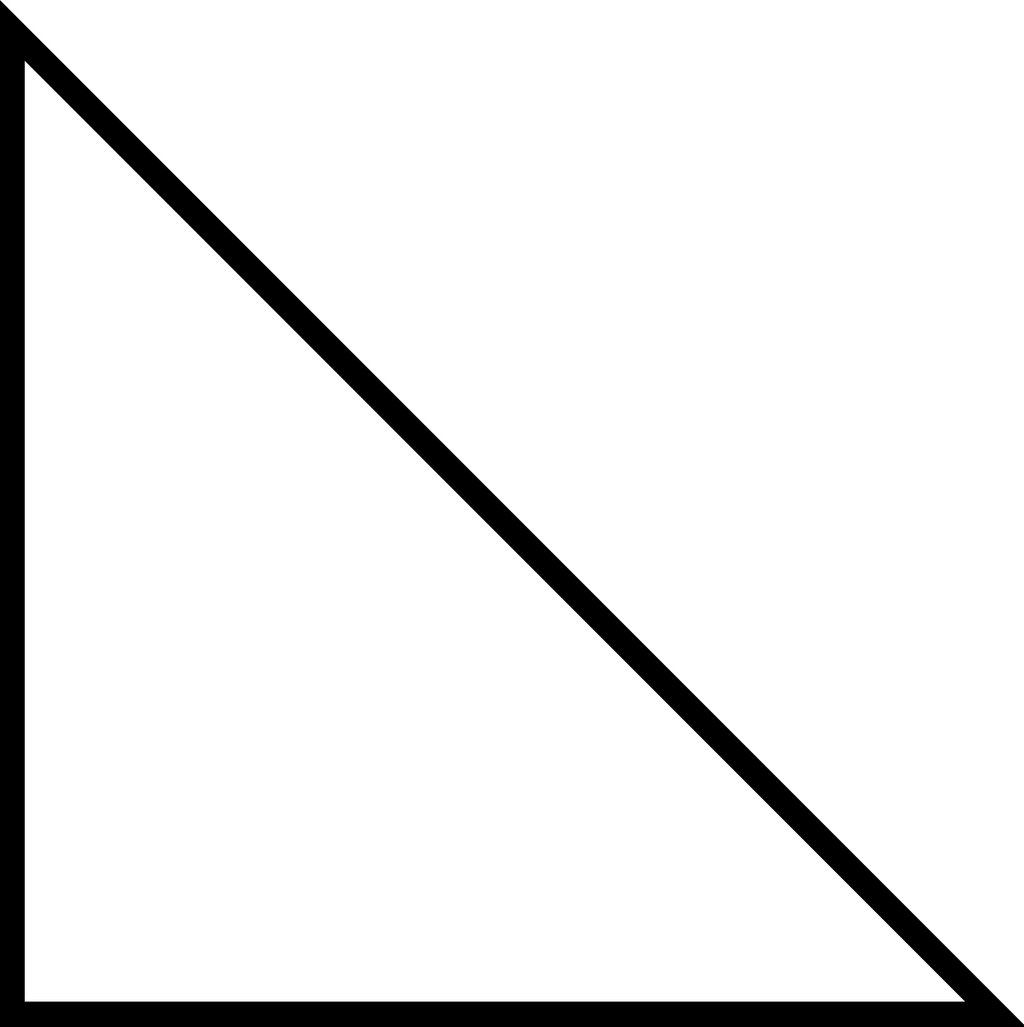
A right triangle is any triangle that has one angle measuring exactly 90 degrees.
This 90-degree angle is called a right angle. You can see right angles everywhere, like the corner of a piece of paper, where the wall meets the floor, or on the face of a clock at 3:00. This perfect corner is the defining feature of a right triangle.
The Parts of a Right Triangle
The sides of a right triangle have special names. It's important to know them because they are used in many geometric rules and formulas.
The two sides that meet to form the 90-degree angle are called the legs. The third side, which is always opposite the right angle, is called the hypotenuse.
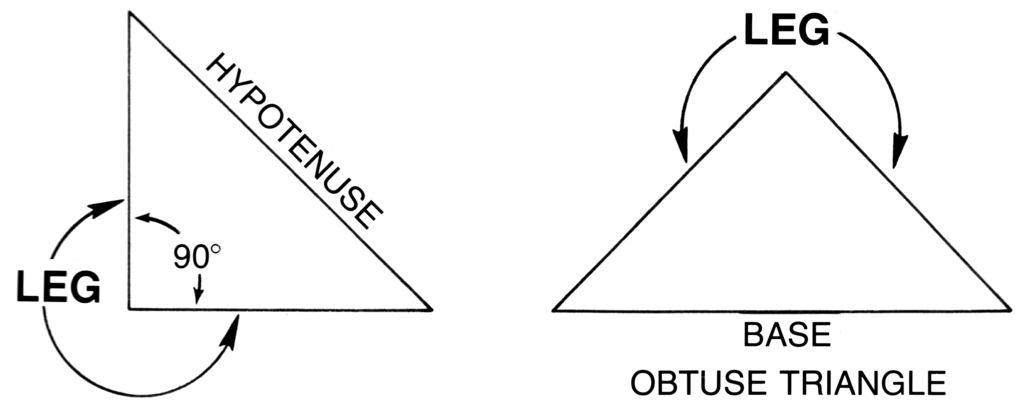
An easy way to find the hypotenuse is to locate the right angle and look at the side directly across from it. That's always the hypotenuse.
hypotenuse
noun
The longest side of a right-angled triangle, opposite the right angle.
One key property to remember is that the hypotenuse is always the longest side of a right triangle. The two legs will always be shorter than the hypotenuse.
The Angles Add Up
A rule for all triangles is that their three internal angles must add up to 180 degrees. Since a right triangle uses up 90 of those degrees for its right angle, that leaves exactly 90 degrees to be shared between the other two angles.
This means the other two angles in a right triangle must always be acute angles, which are angles less than 90 degrees. Together, they will always sum to 90 degrees. For example, if one acute angle is 30 degrees, the other must be 60 degrees.
Understanding the parts and properties of a right triangle is the first step toward exploring some of the most powerful ideas in geometry. The special relationship between the legs and the hypotenuse is the key to many practical calculations.