Pythagorean Theorem Basics
Right Triangles
The Right Triangle
Triangles are one of the most fundamental shapes in geometry, but one special type stands out: the right-angled triangle, or simply the right triangle. Its defining feature is that one of its three angles is a perfect 90-degree angle.
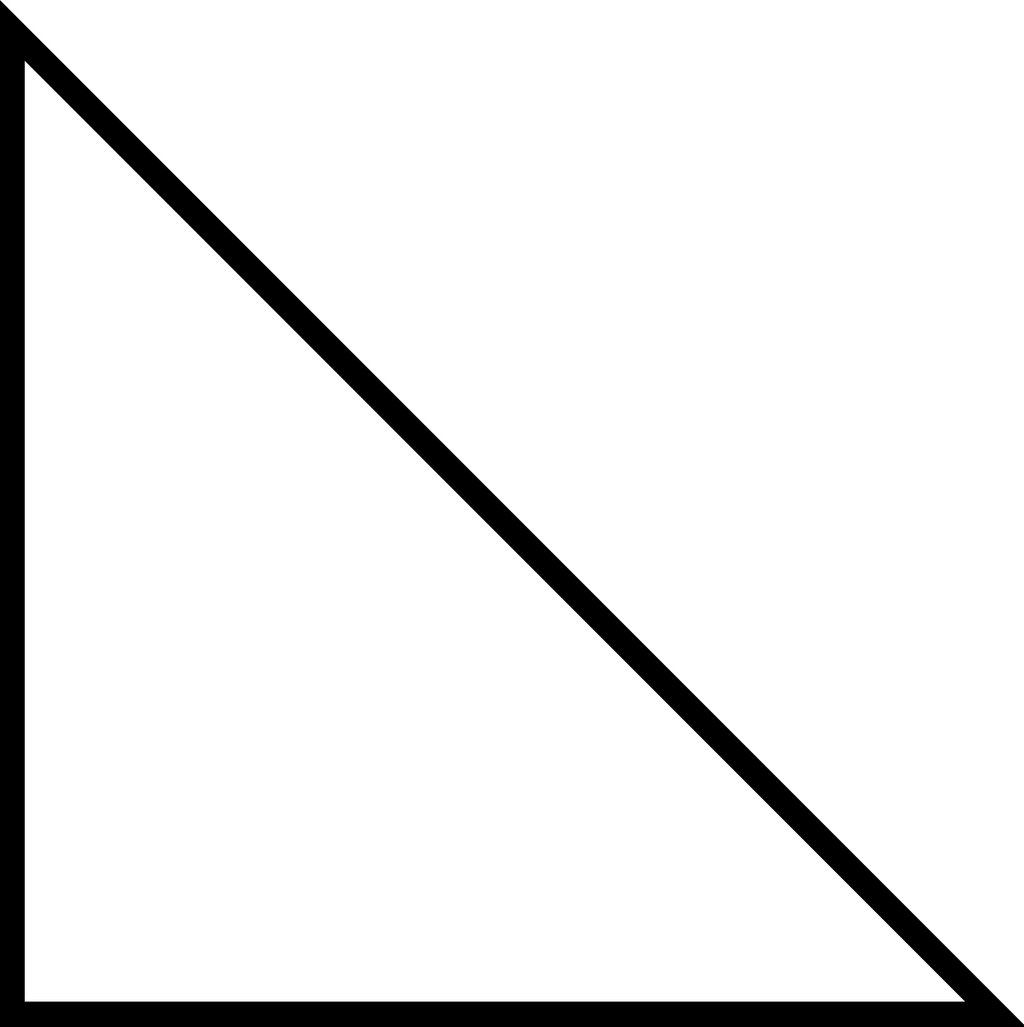
This 90-degree angle is also called a right angle. It's the same angle you see in the corner of a square, a door frame, or a piece of paper. This corner is often marked with a small square symbol to show that it is exactly 90 degrees.
Legs and Hypotenuse
Because right triangles are so special, their sides have unique names. The two sides that meet to form the 90-degree angle are called the legs.
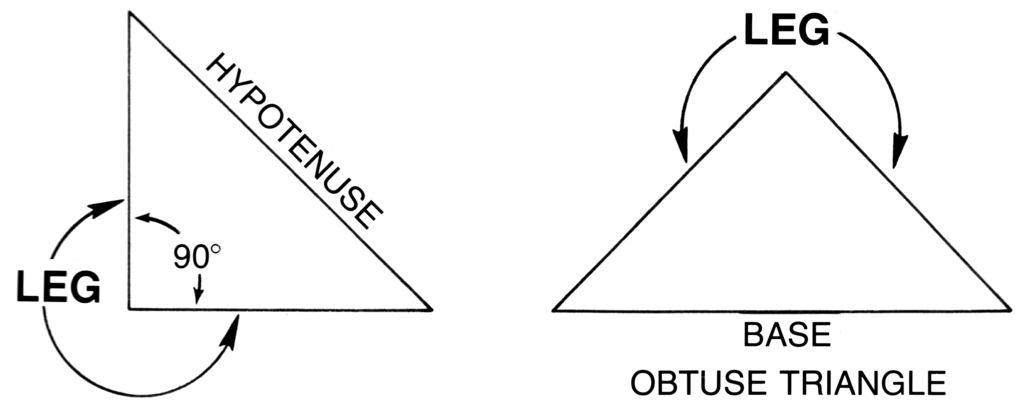
The third side, which is always opposite the right angle, is called the hypotenuse. An easy way to spot the hypotenuse is to find the right angle; the side that doesn't touch that corner is the hypotenuse. It is also always the longest side of the triangle.
hypotenuse
noun
The longest side of a right-angled triangle, located opposite the right angle.
Unique Properties
Right triangles have a few important properties that set them apart. First, let's talk about the angles. As you know, every triangle's three angles add up to 180 degrees. Since a right triangle uses up 90 of those degrees for its right angle, the other two angles have to share the remaining 90 degrees.
This means the other two angles must add up to 90 degrees. Angles that add up to 90° are called complementary. Because neither of these angles can be 90° or more, they are always acute angles (less than 90°).
In a right triangle, the two non-right angles are always complementary.
This simple fact about the angles is incredibly useful. If you know the measure of just one of the acute angles, you can instantly find the other. For example, if one acute angle is 30°, the other must be 60°, because $30° + 60° = 90°$. Understanding the relationship between the sides and angles of a right triangle is the first step toward exploring more advanced ideas in geometry.