Pythagoras and His Famous Theorem
Introduction to Right-Angled Triangles
The Perfect Corner
Triangles are everywhere, but a special kind stands out: the right-angled triangle. Its defining feature is one perfect corner, an angle that measures exactly 90 degrees. Think of the corner of a square or a book page. That's a 90-degree angle.
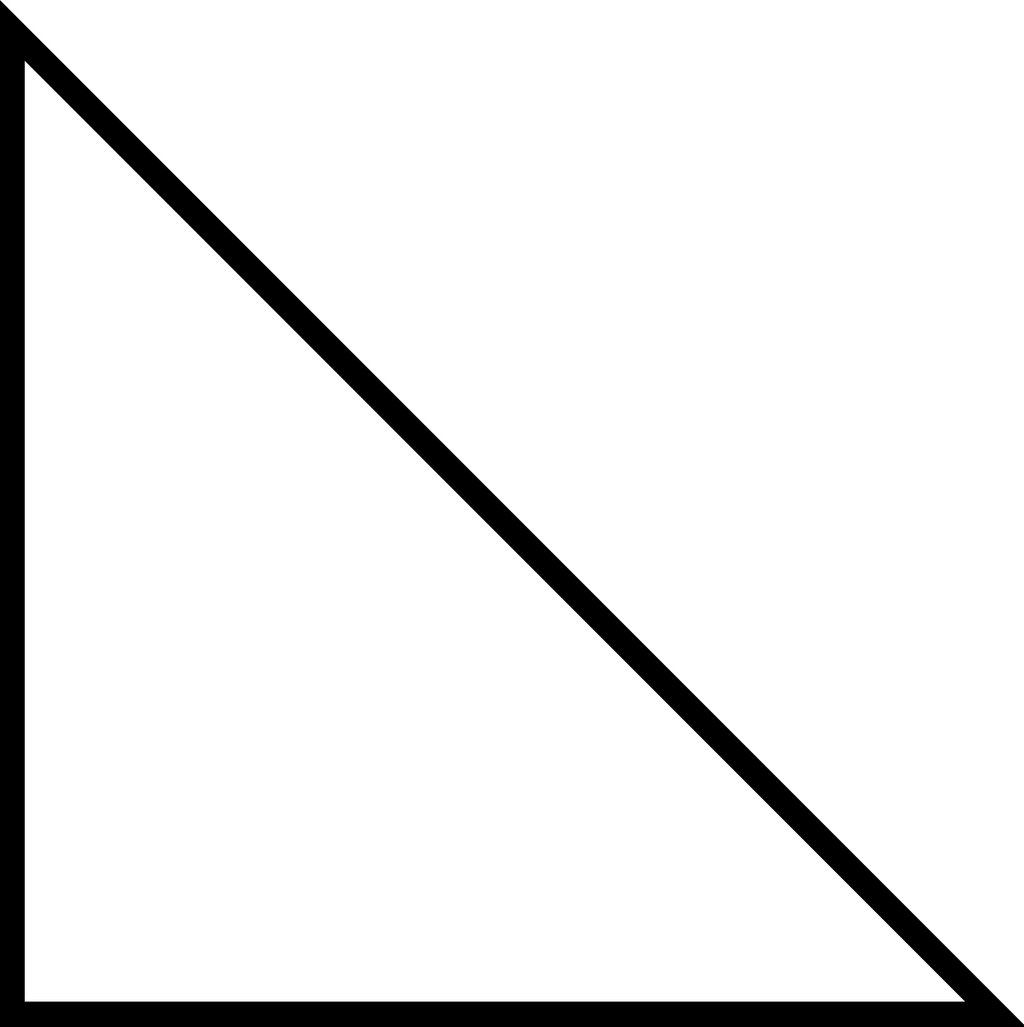
Because it has this special angle, its sides get special names. Knowing them is key to understanding how these triangles work.
Meet the Sides
Every right-angled triangle has two legs and one hypotenuse.
The two sides that meet to form the 90-degree angle are called the legs. They are the perpendicular sides.
The third side, which is always opposite the right angle, is the hypotenuse. It's also always the longest side of the triangle.
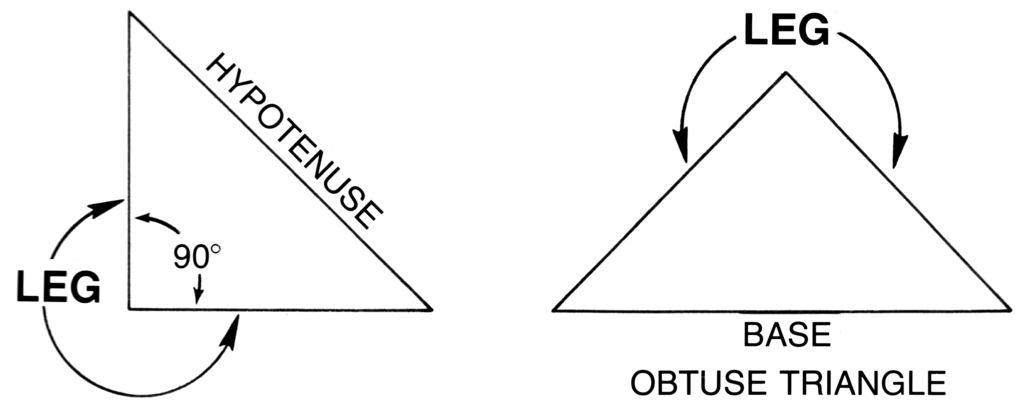
A simple way to find the hypotenuse is to locate the right angle and look at the side directly across from it. That's always your hypotenuse.
hypotenuse
noun
The longest side of a right-angled triangle, found opposite the right angle.
Let's look at a real-world example.
In this picture, the wall and the ground form the 90-degree angle, making them the legs. The ladder is opposite the right angle, so it's the hypotenuse.
A Note on Angles
The angles in any triangle always add up to 180 degrees. Since a right-angled triangle uses up 90 of those degrees for its right angle, that leaves just 90 degrees for the other two angles to share.
This means the other two angles must always be acute, which means they are each less than 90 degrees. Together, these two acute angles will always sum to 90 degrees.
In a right-angled triangle, you have one 90° angle and two acute angles that add up to 90°.
Now that you can identify a right-angled triangle and its parts, you're ready to explore its most famous property.