Pybricks Robotics for Spike Prime and GitHub
Introduction to LEGO Spike Prime 3
Meet Your Robotics Kit
Welcome to the world of robotics with the LEGO Spike Prime kit. Think of it as a toolbox filled with everything you need to build and command your own robots. Inside, you'll find hundreds of familiar LEGO Technic pieces, but the real magic comes from three special types of components: a programmable hub, motors, and sensors.
Together, these parts work like a body. The hub is the brain, the motors are the muscles, and the sensors are the senses. By connecting them in different ways, you can create robots that drive, grab, draw, and react to the world around them.
The Brains of the Operation
The heart of every robot you build is the programmable hub. It’s a smart brick that acts as the robot's brain and power source. It runs the programs you write, telling the motors when to spin and making sense of information from the sensors. It has a rechargeable battery, a speaker for making sounds, and a 5x5 grid of lights that can display patterns or data.
You'll also notice six ports on the hub, labeled A through F. These are the connection points for your motors and sensors. When you plug a motor into port A, your code can specifically tell
Motor A
to turn on. This system of ports is how the brain communicates with the rest of the body.
Muscles and Senses
Robots need to interact with the world. That's where motors and sensors come in. Motors make things move, and sensors gather information so the robot can make smart decisions.
The Spike Prime kit includes both large and medium motors. The large motor is powerful, perfect for driving wheels or lifting heavy objects. The medium motor is smaller and faster, ideal for tasks that require quick, precise movements, like operating a robotic arm or a spinning attachment.
Sensors are your robot's eyes, ears, and hands. They let your robot perceive its surroundings. The kit comes with three key types.
| Sensor | Function | Common Use |
|---|---|---|
| Color Sensor | Detects 8 different colors and light intensity | Follow a colored line on the ground |
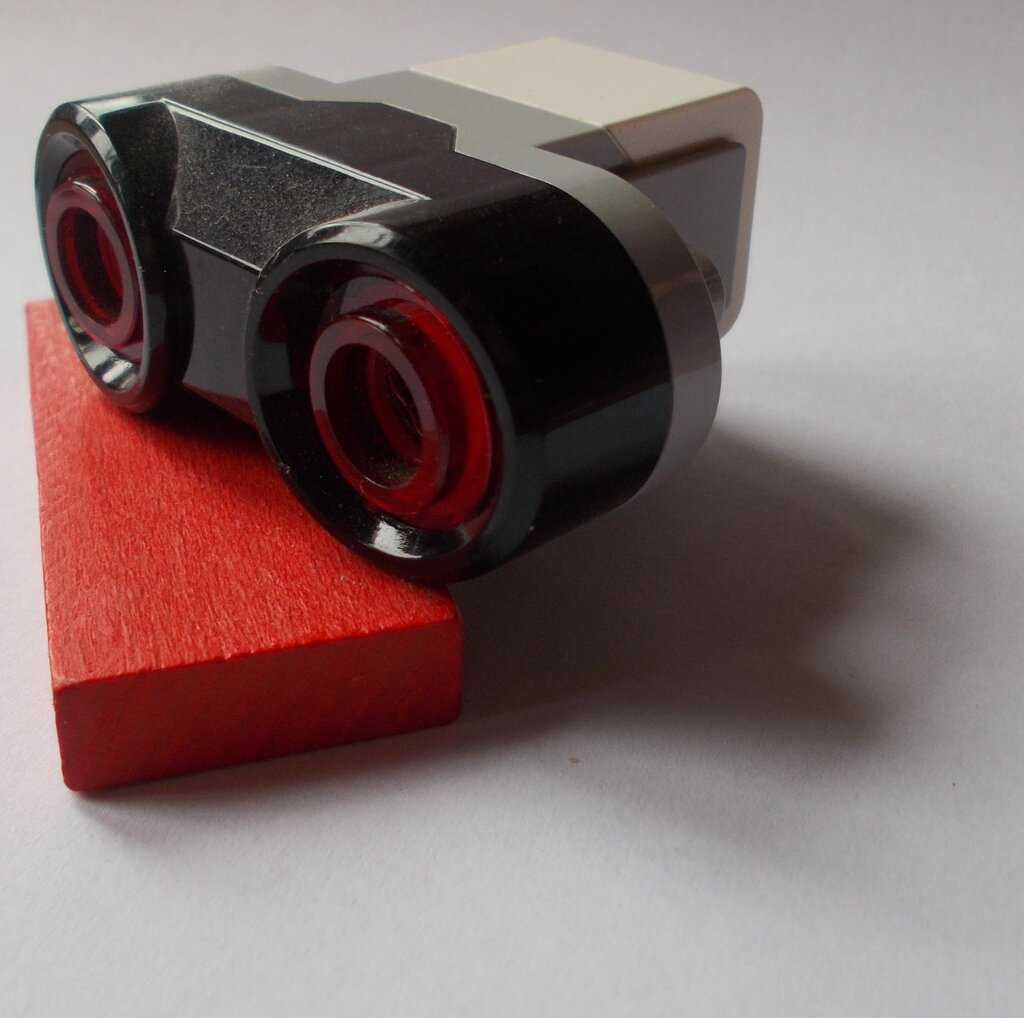
| Distance Sensor | Measures distance to an object using sound waves | Stop before hitting a wall |
| Force Sensor | Detects when it is pressed, released, or bumped | Start a program when you press a button |
By combining these sensors with motors, you can create sophisticated behaviors. For example, a robot can use the distance sensor to drive forward until it gets close to a wall, then use a motor to turn and go in another direction.
Building a Simple Robot
Let’s think about how to build a basic driving robot. It's a great first project that uses the core components.
First, you'd build a chassis, or frame, to hold everything together. This is the skeleton of your robot. Next, you'd attach two motors, one for each wheel. Connecting them to different ports, like A and B, lets you control each wheel independently. This is key for turning; to turn right, you can slow down the right wheel or even spin it backward while the left wheel moves forward.
With the chassis and motors in place, you mount the hub, connecting the motors to its ports with the included cables. Finally, you can add a sensor. Attaching a distance sensor to the front allows your robot to detect objects in its path. Now you have a simple robot ready for its first program.
What is the primary role of the programmable hub in a LEGO Spike Prime robot?
You need your robot to perform a task that requires quick, precise movements, like operating a small robotic arm. Which motor is better suited for this?
You've now seen the fundamental building blocks of the Spike Prime kit. Understanding what each part does is the first step toward creating amazing robots.