PVC Manufacturing: Calendering vs. Extrusion
Process Mechanics
Two Paths for Shaping Polymers
When working with a versatile material like PVC, the manufacturing process determines the final product's form and function. Two common methods, calendering and extrusion, both start with a PVC compound but shape it through fundamentally different mechanical actions. One rolls, the other pushes.
Calendering is essentially a sophisticated rolling process. The PVC compound is fed into a series of large, heated, counter-rotating rollers. As the material passes through the gap between each pair of rollers, known as the 'nip', it gets squeezed into a continuous sheet. A small reservoir of molten material, called the 'bank', forms just before each nip, ensuring a consistent feed. By precisely controlling the temperature and spacing of these rollers, manufacturers can produce very thin, uniform films and sheets with exceptional thickness consistency. Think of it like a massive, industrial-grade rolling pin for plastic.
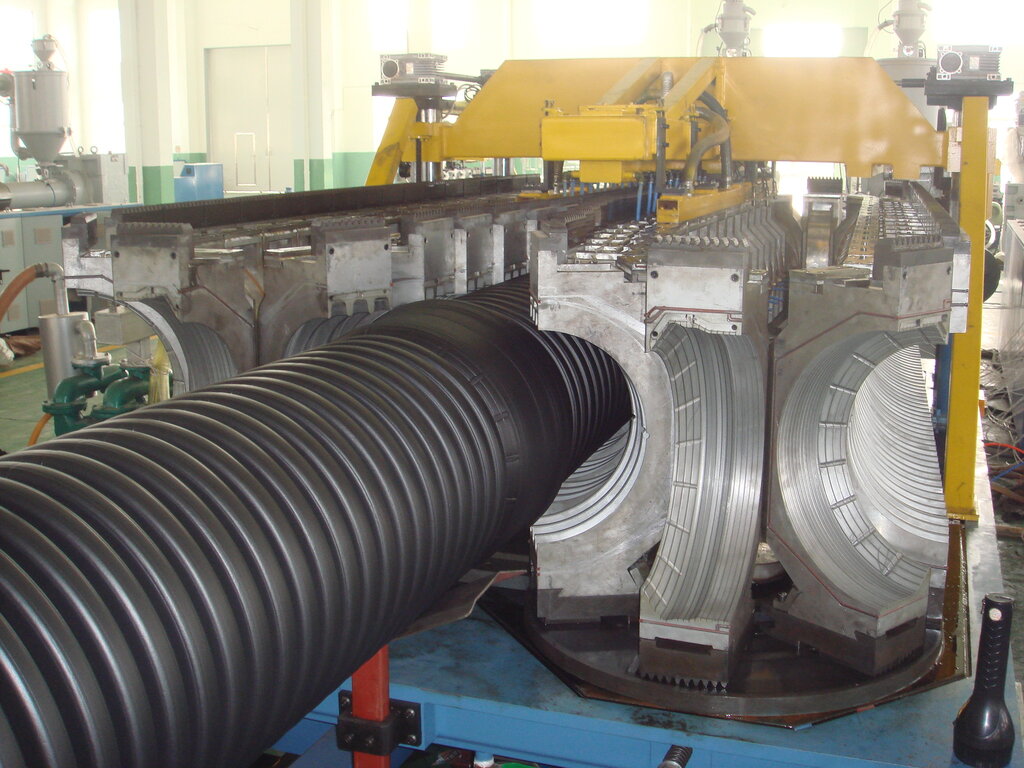
Extrusion takes a different approach. Instead of rolling, it pushes. In this process, raw PVC material is fed into a heated barrel containing a large rotating screw. The screw conveys the PVC forward, simultaneously melting and mixing it into a uniform molten mass through both heat and immense pressure. This molten plastic is then forced through a specially shaped opening called a die head at the end of the barrel. The shape of the die determines the final profile of the product. This method is ideal for creating objects with complex cross-sections, like pipes, window frames, or siding, as well as for producing thicker sheets.
Force and Formation
The core mechanical difference lies in how force is applied. Calendering relies on the immense compressive force generated at the —the point of closest contact between two rollers. This squeezing action is what flattens the material into a sheet. The precision of this nip gap is what gives calendering its superior control over the thickness of thin films.
Extrusion, on the other hand, uses hydraulic or mechanical pressure built up by the screw's rotation. The screw acts like a pump for molten plastic, forcing it out of the die. The pressure is uniform within the barrel just before the die, but the process excels in creating consistent profiles along the length of the product rather than controlling micro-variations in thickness across a wide sheet.
| Feature | Calendering | Extrusion |
|---|---|---|
| Mechanism | Squeezing material between rotating rollers. | Forcing material through a fixed die. |
| Primary Force | Compressive force at the nip point. | Screw-generated pressure in a barrel. |
| Best For | Thin, wide sheets and films. | Complex profiles and thick gauges. |
| Thickness Control | Superior for thin films across a wide area. | Excellent for consistency along length. |
| Shape Complexity | Limited to flat sheets. | High; defined by the die shape. |
This mechanical difference also affects how the melt itself is formed. In an extruder, the PVC compound is completely melted and homogenized inside the barrel before it ever reaches the die. This ensures a uniform molten mass is ready for shaping.
Once the PVC compound is ready, it is fed into an extruder, a machine that melts the mixture to form a uniform molten mass.
In calendering, the process is more fluid. The material melts and is shaped almost simultaneously. The heat from the rollers and the intense shear forces in the bank and at the nip all contribute to forming the melt as it's being flattened. This combined action allows for fine-tuning the material's properties as it's being formed into a sheet.
Now, let's test your knowledge of these shaping processes.
Which statement best describes the primary mechanical action of the calendering process?
If a manufacturer needs to produce PVC window frames, which have a complex and consistent cross-section, which process is the most appropriate choice?
Understanding these mechanical distinctions is key to selecting the right manufacturing process. One offers unparalleled control over thin sheets, while the other provides the power to create complex, robust profiles.