Puppy Training Essentials
Understanding Puppy Behavior
A Puppy's World
Bringing a new puppy home is an exciting time. It’s easy to see them as just tiny, fluffy dogs, but they're really babies learning about the world from scratch. Just like humans, puppies go through distinct developmental stages. Understanding these phases helps you know what to expect and how to best support your new friend.
During the first 12 to 16 weeks of a puppy’s life, they are most receptive to learning about new environments, people, and other animals.
This early period is a whirlwind of change. In just a few months, a puppy goes from a blind and deaf newborn to a curious, playful explorer. Each stage brings new behaviors and learning opportunities.
| Stage | Age Range | Key Developments |
|---|---|---|
| Neonatal | 0–2 weeks | Totally dependent on mom. Senses of touch and taste are present. |
| Transitional | 2–4 weeks | Eyes and ears open. Starts to stand, walk, and wag its tail. |
| Socialization | 4–12 weeks | The critical window. Learns to play, interact, and understand boundaries. |
| Juvenile | 3–6 months | Becomes more independent. Explores dominance and continues learning. |
The socialization period is the most important time for shaping your dog's future personality. Experiences during these weeks—good and bad—will stick with them for life.
Why Puppies Bite
One of the first things new owners notice is that puppies use their mouths for everything. This is completely normal. Puppies explore the world with their mouths, much like human toddlers use their hands to touch everything they see. This is called mouthing.

Nipping is a part of mouthing. When puppies play with their littermates, they bite each other constantly. If one puppy bites another too hard, the bitten pup will yelp and stop playing. This is a crucial lesson: "If you bite too hard, the fun stops." This process teaches bite inhibition, which is the ability to control the force of their bite.
Mouthing is exploration, not aggression. It’s your job to teach your puppy how soft a human’s skin is.
When a puppy nips you, it isn't trying to be mean. It's trying to play and doesn't yet know that your skin is more sensitive than its sibling's fur. The key is to teach them gently. If your puppy nips you, make a high-pitched yelp sound and briefly pull your hand away. Then, redirect their attention to an appropriate chew toy. They'll quickly learn that toys are for biting, but people are not.
Making Friends with the World
Socialization is the process of introducing your puppy to new sights, sounds, people, and other animals in a positive and safe way. It's not just about meeting other dogs at the park. It’s about creating a well-adjusted, confident adult dog that isn't fearful of new experiences.
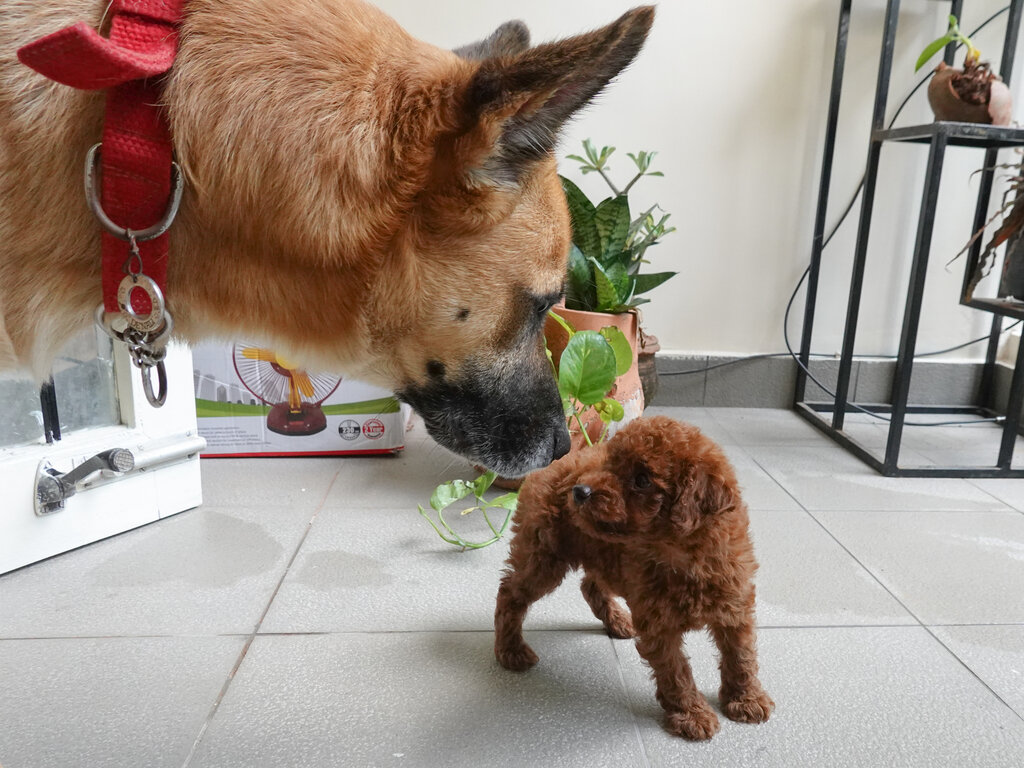
During the critical socialization window (from about 4 to 12 weeks), your puppy’s brain is wired to accept new things. This is the ideal time to introduce them to:
- Different People: People of all ages, appearances, and sizes.
- New Environments: A busy street, a quiet park, a pet-friendly store.
- Various Sounds: A vacuum cleaner, traffic, a doorbell.
- Other Healthy Dogs: Well-behaved, vaccinated adult dogs can be great teachers.
The goal is to make these experiences positive. Use treats, praise, and a calm attitude. If your puppy seems scared, don't force it. Let them approach new things at their own pace. A well-socialized puppy grows into a dog that is curious and confident, not fearful and reactive.
Time for a quick check-in on these concepts.
The critical socialization window for puppies, when their brains are most accepting of new experiences, is generally considered to be from ______.
What is the primary goal of socializing a puppy?
Understanding these early behaviors sets the stage for a happy life together. It's all about patience and seeing the world through their eyes.