Puppy Training Essentials
Understanding Positive Reinforcement
Rewarding the Good Stuff
Training a puppy isn't about dominance or being the "alpha." It's about clear communication. The simplest and most effective way to talk to your puppy is through positive reinforcement. The core idea is simple: when your puppy does something you like, you immediately give them something they like. This makes them more likely to repeat that behavior in the future.
Think of it like this: if you got a small bonus every time you completed a task at work ahead of schedule, you'd probably start finishing tasks early more often. Your puppy's brain works in a similar way. The behavior is sitting politely; the bonus is a tasty treat. Simple as that.
Positive reinforcement training is a dog training method that focuses on rewarding good behavior rather than punishing bad behavior.
This method is rooted in a psychological principle called operant conditioning. Don't let the technical term scare you. It just means that learning happens when behavior is shaped by consequences. When the consequence is good (a reward), the behavior strengthens. When the consequence is unpleasant, the behavior weakens. For a happy, confident puppy, we focus on the good consequences.
Timing Is Everything
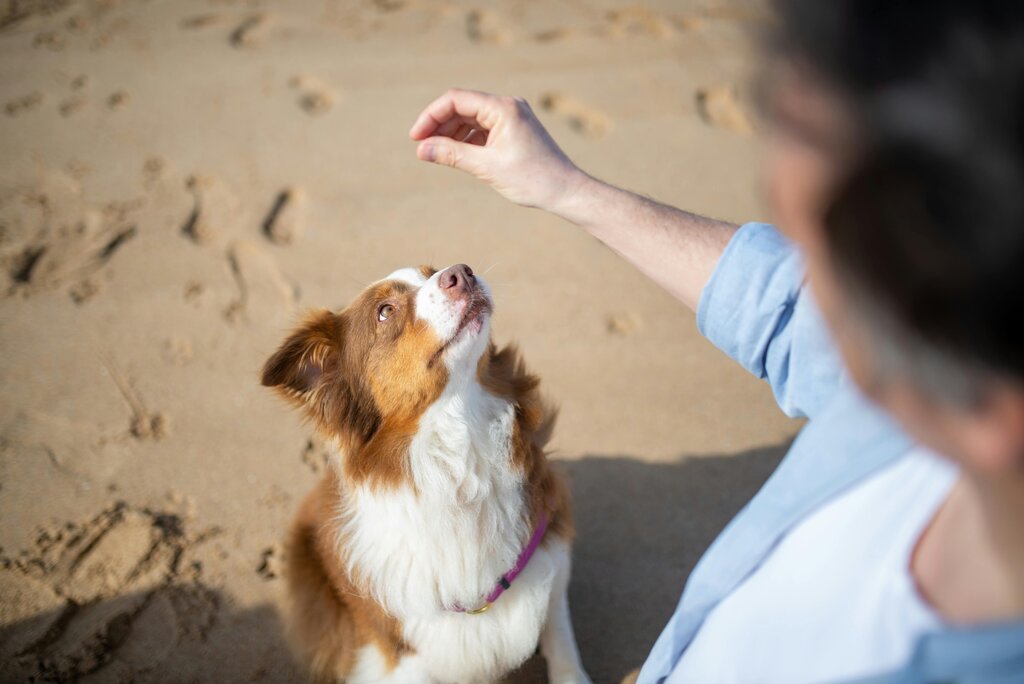
To make this work, the reward must arrive immediately after the desired action. We're talking within a second or two. If you ask your puppy to sit, and they do, the treat must appear right away. If you wait until after they've already stood up and started sniffing the carpet, you're rewarding the sniffing, not the sitting. The puppy's brain connects the reward to whatever it was doing the instant the reward appeared.
Consistency is just as critical. When you're first teaching a new behavior, reward it every single time it happens. This builds a strong, clear association in your puppy's mind. Sit always equals treat. Every. Single. Time. This reliability helps your puppy learn fast.
The rule of thumb: Reward the behavior you want to see more of, the instant you see it.
More Than Just Treats
What does your puppy find rewarding? The answer isn't always food. While small, high-value treats are a fantastic tool, they're not the only one in your toolbox.
- Praise: A happy, enthusiastic "Good boy!" or "Yes!" in an upbeat tone can be a powerful reward.
- Affection: A quick scratch behind the ears or a gentle pat can work wonders for puppies who love physical contact.
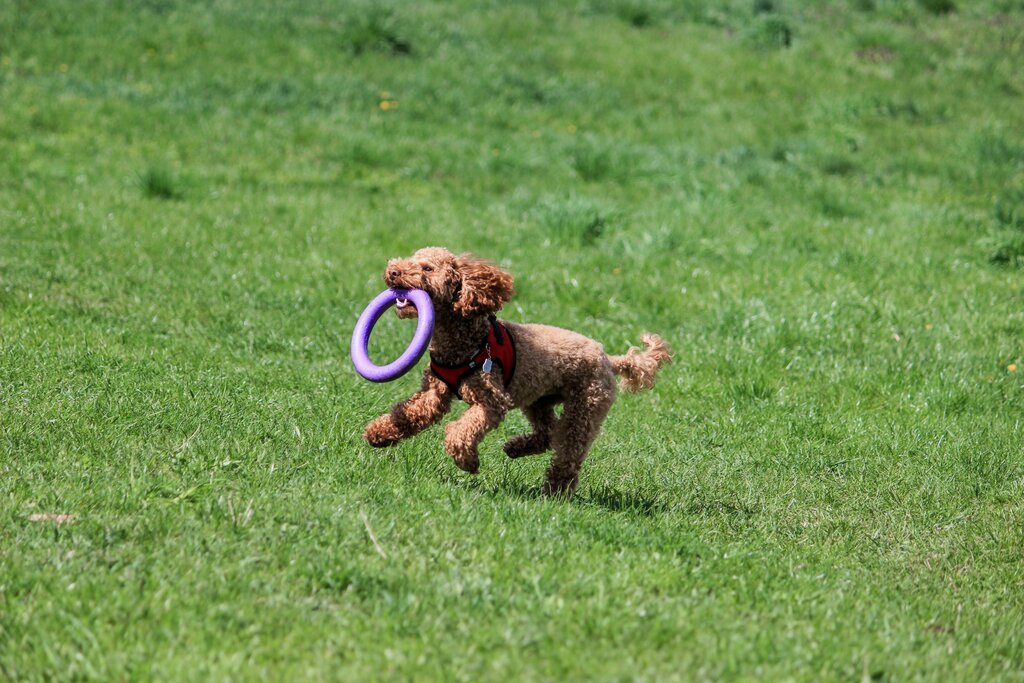
- Play: For some dogs, the best reward is a quick game of tug-of-war or chasing a favorite toy for a few seconds.
Discover what truly motivates your puppy and mix it up. This keeps training exciting and strengthens your bond. The goal is for your puppy to enjoy working with you, not just for the food.
To make your timing even more precise, you can introduce a secondary reinforcer, often called a marker. This is a sound that marks the exact moment your puppy does the right thing and signals that a reward is coming. The most common marker is a training clicker.
clicker
noun
A small mechanical device that makes a distinct clicking sound when pressed, used in animal training to mark a desired behavior.
First, you "charge" the clicker by clicking it and immediately giving your puppy a treat, over and over, without asking for any behavior. The puppy quickly learns that click means treat. Once that connection is made, you can use the click to pinpoint behaviors with surgical precision. Puppy's bottom hits the floor in a sit? Click! Then you can take a moment to deliver the treat. The click ends the guesswork for the puppy; it says, "Yes, that's exactly what I wanted!"
Now let's check your understanding of these core concepts.
What is the core idea of positive reinforcement training?
You ask your puppy to sit, and they do. You praise them, but then you take 10 seconds to get a treat from the cupboard. By the time you give it to them, they have already stood up and started sniffing a chair leg. What did you most likely reward?