Puppy Training Essentials
Understanding Puppy Behavior
The Puppy Blueprint
A puppy’s behavior is a story written by two authors: genetics and environment. Genetics provides the rough draft. A Border Collie is born with an instinct to herd, while a Beagle is wired to follow scents. These are deep-seated traits passed down through generations. You can’t train the herding out of a collie, but you can channel it into games like fetch.
The environment then edits and refines that draft. A puppy’s early life experiences have a massive impact on the adult dog they become. A pup raised in a calm home with gentle exposure to new things will likely be more confident than one from a chaotic or isolated setting. The combination of their inherited traits and their life story creates their unique personality.
A Puppy's First Year
Puppies develop in predictable stages, each with its own focus. Understanding this timeline helps you know what your puppy needs from you and when.
Neonatal Period (0-2 weeks): Newborns are completely dependent on their mother for warmth and food. Their world is all about taste and touch. They sleep most of the time, twitching as their nervous system develops.
Transitional Period (2-4 weeks): Big changes happen now. Their eyes and ears open, and they begin to see and hear the world. They'll start to stand, take wobbly steps, and even try out their first barks and tail wags.
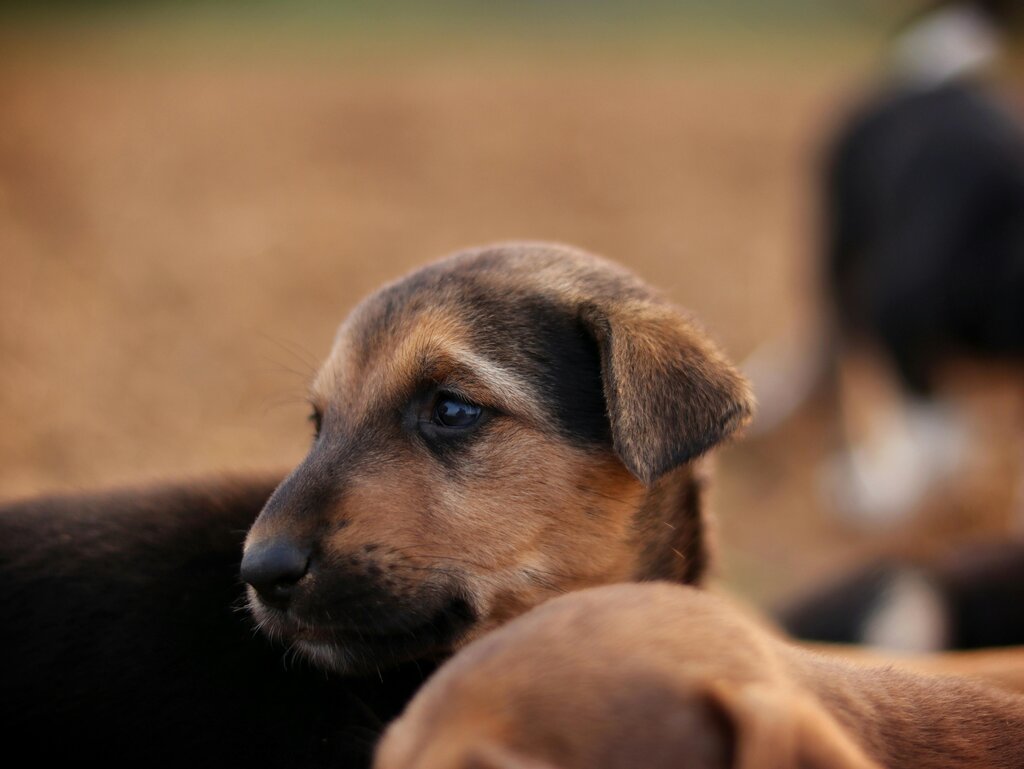
Socialization Period (3-16 weeks): This is the most important window in a puppy’s life. Their brains are like sponges, soaking up information about what is safe and what is scary. Positive experiences with new people, vaccinated friendly dogs, sounds, and places during this time are crucial for raising a well-adjusted, confident adult dog.
During the first 12 to 16 weeks of a puppy’s life, they are most receptive to learning about new environments, people, and other animals.
Juvenile Period (4-6 months): Your puppy has all its adult teeth and a surplus of energy. They're like toddlers, learning the rules of the house and figuring out how to interact with others. They are still learning but are more independent.
Adolescence (6-18 months): Welcome to the teenage years. Your dog might suddenly forget commands they once knew or start testing boundaries again. This is a normal part of development as their brains mature. They may also go through a second chewing phase.
Decoding Common Behaviors
Puppies do things that can be confusing, but most of their behavior is completely normal and serves a purpose. It's their way of learning about the world.
| Behavior | Why They Do It |
|---|---|
| Nipping & Play-Biting | Puppies explore with their mouths and learn how hard to bite (bite inhibition) from their mother and littermates. |
| Chewing | It's a natural dog behavior that helps relieve teething pain and keeps them occupied. |
| Jumping Up | It's often an enthusiastic greeting. They want to get closer to your face to say hello. |
| Whining | This is how they communicate needs like going potty, being hungry, or feeling lonely. |
| Digging | An instinctual behavior for many breeds, used for hunting, creating a cool place to lie down, or just for fun. |
Recognizing that these are normal developmental behaviors is the first step. They aren't being "bad" on purpose; they are simply acting like puppies. Your role is to patiently guide them toward the behaviors you want to see.
Which statement best describes the relationship between a puppy's genetics and its environment in shaping behavior?
During which developmental period do a puppy's eyes and ears open, allowing them to begin seeing and hearing the world?
By understanding where your puppy is coming from, both genetically and developmentally, you build a foundation of empathy. This allows you to work with your dog's nature, not against it.